
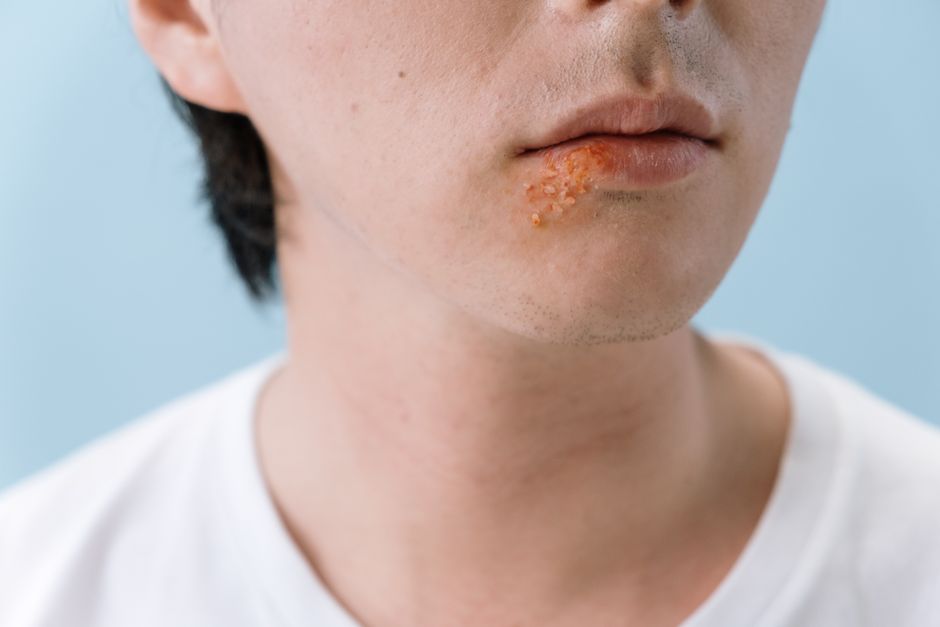
A cold sore will not disappear overnight, but you can shorten an outbreak and ease the pain significantly if you act quickly. The fastest approach combines starting antiviral treatment at the first tingle, managing the pain, and protecting the area from irritation. Prescription antiviral pills are the most effective option, but over-the-counter creams and patches also help when applied early.
What Actually Causes a Cold Sore?
Cold sores come from the herpes simplex virus, usually type 1 (HSV-1). Most people get this virus in childhood through casual contact like a kiss from an infected relative. Once you have the virus, it lives quietly in nerve cells near your face.
When something triggers the virus, it travels back to your skin and creates a blister. Common triggers include stress, illness, fever, sun exposure, hormonal changes, and fatigue. The virus is highly contagious during an active outbreak, especially when blisters are present.
This explains why the same spot tends to break out repeatedly. The virus does not leave your body. It stays dormant until something reactivates it. Understanding this mechanism matters because it shapes how treatment works — you are not curing the infection, you are suppressing a flare-up.
How To Make A Cold Sore Go Away Fast: Start at the First Tingle
The single most important factor in speeding up healing is timing. Most people feel a burning, itching, or tingling sensation 12 to 24 hours before the blister appears. This is called the prodrome phase. Treatment started during this window is dramatically more effective than treatment started after the sore is visible.
If you have prescription antiviral medication like acyclovir, valacyclovir, or famciclovir, take it at the very first tingle. These drugs stop the virus from replicating. Less viral replication means a smaller sore, less pain, and a shorter healing time.
For people with frequent outbreaks, doctors often prescribe these medications to keep on hand. That way you do not need a doctor visit each time. If you do not have a prescription, call your doctor or use a telehealth service as soon as you feel that familiar tingle. Starting antiviral treatment within the first 48 hours of symptoms makes the biggest difference.
Over-the-counter creams containing docosanol (Abreva) also work best when applied at the first sign. Docosanol works differently than prescription antivirals — it prevents the virus from entering healthy skin cells. It is less potent than oral medication, but it is effective for mild outbreaks and requires no prescription.
Prescription Antivirals: The Fastest Option
Oral antiviral medications are the gold standard for shortening a cold sore outbreak. Clinical studies consistently show that these drugs reduce healing time by about one to two days when started early. Valacyclovir is commonly prescribed because it requires fewer doses per day — often just two pills at the start and two more 12 hours later.
These medications are generally well tolerated. The most common side effects are mild headache, nausea, or diarrhea. Serious side effects are rare in healthy adults. People with kidney disease need dose adjustments, so tell your doctor about any medical conditions before taking these drugs.
Some doctors also prescribe topical antiviral creams like penciclovir. These are less effective than oral medication but can still help. The choice between oral and topical treatment depends on your outbreak history, symptom severity, and how quickly you caught the outbreak.
For people with very frequent outbreaks — typically six or more per year — some doctors recommend daily suppressive therapy. This means taking a lower dose of antiviral medication every day to prevent outbreaks entirely. This is a decision to make with your doctor based on your specific situation.



Over-the-Counter Options That Actually Work
Docosanol cream is the only FDA-approved non-prescription antiviral for cold sores. It is available at most pharmacies without a prescription. Applied five times daily at the first symptom, it can reduce healing time by about half a day to a full day compared to no treatment.
Hydrocolloid patches and cold sore patches do not kill the virus, but they serve a different purpose. They cover the sore, reduce pain, hide the blemish, and prevent you from touching it. Keeping the area covered also reduces the risk of spreading the virus to other people or to other parts of your body.
Some patches contain ingredients like menthol or benzocaine to numb the area. These provide symptom relief but do not speed healing. If your main concern is pain and appearance, a patch is a solid choice. If your main concern is shortening the outbreak, use an antiviral product instead.
Lysine supplements are popular for cold sore prevention and treatment, but the evidence is not strong. Some small studies suggest lysine may help prevent outbreaks, while others show no benefit. The research on lysine for treating an active outbreak is even weaker. Taking lysine is unlikely to harm you, but do not rely on it as your primary treatment.
What Not To Do During an Outbreak
Picking, popping, or scratching a cold sore is the worst thing you can do. The fluid inside the blister is packed with active virus particles. Breaking the blister spreads the virus to other areas of your face and to other people. It also opens the door for bacterial infection, which can make the outbreak last longer and leave scarring.
Avoid kissing and oral sex until the sore is completely healed, including the scab stage. The virus can spread even when no blister is visible, but the risk is highest when the sore is open or weeping. Sharing utensils, towels, lip balm, and razors also spreads the virus.
Do not apply makeup over an active cold sore. Makeup can introduce bacteria into the open sore and delay healing. If you must cover it, use a cold sore patch that seals the area first.
Be careful with essential oils and home remedies. Tea tree oil, coconut oil, and honey are sometimes recommended online, but clinical evidence for these is minimal. Some oils can irritate the skin and make the outbreak worse. There is no harm in using a gentle moisturizer, but do not expect unproven remedies to speed healing.
Pain Management and Comfort During Healing
Cold sores typically go through several stages: tingling, blistering, weeping, crusting, and healing. The weeping and crusting stages are often the most uncomfortable. Over-the-counter pain relievers like ibuprofen or acetaminophen can help manage discomfort.
Applying a cold compress for 10 to 15 minutes several times a day can reduce pain and swelling. Use a clean, damp cloth and avoid rubbing the area. Some people find that ice directly on the sore numbs the area effectively.
Keep the area moisturized with a lip balm or petroleum jelly. A dry, cracked scab is more painful and more likely to split and bleed. Moisturizing also prevents the scab from cracking when you smile, eat, or talk.
Sun exposure is a known trigger for outbreaks. If you are prone to cold sores, use a lip balm with SPF 30 or higher every day, not just during an outbreak. This simple habit may prevent many outbreaks from starting in the first place.
When To See a Doctor
Most cold sores clear up on their own within 7 to 10 days without treatment. With early antiviral treatment, healing may take 5 to 7 days. But some situations require medical attention.
See a doctor if the cold sore does not heal within two weeks, if you get outbreaks more than six times per year, or if the sore spreads to your eyes. A cold sore on or near the eye is an emergency — the virus can cause corneal scarring and vision loss. Go to urgent care or an eye doctor immediately.
People with weakened immune systems — from chemotherapy, organ transplantation, or conditions like HIV — should contact their doctor at the first sign of an outbreak. The virus can spread more aggressively in these populations and may require stronger treatment.
If the area becomes red, swollen, warm, and painful beyond what you normally experience, you may have developed a bacterial infection on top of the cold sore. This requires medical evaluation and possibly antibiotics.
How To Prevent Future Outbreaks
Prevention is easier than treatment. If you know your triggers, you can often avoid outbreaks entirely. Common triggers include sun exposure, stress, lack of sleep, and illness. Managing these factors reduces outbreak frequency.
For sun-sensitive people, daily SPF lip balm is one of the most effective prevention strategies. For stress-related outbreaks, adequate sleep and stress management techniques may help, though the evidence for specific stress reduction methods is limited.
If you get outbreaks frequently, talk to your doctor about suppressive therapy. Daily antiviral medication can reduce outbreak frequency by 70 to 80 percent in people who qualify. This is a prescription decision that requires a conversation about your outbreak history and medical profile.
Remember that having HSV-1 is extremely common. Roughly two-thirds of the global population under age 50 carries the virus. Having cold sores is not a sign of poor hygiene or a reflection on your health. It is simply a common viral condition that most people manage with basic self-care.
Frequently Asked Questions
What is the fastest way to get rid of a cold sore?
Prescription antiviral medication taken at the first tingle is the fastest method. Starting treatment within 48 hours of symptoms can shorten healing time by one to two days.
Can toothpaste or home remedies cure a cold sore?
No, toothpaste and most home remedies have no proven antiviral effect and can irritate the skin. Stick to FDA-approved antiviral creams or prescription medications for real results.
How long is a cold sore contagious?
A cold sore is contagious from the first tingle until the scab completely falls off and the skin heals. This usually takes 7 to 10 days from start to finish.
Can I pop a cold sore to make it heal faster?
No, popping a cold sore spreads the virus and increases the risk of infection and scarring. Let the blister heal on its own or use a hydrocolloid patch to cover it.
