
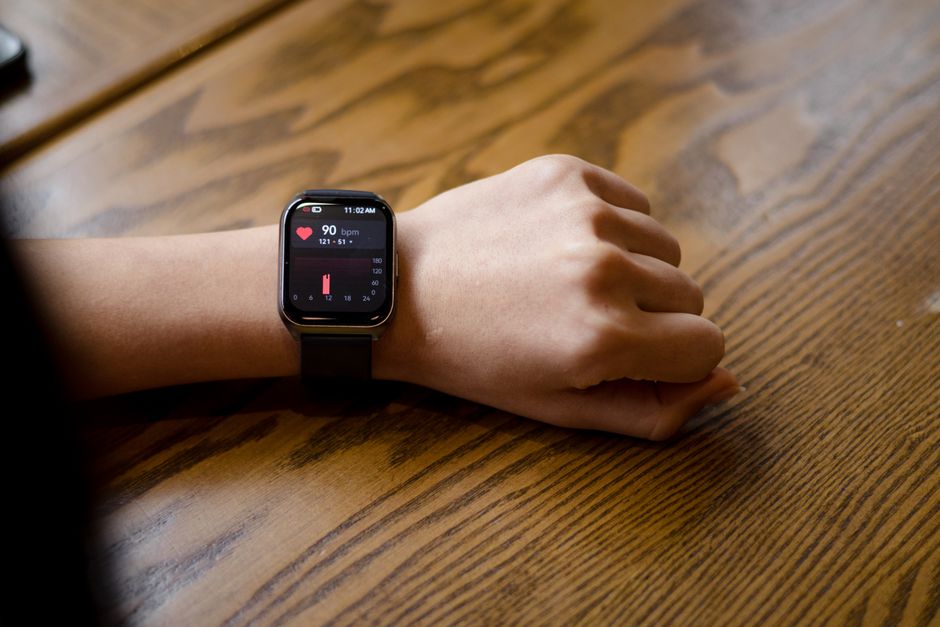
Anxiety can push your heart rate up fast. You feel it in your chest, your neck, your fingertips. The good news is that your body has a built-in brake, and you can learn to use it on purpose. Slow, steady breathing that makes your exhale longer than your inhale tells your nervous system to ease off, and many people feel their pulse settle within a minute or two. It will not erase anxiety, but it can pull your body out of the spike so you can think again.
What Happens to Your Heart Rate During Anxiety?
Anxiety triggers the same system your body uses when you are in real danger. Your brain signals your adrenal glands to release adrenaline and related stress hormones. Those chemicals speed up your heart, tighten blood vessels, and quicken your breathing.
The purpose is to move oxygen to your muscles so you can run or fight. When there is no physical threat, that surge has nowhere to go. Your heart keeps pounding and you feel shaky, short of breath, or lightheaded.
This is a normal stress response, not a sign that something is wrong with your heart. A normal resting heart rate for adults is generally 60 to 100 beats per minute. During a panic surge it can climb well above that, sometimes past 120, and still be a stress response rather than a heart problem.
One thing worth knowing: anxiety and heart symptoms can look alike. If you have chest pain, fainting, or a racing pulse that comes with no anxious thoughts at all, that needs medical attention rather than breathing exercises.
How Do You Lower Your Heart Rate Immediately During Anxiety?
Extending your exhale is the fastest voluntary lever you have. Breathing is the one part of your stress response you control directly, and it connects straight to the part of your nervous system that calms you down.
Try this pattern, sometimes called 4-6 breathing:
- Breathe in through your nose for about 4 seconds.
- Breathe out slowly through your mouth for about 6 seconds.
- Repeat for one to two minutes.
The exact counts matter less than the ratio. A longer exhale than inhale is the key. If 4 and 6 feel too long, use 3 and 4. If they feel too short, use 5 and 8.
You can also try a double inhale followed by a long exhale. Take one normal breath in, then a second small sip of air on top of it, then let everything out slowly. This pattern is used in some breathwork traditions and appears in popular stress-relief methods. The evidence for it specifically is thinner than for slow breathing generally, but it is not harmful for most healthy adults.
Cold water on your face can also slow your heart. Splashing cold water or holding a cold pack to your cheeks and eyes for about 30 seconds triggers what is called the dive reflex. This reflex slows the heart rate and is well documented in physiology. It works best when your face is actually cold, not just damp.
Why Does Slow Breathing Actually Slow Your Heart?
Breathing is unusual because it sits at the crossroads of the voluntary and involuntary nervous systems. You do not have to think about it, but you can take it over at any moment. That gives you a way in.
When you breathe in, your heart rate naturally speeds up slightly. When you breathe out, it slows down. This normal cycle is called respiratory sinus arrhythmia, and it is a sign of a healthy, flexible nervous system.
By making your exhale longer and slower, you spend more of each breath cycle in the “slow down” phase. Over a minute or two, that gently pulls your average heart rate down. It also signals to your brain that you are not in danger, which can reduce the hormone surge driving the whole response.
This is not a trick or a placebo. It is a direct line into the vagus nerve, the main pathway of your rest-and-digest system. The effect is real, but it is modest and temporary. It calms the physical spike. It does not resolve the anxiety itself.





What Else Helps in the Moment?
Breathing is the fastest tool, but a few other actions can help while your body settles.
- Move your body. A short walk or a few minutes of gentle movement burns off some of the stress hormones and gives the energy somewhere to go.
- Cool your environment. Step outside, open a window, or run cool water over your wrists.
- Ground your attention. Name five things you can see, four you can hear, three you can touch. This pulls focus away from the internal spiral.
- Loosen your posture. Unclench your jaw, drop your shoulders, uncurl your hands. Tension feeds the feeling of alarm.
- Sip cold water. The swallow and the temperature both nudge your nervous system toward calm.
None of these replace treatment for an anxiety disorder. They are first-aid measures for the physical surge. Think of them as turning down the volume so you can use other coping skills more clearly.
What Should You Not Do When Your Heart Is Racing?
Some common reactions make the spike worse. Knowing them can help you avoid a loop.
Do not check your pulse over and over. Each check can feed the anxiety that started the spike. It is a cycle that keeps the alarm switched on.
Do not force slow breathing so hard that you feel air-hungry. If you start to feel dizzy, stop and breathe normally. Overbreathing can actually make you feel worse by lowering carbon dioxide in your blood, which causes lightheadedness and tingling.
Do not lie still and fight the feeling with willpower alone. That often increases the sense of struggle. Gentle movement or a change of scene usually works better.
Caffeine and stimulants can push a racing heart higher. If you are prone to anxiety spikes, cutting back may help. Alcohol can also raise heart rate and disturb sleep, both of which feed anxiety the next day.
When Is a Fast Heart Rate a Medical Issue?
A fast heart rate from anxiety is common and usually harmless. But some heart rhythm problems can feel similar, and it is not always possible to tell them apart by feel alone.
Seek medical care if any of these apply:
- Chest pain, pressure, or tightness
- Fainting or near-fainting
- Shortness of breath that does not ease with rest
- A pulse that is fast at complete rest with no anxious trigger
- A racing heart that starts and stops suddenly, like a switch
- Heart rate above 100 beats per minute at rest that does not settle
A resting heart rate consistently above 100 beats per minute is called tachycardia. It has many possible causes, including anxiety, fever, dehydration, thyroid problems, anemia, and heart rhythm conditions. A doctor can sort out which one applies. Do not assume it is “just anxiety” without checking, especially if it is new.
If you have an anxiety disorder, treatment works. Talk therapy, particularly cognitive behavioral therapy, has strong evidence for panic and anxiety. Some medications also help. These take time, but they reduce how often and how hard the spikes hit. A doctor or mental health professional can guide you.
How Do You Keep Anxiety From Spiking Your Heart Rate So Often?
In-the-moment tools handle the surge. They do not lower how often it happens. That takes longer-term work.
Regular aerobic exercise is one of the most reliable ways to reduce anxiety and lower resting heart rate over time. Even a brisk walk most days can help. Sleep matters too. Poor sleep raises stress hormones and makes the next day’s anxiety worse.
Learning to notice early signs helps. Most people get warning signals before a full spike — tight chest, shallow breathing, racing thoughts. Catching it early makes the breathing tools far more effective than waiting until you are already in full panic.
If anxiety is interfering with work, relationships, or sleep, that is a signal to get professional support. You do not have to manage it alone, and effective treatments exist.
Frequently Asked Questions
How fast can I lower my heart rate during anxiety?
Many people notice a drop within one to two minutes of slow breathing with a longer exhale. The change is usually modest, so expect a gradual settling rather than an instant return to normal.
Does splashing cold water on your face really slow your heart?
Yes. Cold water on the face triggers the dive reflex, which slows the heart rate. This is well documented in physiology, and holding a cold pack to your cheeks for about 30 seconds can work when water is not available.
Can anxiety make your heart rate dangerously high?
Anxiety can push your heart rate well above 100 beats per minute, but that alone is not usually dangerous in a healthy heart. A resting rate consistently over 100, or a racing heart with chest pain or fainting, should be checked by a doctor.
Should I take medication for a fast heart rate from anxiety?
That depends on the cause, so it is a decision for a doctor. Some medications slow the heart directly, while others treat the anxiety driving it, and the right choice depends on your health and history.
