
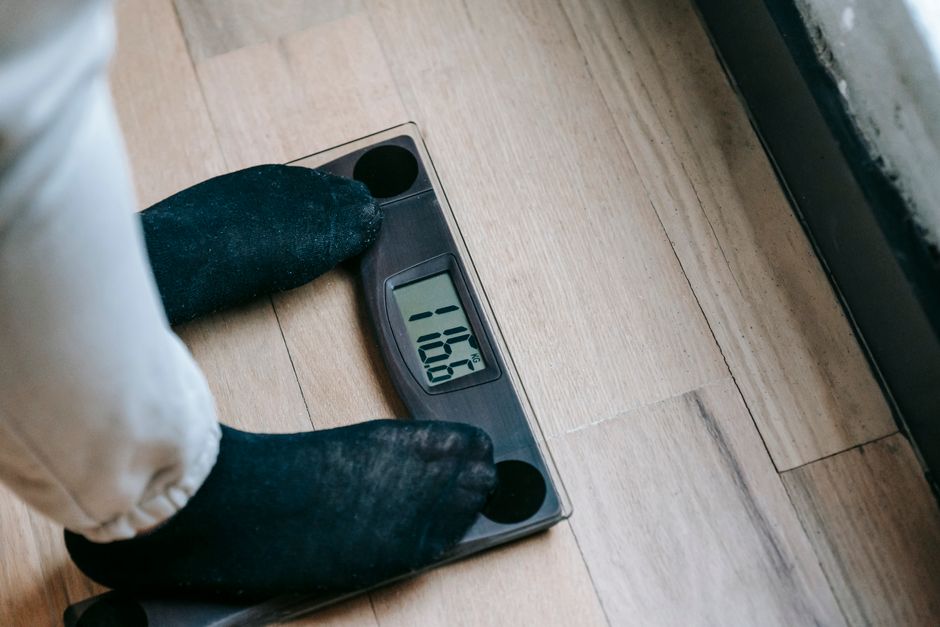
Checking your blood sugar will not burn a single calorie. But it can show you exactly how your body responds to the food you eat, and that information often changes what people choose to put on their plate. For some people, especially those with prediabetes or type 2 diabetes, tracking glucose around meals can support weight loss by revealing which foods spike their levels and which keep them steady.
The idea is not that glucose monitoring causes fat loss directly. It is that the feedback loop makes cause and effect visible. You eat a bagel, your glucose jumps. You eat eggs and avocado, it barely moves. Seeing that difference in real numbers is often more motivating than reading generic diet advice.
Why Does Blood Sugar Matter For Weight Loss?
Blood sugar and body weight are connected through insulin. When you eat carbohydrates, your digestive system breaks them into glucose, which enters the bloodstream. The pancreas releases insulin to move that glucose into cells for energy or storage.
When glucose rises quickly and sharply, insulin rises with it. Insulin does many things, and one of them is signaling the body to store energy rather than release it. Frequent large glucose swings mean frequent large insulin responses. Over time, cells can become less responsive to insulin, a condition called insulin resistance. When that happens, the pancreas produces more insulin to get the same job done.
This matters for weight because insulin resistance is strongly associated with excess fat storage, particularly around the abdomen. It is also a hallmark of prediabetes and type 2 diabetes. Research consistently shows that people with insulin resistance tend to have a harder time losing weight through standard calorie-cutting alone.
Here is the part that surprises many people. Two foods with identical calorie counts can produce very different glucose responses in the same person. A 200-calorie serving of white rice and a 200-calorie serving of lentils are not metabolically equivalent, at least not in terms of blood sugar impact. That difference is what glucose monitoring makes visible.
This does not mean calories are irrelevant. They still matter. But the type and timing of carbohydrates can influence hunger, energy, and how your body partitions what you eat.
How Does Checking Your Blood Sugar Actually Help You Lose Weight?
The mechanism is behavioral, not metabolic. Checking glucose does not directly cause fat loss. What it does is give you real-time data that can change your eating decisions.
Without monitoring, most people guess. They assume oatmeal is always a healthy choice, or that a banana is a safe snack. For many people, those foods work fine. For others, especially those with insulin resistance, oatmeal can send glucose higher than expected.
When you check your glucose after meals, you start to see patterns. You learn which foods keep you steady and which send you on a rollercoaster. That information lets you make targeted changes instead of overhauling your entire diet.
There is a second, less obvious benefit. High glucose swings are often followed by a crash, and crashes trigger hunger. If you can flatten the curve, you may experience fewer intense hunger signals. Some people find that stabilizing glucose reduces cravings for sweets and refined carbohydrates. The evidence for this effect is stronger in people with insulin resistance than in the general population.
A third factor is accountability. Logging a number before and after a meal creates a feedback loop that many people find more concrete than tracking calories. You see the consequence immediately. That immediacy can be more motivating than a weight scale that moves slowly.
What Is Continuous Glucose Monitoring And Who Uses It?
Continuous glucose monitors, or CGMs, are small sensors worn on the arm or abdomen that measure glucose in the fluid between cells every few minutes. They send readings to a smartphone or receiver.
CGMs were developed for people with diabetes, and they remain the primary users. For someone with type 1 or type 2 diabetes, a CGM provides real-time glucose data that can guide insulin dosing, food choices, and activity. The clinical evidence supporting CGM use in diabetes management is strong and well established.
In recent years, CGMs have been marketed to people without diabetes as a wellness tool. This is where the evidence gets thinner. Some small studies suggest that non-diabetic users may change their eating behavior after seeing glucose data. But large, long-term trials showing that CGM use leads to meaningful weight loss in healthy adults are lacking.
That does not mean the approach is useless. It means the evidence is not yet strong enough to call it a proven weight loss method for the general population. It is a tool that some people find helpful, and others find stressful or confusing.
For people without diabetes who want to try glucose monitoring, fingerstick meters are a lower-cost alternative. They require pricking a finger to get a drop of blood on a test strip. You get one reading at a time rather than a continuous stream, but for meal testing, that is often enough.



How Do You Test Your Blood Sugar Around Meals?
The basic approach is to check before a meal and again at a set time afterward. This gives you a before-and-after picture of how that specific meal affected your glucose.
For people with diabetes, clinical guidelines often recommend checking glucose before eating and about two hours after the first bite. The two-hour mark is a standard reference point in diabetes care. For someone without diabetes, the same timing can still be informative.
What you are looking for is the size of the rise. A small, gentle rise suggests the meal was well tolerated. A large spike followed by a sharp drop suggests the meal may have been heavy in fast-digesting carbohydrates.
It helps to test one variable at a time. If you change five things about a meal and then test, you will not know which change mattered. Test the same meal with and without a specific food. Test a meal eaten alone versus the same meal eaten after a short walk.
Keep a simple log. Write down what you ate, when you ate it, and your glucose readings. After a week or two, patterns usually emerge. Most people find that a handful of specific foods are responsible for most of their spikes.
Do not test constantly. Testing every meal for months can lead to anxiety and obsessive behavior, especially in people without diabetes. A short, focused period of testing to learn your patterns is usually more useful than endless tracking.
What Glucose Numbers Should You Watch For?
For people without diabetes, fasting glucose typically falls between 70 and 99 mg/dL. A fasting glucose of 100 to 125 mg/dL falls in the prediabetes range. A fasting glucose of 126 mg/dL or higher on two separate tests is one criterion used to diagnose diabetes.
After meals, glucose naturally rises. For people without diabetes, post-meal glucose usually stays below 140 mg/dL, though individual responses vary. For people with diabetes, target ranges are typically set higher and are individualized by a clinician.
These numbers are diagnostic reference points established by major medical organizations. They are not weight loss targets. A person can have perfectly normal glucose readings and still carry excess weight, just as a person can have elevated glucose and be at a healthy weight.
What matters for weight loss is the pattern, not a single number. If your glucose is consistently spiking high after meals and crashing afterward, that pattern may be driving hunger and cravings. Flattening that curve is the goal, not hitting a specific number.
What Foods Tend To Spike Blood Sugar?
Carbohydrates have the biggest effect on blood glucose. But not all carbohydrates behave the same way. The speed at which a food raises glucose depends on several factors.
- Refined carbohydrates like white bread, white rice, and sugary drinks tend to raise glucose quickly.
- Whole grains, beans, and lentils generally raise glucose more slowly because of their fiber content.
- Adding protein, fat, or fiber to a meal slows digestion and blunts the glucose rise.
- Eating carbohydrates after vegetables or protein, rather than first, may reduce the spike.
- Portion size matters. A small serving of a high-glycemic food may have less impact than a large serving of a low-glycemic one.
Individual responses vary widely. Two people can eat the same meal and see very different glucose curves. That is one reason generic diet advice often fails. What works for one person may not work for another.
This is also why testing your own response is more useful than following a list. A food that spikes one person’s glucose might be perfectly fine for someone else.
Does Glucose Monitoring Replace Other Weight Loss Strategies?
No. Glucose monitoring is a tool, not a treatment. It does not replace the fundamentals of weight management, which include overall calorie intake, physical activity, sleep, and stress management.
What it can do is make those fundamentals easier to apply. If you know that a particular breakfast keeps you full until lunch and another leaves you hungry an hour later, you can make a better choice. If you see that a 15-minute walk after dinner blunts your glucose rise, you have a reason to take that walk.
For people with prediabetes or type 2 diabetes, glucose monitoring is part of standard care. For everyone else, it is an optional tool with emerging but incomplete evidence. It may help. It may also add stress without benefit. The honest position is that we do not yet have large trials proving it causes weight loss in healthy adults.
If you have diabetes, prediabetes, or any condition affecting blood sugar, talk to your doctor before making changes based on glucose readings. Medication adjustments, especially insulin, should never be made without clinical guidance.
Frequently Asked Questions
Can checking blood sugar really help me lose weight?
It can help indirectly by showing you which foods spike your glucose and drive hunger. The evidence for meaningful weight loss from monitoring alone in people without diabetes is limited.
Do I need a continuous glucose monitor to do this?
No. A standard fingerstick glucose meter works for before-and-after meal testing. CGMs provide more data points but cost more and are not proven to produce better weight loss outcomes in non-diabetic users.
What should my blood sugar be after eating?
For people without diabetes, post-meal glucose usually stays below 140 mg/dL. For people with diabetes, target ranges are individualized and should be set by a clinician.
How long should I track my blood sugar for weight loss?
A focused period of one to two weeks is often enough to identify your main trigger foods. Long-term daily tracking is not necessary for most people without diabetes and may cause unnecessary anxiety.
