
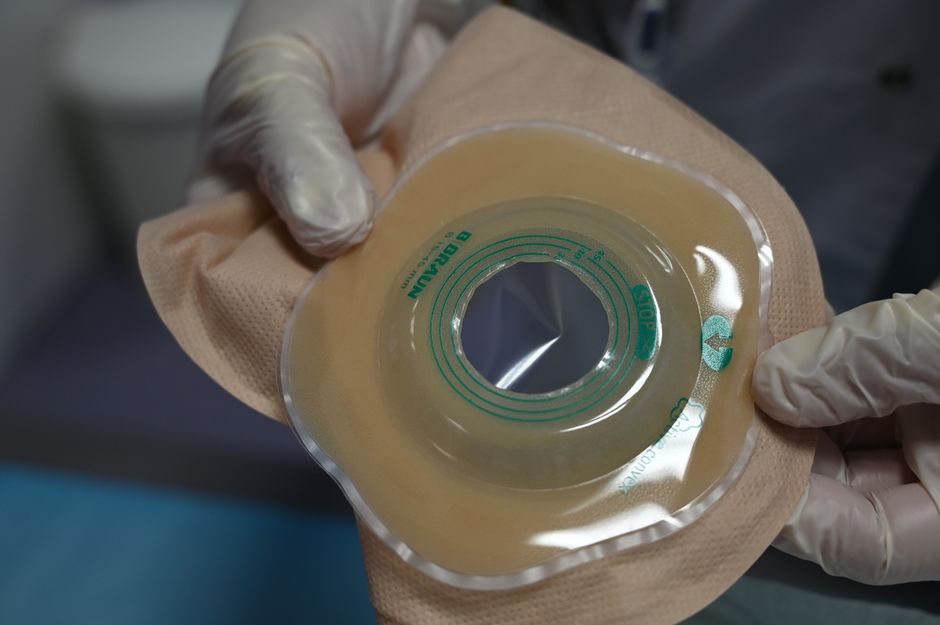
A colostomy changes how your body works, but it does not have to change who you are. Living well with a colostomy bag comes down to a few practical skills: learning to empty and change your pouch, protecting the skin around the stoma, adjusting your diet and routine, and knowing when to call your care team. Most people return to work, travel, exercise, and social life after surgery.
What Is a Colostomy and What Does the Bag Actually Do?
A colostomy is a surgically created opening in the abdominal wall. A section of the large intestine is brought through that opening and stitched to the skin. The visible part is called a stoma. It looks like a small, moist, pink or red circle, similar to the inside of your mouth.
The stoma does not have nerve endings, so touching it does not hurt. It also has no sphincter muscle, which is why you cannot control when stool comes out. Waste leaves the body through the stoma and collects in a pouch, also called an ostomy bag, that sticks to the skin around it.
Colostomies are created for several reasons. These include colorectal cancer, inflammatory bowel disease such as Crohn’s disease or ulcerative colitis, diverticulitis, bowel obstruction, and certain injuries or birth defects. Some are temporary and reversed later. Others are permanent.
Where the stoma sits on your abdomen depends on which part of the colon was used. A stoma from the ascending colon (right side) produces more liquid output. One from the descending or sigmoid colon (left side) produces firmer stool, closer to what you had before surgery. This matters because it shapes how often you empty the pouch and what you eat.
How Do You Empty and Change a Colostomy Bag?
Emptying is the most frequent task, and most people do it several times a day depending on output. You empty the pouch when it is about one-third to one-half full. Letting it get too full can pull on the skin barrier and cause leaks.
To empty a drainable pouch, sit on or near the toilet, hold the bottom of the pouch over the bowl, and open the clamp or closure at the bottom. Let the contents drain, wipe the end clean, and reseal it. Some people rinse the end with a little water. This step is optional and not required.
Changing the whole pouch and skin barrier is different from emptying. There is no single schedule that fits everyone. Many people change the barrier every few days, but this varies with the type of pouch, your skin, and how much you sweat. Your ostomy nurse can help you find a routine that works for your body.
The steps for a change are consistent:
- Gather your supplies first so you are not searching mid-change.
- Gently remove the old pouch and barrier. Adhesive remover wipes help and reduce skin pulling.
- Clean the skin around the stoma with warm water. Mild soap is fine if you rinse it off completely.
- Pat the skin dry. Let it air dry for a minute if you can.
- Measure the stoma. It shrinks over the first weeks and months after surgery, so re-measure regularly.
- Cut the barrier opening to match the stoma size. A snug fit protects the skin. A gap lets stool touch and irritate the skin.
- Press the barrier on, hold it for a short time to warm the adhesive, then attach the pouch.
One detail people often miss: the skin around a stoma is not like the rest of your abdomen. It is exposed to digestive enzymes and moisture, and it breaks down faster than normal skin. A barrier that fits well is the single most important thing you can do to prevent irritation. A gap of even a small amount around the stoma can cause problems over time.
How Do You Protect the Skin Around a Stoma?
Healthy skin around the stoma is the foundation of everything else. When the skin is irritated, nothing sticks well, and leaks get worse. That cycle is worth preventing early.
Signs of skin trouble include redness, itching, burning, weeping, or a rash. Some of this is simple irritation from stool contact. Some is a reaction to an adhesive or product. Some is a fungal infection, which is more common in warm, moist areas. These causes look similar and need different treatments, so it is worth having a nurse look rather than guessing.
Practical steps that help:
- Get the barrier opening size right. Re-measure whenever the stoma changes.
- Change the pouch if you feel itching or burning under the barrier. Do not wait.
- Use skin barrier wipes or powder if your nurse recommends them for your skin type.
- Avoid alcohol, oil, or lotion on the skin right around the stoma. These stop the barrier from sticking.
- Shave hair under the barrier carefully, or use a barrier that works with hair.
If redness or pain does not improve within a few days, contact your ostomy nurse or doctor. Skin problems are common and usually solvable, but they rarely fix themselves once they start.





What Should You Eat With a Colostomy?
There is no single colostomy diet. What works depends on which part of your colon was used, how your body responded to surgery, and your other health conditions. That said, some patterns are widely reported and clinically recognized.
Right after surgery, many clinicians suggest a low-fiber diet for a period to let the bowel settle. Over time, most people return to a normal diet. Your surgical team will guide the timing, since it varies.
Foods that commonly cause gas include beans, broccoli, cabbage, onions, carbonated drinks, and chewing gum. Foods that can cause odor include fish, eggs, asparagus, and some spices. Foods that can thicken output include bananas, applesauce, white rice, and pasta. Foods that can loosen output include fruit juice, coffee, and very spicy meals. These effects vary a lot from person to person.
A few habits help most people:
- Eat slowly and chew well.
- Drink enough fluid. The colon absorbs water, and a colostomy can make dehydration easier to reach, especially with a stoma on the right side.
- Add new foods one at a time so you can tell what caused a change.
- Eat regular meals rather than skipping, which can increase gas.
If you notice a blockage — cramping, a swollen abdomen, no output, nausea, or vomiting — that is a medical concern. Contact your care team or seek urgent care. Do not wait to see if it passes on its own.
How Do You Handle Odor, Gas, and Leaks?
Odor and gas are the two concerns people mention most. Both are manageable.
Modern pouches are made with odor-barrier film, so a sealed pouch generally does not release smell. Odor usually comes from the moment you empty the pouch or from a leak. Emptying promptly and keeping the closure clean reduces this.
Gas is normal. It comes from swallowed air and from bacteria in the gut breaking down food. You can reduce it by limiting carbonated drinks and gas-producing foods, and by eating more slowly. Some pouches have a filter that lets gas escape without odor. If gas is a persistent problem, talk with your nurse about filter options.
Leaks are the most disruptive issue, and they are usually preventable. Common causes include a barrier opening that is too large, a barrier that has worn out, weight change, or a stoma that has changed shape. If leaks keep happening, re-measure the stoma and check your barrier fit. A nurse can often spot the cause quickly.
Can You Exercise, Travel, and Stay Social With a Colostomy?
Yes. Physical activity is generally encouraged after healing. Walking, swimming, cycling, and most sports are possible. Swimming is fine once the pouch is secure. For contact sports, a stoma guard or belt can protect the area. Ask your surgeon when it is safe to lift heavy weights, since this depends on how your surgery healed and whether you had a hernia risk.
Travel takes some planning but is very doable. Carry extra supplies in your carry-on bag, not checked luggage. Bring more than you think you need. A pouch cut to size in advance saves time in a small bathroom. If you fly, know that cabin pressure can increase gas, so you may want an empty or filtered pouch before boarding.
Socially, the biggest barrier is often worry rather than reality. Clothing does not need to change much. Loose-fitting tops and waistbands that sit above or below the stoma work well. Most pouches lie flat and are not visible under normal clothes.
Intimacy is a common concern and rarely discussed. A pouch can be emptied, folded, or covered with a smaller pouch or wrap. Many people find that talking with a partner reduces anxiety more than any product does. If you have ongoing concerns, a counselor or ostomy support group can help.
When Should You Call Your Care Team?
Some changes are routine and some need attention. Contact your doctor or ostomy nurse if you notice:
- Skin that is red, painful, broken, or bleeding around the stoma
- A stoma that changes color, turns dark, or looks blue or black
- A stoma that swells, shrinks suddenly, or pulls back below the skin
- No output for a day or more, with cramping or vomiting
- Heavy or ongoing bleeding from the stoma
- Signs of dehydration, such as dark urine, dizziness, or a dry mouth
- Fever or worsening abdominal pain
A healthy stoma is usually pink or red and moist. A stoma that looks pale, dark, or dry is a reason to call, not wait.
Frequently Asked Questions
How often should you change a colostomy bag?
There is no fixed schedule, but many people change the skin barrier and pouch every few days. Your ostomy nurse can help you set a routine based on your pouch type, skin, and output.
Can you shower with a colostomy bag on?
Yes, you can shower with the pouch on, and water does not harm the stoma. Some people prefer to shower without the pouch during a change, which is also fine.
What foods should you avoid with a colostomy?
There is no universal list, but gas-producing and high-fiber foods are common triggers for some people. Add foods one at a time so you can identify what affects you.
Can a colostomy be reversed?
Some colostomies are temporary and can be reversed, while others are permanent. Whether reversal is possible depends on why the colostomy was created and your overall health.
