
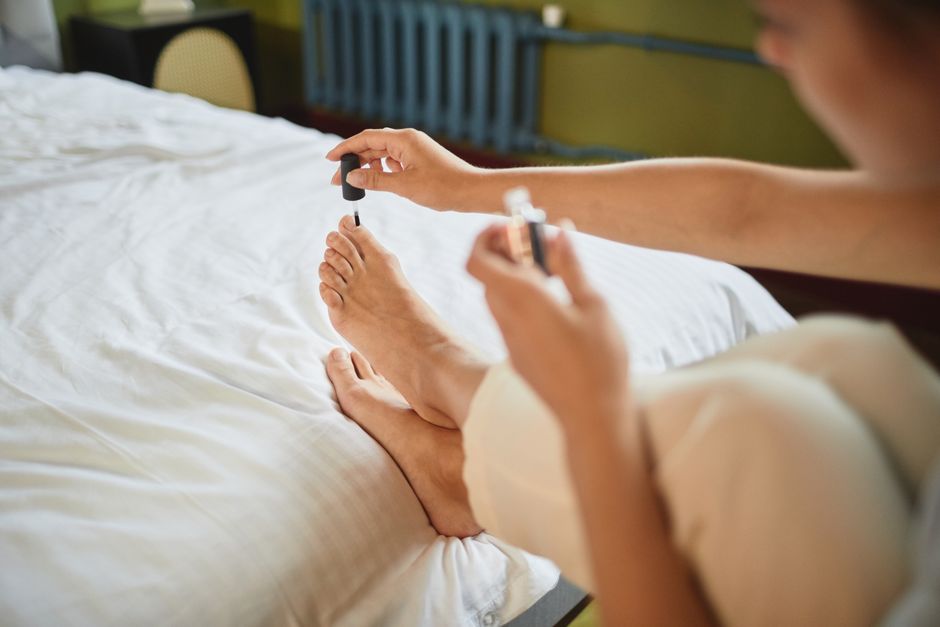
Can nail fungus live in nail polish? Yes — and this is one of the most common misunderstandings in nail care. Nail fungus, a group of organisms that infect the nail and the skin beneath it, can survive in the space between the nail plate and the polish. The polish itself does not create the infection, but it can shelter fungus that is already there and make treatment harder.
The reason is simple. Nail polish forms a tight film over the nail surface. Fungus living under or around that film is sealed off from air, moisture changes, and the antifungal products you apply to the nail. The polish does not feed the fungus, but it can hide it.
This matters because many people cover an infected nail with polish to hide the discoloration, then wonder why the problem never goes away. It usually does not — and the polish is part of the reason.
What Is Nail Fungus and How Does It Grow?
Nail fungus — the medical term is onychomycosis — is an infection of the nail unit by dermatophyte molds, yeasts, or non-dermatophyte molds. Dermatophytes are the most common cause in toenails. They feed on keratin, the protein that makes up your nails and the outer layer of your skin.
The infection usually starts at the free edge of the nail or under the nail tip. From there it works backward toward the cuticle. As it spreads, the nail may turn yellow, brown, or white, thicken, and separate from the nail bed. It can also crumble at the edges.
Fungus needs three things to grow: warmth, moisture, and a food source. Your shoes provide warmth. Sweat provides moisture. Your nail provides keratin. This is why toenail infections are far more common than fingernail infections — feet spend hours each day in dark, damp shoes.
Once established, nail fungus is stubborn. The nail plate is hard and has no blood supply of its own. It gets nutrients by diffusion from the nail bed underneath. This makes it hard for the immune system and for antifungal drugs to reach the infection. That is why treatment often takes months, not weeks.
Can Nail Fungus Live In Nail Polish?
Fungus does not live in nail polish as a habitat. It lives in and under the nail. But polish can trap fungus against the nail and protect it from treatment.
When you paint an infected nail, you create a barrier. Any fungus on the nail surface, in the crevices around the cuticle, or under the free edge is now covered. The polish film holds in moisture and blocks antifungal creams and solutions from reaching the organisms.
Some people also reuse the same polish bottle and brush on an infected nail and then on healthy nails. Whether this spreads infection is not clearly established. Fungus generally needs a break in the skin or nail to establish itself, and polish is not a favorable environment for long-term survival. But the brush does pick up nail debris, and sharing polish or tools is not a good idea if one nail is infected.
The clearer risk is this: polish hides the infection. You cannot see the nail changing color or separating from the bed. You may not notice that the infection is spreading to other nails. You keep covering it, and the fungus keeps growing underneath.
Does Nail Polish Cause Nail Fungus?
Nail polish does not cause nail fungus. It has no keratin to feed on, and it does not introduce dermatophytes. The infection comes from contact with fungal organisms, usually in warm, wet public spaces or from skin that already carries fungus.
That said, nail polish can contribute to conditions that make infection more likely. Here is how.
- Trapped moisture. Polish and artificial nails can seal in moisture around the nail, softening the nail plate and skin. Soft, damaged tissue is easier for fungus to invade.
- Nail damage. Frequent use of polish remover, especially acetone-based products, dries and weakens the nail. Small cracks and separation give fungus an entry point.
- Artificial nails. Acrylics and gels can lift at the edges, creating a dark, damp space between the artificial nail and the natural nail. This is a known risk factor for nail infections.
- Shared tools. Nail clippers, files, and buffers can carry fungal particles from one person to another if not cleaned.
The polish itself is not the culprit. The environment it creates — and the way it hides an existing problem — is what matters.




Does Nail Polish Make Fungus Worse?
Covering an infected nail with polish can make treatment less effective. It does not necessarily make the fungus grow faster, but it can slow your progress and extend how long the infection lasts.
Antifungal nail lacquers and creams are designed to be applied directly to the nail surface. A layer of polish blocks that contact. Even oral antifungal medications, which work from the inside, are judged partly by how the nail looks as it grows out. If the nail is painted, you and your clinician cannot see whether the treatment is working.
There is also the question of the polish itself. Some products contain ingredients that can irritate skin or damage the nail with heavy use. An irritated nail bed is more vulnerable, not less.
If you are being treated for nail fungus, most clinicians recommend keeping the affected nail free of polish until the infection has cleared and healthy nail has grown out. That can take many months for a toenail, because toenails grow slowly — roughly 1 millimeter per month, and often slower in older adults or people with poor circulation.
How Do You Know If You Have Nail Fungus?
Nail fungus and other nail problems can look alike. This is where many people guess wrong and treat the wrong thing for months.
Common signs of a fungal nail infection include:
- Yellow, brown, or white discoloration
- Thickening of the nail
- Brittle, crumbly, or ragged edges
- Separation of the nail from the nail bed
- A distorted nail shape
- Debris or a chalky substance under the nail
But several other conditions cause similar changes. Psoriasis can cause nail pitting, thickening, and separation. Repeated trauma from tight shoes or running can thicken a nail and lift it from the bed. Lichen planus, poor circulation, and even some skin cancers can affect the nail. A dark streak under the nail, in particular, should be checked by a clinician rather than assumed to be fungus.
Because these conditions can look so similar, the only reliable way to confirm nail fungus is laboratory testing. A clinician can take a small sample of nail clippings or debris and examine it under a microscope or culture it. Some clinics use a stain or a DNA-based test. Without testing, you may be treating a problem that is not fungal at all.
How Is Nail Fungus Treated?
Treatment depends on how severe the infection is and how many nails are involved. There is no single approach that works for everyone.
For mild infections limited to a small part of the nail, some clinicians recommend topical antifungal lacquers or solutions. These are applied to the nail surface, often for many months. Evidence for topical treatment alone is strongest for mild, limited disease. For more extensive infection, topical products often do not reach the fungus deep in the nail.
For moderate to severe infections, oral antifungal medications are commonly prescribed. These work from inside the body and reach the nail through the bloodstream. They are generally more effective than topical treatment for extensive infection, but they require monitoring and are not appropriate for everyone. A clinician weighs liver health, other medications, and interactions before prescribing them.
In some cases, a clinician may remove part or all of the affected nail to reduce the fungal load and improve how well treatment works. This is usually reserved for severe or stubborn cases.
Whatever the approach, patience is required. Even after the fungus is gone, the damaged nail must grow out. For a toenail, that can take a year or more. The new nail grows in healthy, but the old infected portion remains until it is trimmed away.
One non-obvious point: treating the skin around the nail and the feet matters too. Fungus often lives on the skin of the feet, especially between the toes. If you treat only the nail and ignore the skin, reinfection is more likely.
Can You Wear Nail Polish If You Have Nail Fungus?
You can, but it is usually not a good idea while you are trying to treat the infection. Polish hides the nail, blocks topical treatment, and traps moisture. If you must cover the nail for a special occasion, keep it brief and remove the polish promptly afterward.
If you are not treating the infection and are simply living with it, polish will not make it worse on its own, but it will hide changes you should be watching. A nail that is getting thicker, separating further, or spreading to other toes is a sign the infection is advancing.
If you want to keep your nails looking neat without polish, keep them trimmed straight across and filed smooth. Do not dig into the corners or push back the cuticle aggressively. That can create small openings for infection.
How Do You Prevent Nail Fungus?
Prevention focuses on keeping feet dry and avoiding contact with fungal organisms. These steps are well supported and low risk.
- Keep feet clean and dry. Dry between the toes after washing.
- Wear shoes that breathe and change socks if your feet get sweaty.
- Wear shower shoes in public pools, locker rooms, and showers.
- Do not share nail clippers, files, or shoes with someone who has a fungal infection.
- Trim nails straight across and avoid cutting them too short.
- Choose a reputable nail salon that cleans and disinfects tools between clients.
- If you have diabetes or poor circulation, check your feet regularly and see a clinician for any nail changes.
For people with diabetes, nail and foot infections carry higher risk. Nerve damage and reduced blood flow can make it harder to notice a problem and harder for the body to fight it. Nail changes in this group deserve prompt medical attention rather than home treatment.
There is no proven way to prevent nail fungus with diet or supplements. Some products marketed for nail health have no clinical evidence behind them. If a claim sounds too strong, it usually is.
Frequently Asked Questions
Can nail fungus live in nail polish?
Fungus does not live in the polish itself, but it can survive under and around a polished nail. The polish can trap fungus against the nail and block antifungal treatment from reaching it.
Does painting over nail fungus make it worse?
It can make treatment less effective by hiding the infection and blocking topical products. It does not usually make the fungus grow faster, but it can extend how long the infection lasts.
Can you get nail fungus from a nail salon?
You can pick up fungal organisms from tools that are not properly cleaned between clients. Choosing a salon that disinfects its instruments lowers the risk.
How long does nail fungus take to go away?
Treatment can take several months, and the damaged nail must grow out afterward. A toenail can take a year or more to fully replace, so total recovery time is often long.
