
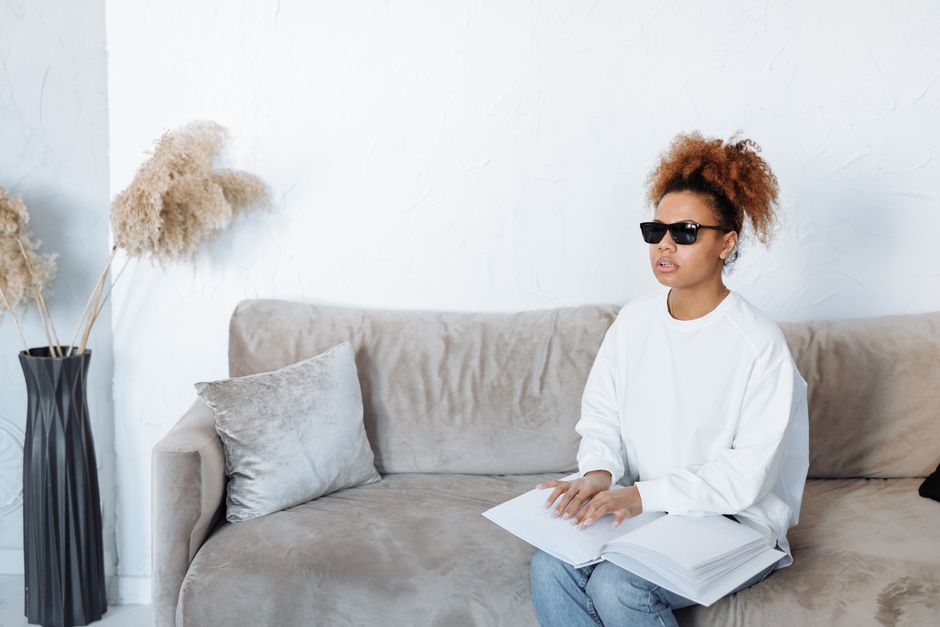
Leading a blind person safely is a simple skill, but most people have never been taught the proper technique. The standard method is called sighted guide technique, and it involves the blind person holding your arm just above the elbow while you walk a half-step ahead. This position gives them your body’s movement cues through your arm, allowing them to follow your pace, direction, and stops without you having to push or pull them.
What Is the Sighted Guide Technique?
The sighted guide technique is the internationally recognized method for guiding a person who is blind or has low vision. It is taught by orientation and mobility specialists and used by guide dog trainers. The core principle is that the blind person stays in control of the movement, while you provide the information about the environment.
The person being guided holds your arm just above the elbow. Their thumb is on the outside of your arm, and their fingers wrap around the inside. This grip is firm but not tight. Your arm should be relaxed and bent at about a 90-degree angle, with your elbow close to your body.
You walk about half a step ahead of them. This is not a race. Your pace should match their comfort level, not your usual walking speed.
How Do You Start Guiding Someone?
Do not grab a blind person’s arm or push them from behind. That is disorienting and can cause a fall. Instead, ask if they would like assistance. If they say yes, let them initiate the contact.
Touch the back of their hand with yours and say “Take my arm.” This lets them find your arm at their own speed and in their own way. They will slide their hand down to your elbow and take the grip. If they prefer to hold your shoulder instead, that is fine too, though the elbow grip is the standard.
Once they have a secure hold, tell them what is ahead. Say “We’re walking straight toward the door” or “There’s a step up in about five feet.” Give them a moment to process the information before you move.
How Do You Navigate Doorways and Narrow Spaces?
Doorways are one of the most common challenges. When you reach a doorway, move your guiding arm behind your back. Your elbow points toward the blind person, and your hand points forward. This creates a straight line for them to follow. They will naturally step behind you and walk through the door single file.
Once you are through, bring your arm back to the normal position. Do not change your grip or let go unless you tell them what you are doing. The person you are guiding can feel the change in your arm position, which is the signal to step behind you.
For narrow hallways or crowded areas, use the same technique. Move your arm behind your back and walk single file. This keeps them directly behind you rather than bumping into walls or obstacles.




How Do You Handle Stairs and Steps?
Stairs require extra care. Stop completely at the edge of the first step. Tell the person clearly: “There are stairs going up” or “There are stairs going down.” Let them know how many steps there are if you can count them, and whether there is a handrail.
Approach the stairs straight on, not at an angle. Step onto the first step yourself, and let the person follow. They will feel your arm move upward or downward as you take the step. Keep your pace slow and even. Do not pause on each step unless they ask you to.
At the top or bottom, pause and say “We’re at the top” or “We’re at the bottom.” This verbal cue is important because the person cannot see the landing. Wait for them to step onto the flat surface before you continue walking.
How Do You Guide Someone Through Seating?
Guiding someone to a chair or bench is a common situation. Walk to the chair and stop. Place the hand of your guiding arm on the back of the chair. The person will slide their hand down your arm to the chair back and feel the seat.
Tell them whether the chair has arms or not, and whether it is a stool, a bench, or a standard chair. Say “The chair is directly in front of you” or “The seat is to your left.” Let them position themselves. They may run their hand along the seat to check for crumbs or objects before sitting.
Do not push them down into the chair. Do not guide their body. Let them sit at their own pace. This preserves their independence and prevents injury if they misjudge the distance.
What Should You Say While Guiding?
Verbal communication is part of the technique. You do not need to narrate every step, but you should give useful information. Mention obstacles like curbs, poles, or overhanging branches. Warn about changes in floor surface, like carpet to tile or gravel to concrete.
Use specific language. Instead of “watch out,” say “There’s a bench on your right, about three feet ahead.” Instead of “careful,” say “There’s a step down at the door.” Specific information is more useful than general warnings.
When you stop walking, say “We’re stopping.” The person will feel your body stop, but the verbal cue confirms it. If you need to leave them for a moment, say “I’m going to step away for a second. I’ll be right back.” Place their hand on a stable surface like a wall or counter before you go.
What Should You Avoid Doing?
Do not grab a blind person’s arm or hand and pull them along. This removes their control and can cause them to trip. Do not walk behind them and push them forward with your hands on their shoulders. This gives them no information about what is ahead.
Do not leave a person standing in an open area without telling them where they are. If you must leave, guide them to a wall, a chair, or another stable object they can hold onto. Say “There’s a wall directly behind you” before you move away.
Do not assume all blind people want or need help. Many people with low vision navigate independently. Always ask first. If they decline, respect that and step back.
Never move furniture or objects without telling the person. A blind person’s mental map of a room includes where things are. Moving a chair or table without warning can cause a collision.
How To Lead A Blind Person Sighted Guide Techniques for Different Situations
The basic technique works for most situations, but some adjustments help in specific environments. In crowded spaces like airports or stadiums, keep your arm close to your body and walk slightly slower. The person behind you needs more reaction time in busy areas.
On uneven ground like grass or gravel, slow your pace and warn about changes underfoot. Say “We’re stepping onto grass now” or “The path gets rocky here.” In the rain, warn about puddles and slippery surfaces. Offer your elbow rather than your hand, since a wet handshake grip can slip.
When going through revolving doors, this is tricky. The safest method is to have the person hold your arm and walk through together, but the space is tight. Alternatively, guide them to the door and let them go through first while you follow. Use whichever method the person prefers, since experienced travelers often have their own approach.
Escalators are another special case. Stop at the bottom or top and tell the person which direction it moves. Let them step on first while holding your arm, then follow. Keep a firm grip until they step off at the other end.
What If the Person Uses a Cane or Guide Dog?
If the person uses a white cane, they will hold it in their free hand. The cane sweeps ahead of them to detect obstacles. Your job is to guide with your arm while they continue using the cane. Do not take the cane from them. Do not walk so fast that the cane cannot keep up.
If they have a guide dog, the dog is working. Do not pet, call, or distract the dog. The person may choose to hold your arm while the dog walks on the other side, or they may prefer to follow the dog alone. Ask what they prefer. Some people use sighted guide even with a dog, especially in unfamiliar areas.
Frequently Asked Questions
Should I grab a blind person’s arm to help them?
No. Always ask first and let the person initiate contact. Touch the back of their hand and say “Take my arm” so they can grip you at their own pace.
What is the correct hand position for sighted guide?
The blind person holds your arm just above the elbow with their thumb on the outside and fingers wrapped inside. You keep your arm bent at about 90 degrees and walk half a step ahead.
How do I guide someone up stairs safely?
Stop at the edge, tell them whether the stairs go up or down, and count the steps if you can. Step onto the first step first and keep a slow, even pace while they follow.
What should I say when guiding a blind person?
Give specific information about what is ahead, like “There’s a curb in two steps” or “We’re stopping now.” Use clear directions rather than vague warnings like “careful.”
