
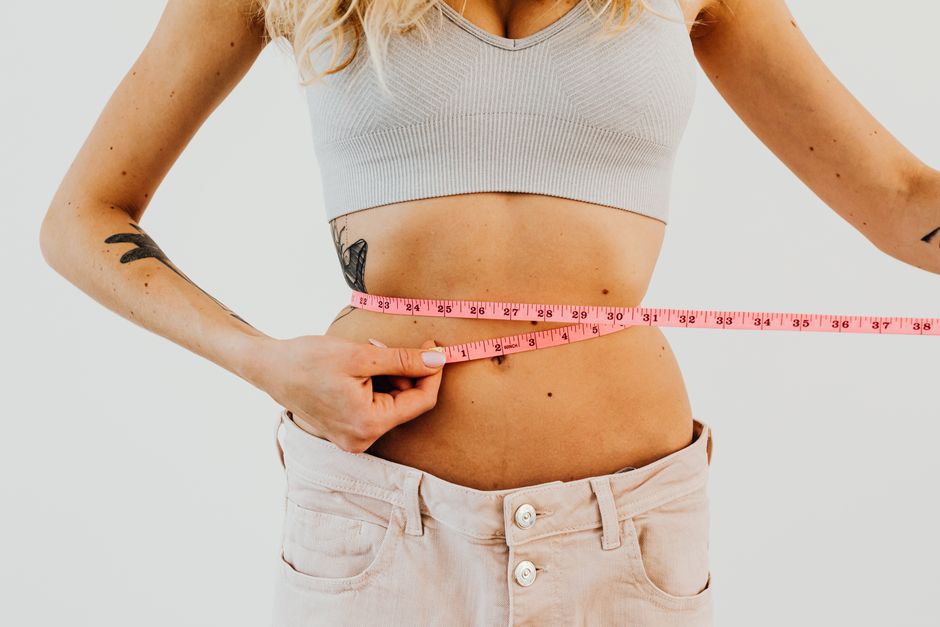
Knowing your body fat percentage is more useful than watching the scale because muscle weighs more than fat. The most accurate methods are DEXA scans, hydrostatic weighing, and the Bod Pod, but they are expensive and not easy to find. For home use, a simple measuring tape and the US Navy method gives you a solid estimate for free. Smart scales and handheld devices are convenient but have a high error rate and can be misleading day to day.
Why Should You Care About Body Fat Percentage Instead of Weight?
Your weight alone does not tell you if you are losing fat or muscle. Two people can weigh the same 180 pounds but have completely different health risks based on body composition. A higher body fat percentage is linked to heart disease, diabetes, and metabolic syndrome according to the American College of Sports Medicine.
Tracking body fat percentage helps you see real progress when the scale is stuck. If you are strength training and eating well, you might gain muscle and lose fat at the same time. The scale will not move much, but your body fat number will drop. That is a win you would miss entirely if you only weighed yourself.
Body fat percentage also matters more as you age. The CDC reports that muscle mass naturally declines after age 30. Without tracking composition, you might not notice you are slowly replacing muscle with fat even if your weight stays the same. This is sometimes called “normal weight obesity.”
How To Know Your Body Fat Percentage Methods Compared: The Gold Standards
DEXA scans are widely considered the most accurate method available to the public. DEXA stands for dual-energy X-ray absorptiometry. It uses low-dose X-rays to measure bone density, lean mass, and fat mass separately. Research published in the Journal of Clinical Densitometry found DEXA has an error rate of about 1 to 2 percent. The downside is cost — expect to pay 75 to 150 dollars per scan — and availability. You usually need to find a university lab, hospital, or specialty fitness center.
Hydrostatic weighing is another gold standard. You sit on a scale underwater and exhale all your air. The machine measures your body density based on how much water you displace. Fat floats and muscle sinks, so the math gives you a percentage. This method has been used for decades in research settings. The error rate is similar to DEXA at around 2 percent. It is uncomfortable for some people and not widely available outside of universities.
The Bod Pod uses air displacement instead of water. You sit inside an egg-shaped chamber for a few minutes while sensors measure how much air your body pushes out. Studies show it agrees closely with hydrostatic weighing. The error is roughly 2 to 3 percent. Many gyms and nutrition centers have one, and it costs about 50 to 75 dollars per test.
All three of these methods are reliable for tracking changes over time if you use the same machine and conditions. But they are not practical for weekly checks.
What About Bioelectrical Impedance Scales and Handheld Devices?
Bioelectrical impedance analysis (BIA) sends a tiny electrical current through your body. Fat resists the current more than muscle does, so the device estimates your fat percentage based on how fast the signal travels. This is how most smart scales and handheld body fat monitors work.
The problem is accuracy. BIA is very sensitive to your hydration level. If you drank water an hour before testing, your body fat reading will be lower than it really is. If you are dehydrated, it will be higher. A study in the Journal of the International Society of Sports Nutrition found that consumer BIA scales can have an error of 4 to 8 percent compared to DEXA. That is a huge range.
These devices are still useful for tracking trends over many weeks — but only if you test under the exact same conditions every time. Test first thing in the morning, after using the bathroom, before eating or drinking anything. Do not test after exercise. Even then, take the number as a rough guide, not a fact.
Handheld BIA devices are generally worse than foot-to-foot scales. The current travels a shorter distance and misses your lower body. If you already own one, use it for trends only and do not compare your number to someone else’s.



Calipers and the US Navy Method: Cheap and Surprisingly Good
Skinfold calipers measure the thickness of fat under your skin at specific sites on your body. The most common protocol uses three or seven sites. A trained technician pinches your skin, measures with the calipers, and plugs the numbers into a formula. The error rate for a skilled measurer is about 3 to 4 percent.
The catch is skill. If you pinch the wrong spot or use too much pressure, your results will be off. Having the same person test you every time is important. You also cannot measure yourself accurately for most sites because you cannot reach your own back or thigh properly.
The US Navy method uses a simple measuring tape. You measure your neck and your waist (and hips for women) and plug the numbers into a formula. The Department of Defense developed this method to estimate body fat for military personnel. Studies comparing it to DEXA show an error of about 3 to 5 percent. That is not bad for a tape measure you already own.
Here is a quick comparison of common methods:
| Method | Typical Error | Cost | Best For |
|---|---|---|---|
| DEXA Scan | 1-2% | $75-150 | Baseline measurement |
| Hydrostatic Weighing | ~2% | $50-100 | Research-level accuracy |
| Bod Pod | 2-3% | $50-75 | Repeatable lab testing |
| BIA Smart Scale | 4-8% | $30-200 | Long-term trend tracking |
| Skinfold Calipers | 3-4% | $5-50 | Consistent home tracking |
| US Navy Tape Method | 3-5% | Free | Quick estimate at home |
What to Avoid: Gimmicks and Inflated Claims
Do not trust any body fat test that takes less than 30 seconds and claims to be highly accurate. Handheld devices in gyms that you grip like a video game controller are notoriously unreliable. A 2016 study in PLOS ONE tested several consumer BIA devices and found errors as high as 10 percent in some individuals.
Avoid any method that does not control for hydration, food intake, or time of day. If someone offers to test your body fat after lunch, the number is useless. The same applies to any device that claims to measure body fat through your feet while you stand on a metal plate. These are common in chain gyms and are only slightly better than guessing.
Do not compare numbers between different methods. Your DEXA result and your smart scale result will not match. That does not mean either one is broken. They use different physics and different formulas. Pick one method and stick with it for all your comparisons.
Also avoid any “body fat calculator” on a website that asks for your weight, height, and age only. These use population averages and have no personal accuracy. They are entertainment, not measurement.
How Often Should You Measure and What Numbers Should You Aim For?
Measure no more than once every two to four weeks. Body fat changes slowly. Measuring daily will show random fluctuations from hydration and food volume, not real fat loss. This causes unnecessary frustration and can lead to unhealthy behaviors.
Take your measurements at the same time of day under the same conditions. Morning before breakfast is best. For tape measurements, use a consistent spot around your belly button. For calipers, mark the spots with a pen so you find them again next time.
The American Council on Exercise provides general body fat ranges for adults. For men, essential fat is 2 to 5 percent, athletes are 6 to 13 percent, fit is 14 to 17 percent, average is 18 to 24 percent, and obese is 25 percent or higher. For women, essential fat is 10 to 13 percent, athletes are 14 to 20 percent, fit is 21 to 24 percent, average is 25 to 31 percent, and obese is 32 percent or higher.
These numbers are guidelines, not rules. Some people feel and perform best at slightly higher or lower percentages. The more important question is whether your number is trending in a healthy direction over months.
Frequently Asked Questions
What is the most accurate way to measure body fat at home?
The US Navy tape method using a measuring tape on your neck and waist gives the best accuracy for zero cost. Skinfold calipers are also good if you learn proper technique.
How much does a DEXA scan cost for body fat?
A DEXA scan typically costs between 75 and 150 dollars depending on your location and facility. Some universities offer discounts for research participants.
Can smart scales really measure body fat accurately?
Smart scales can track trends over time but are not accurate for a single reading. Hydration, food intake, and time of day can change the number by 4 to 8 percent.
How often should I check my body fat percentage?
Once every two to four weeks is enough. Measuring more often will show meaningless day-to-day changes from water weight and food volume.
