
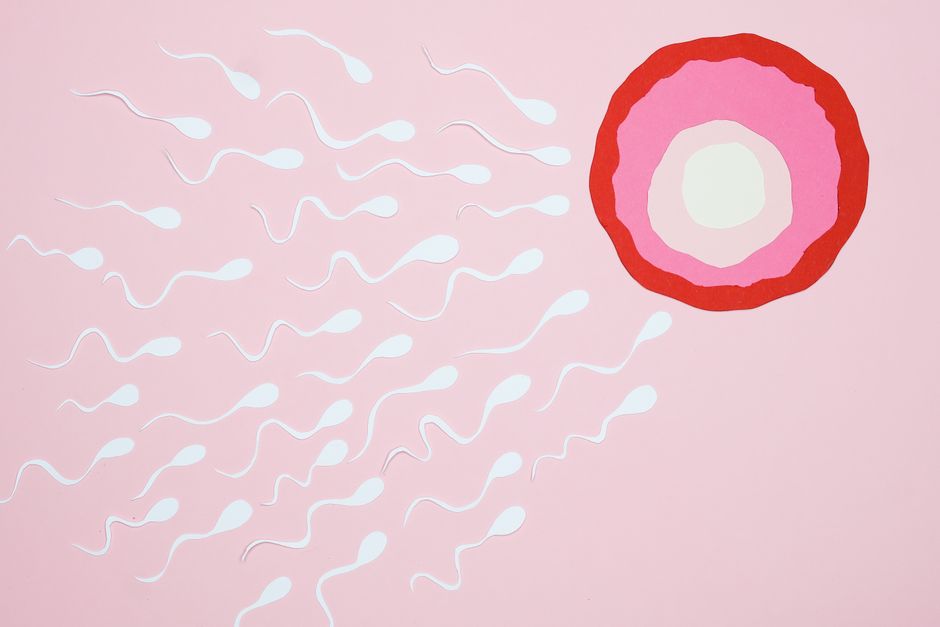
Ovulation is the release of a mature egg from an ovary, and it happens once per menstrual cycle in most cycling women. You can tell it is near by tracking physical signs like cervical mucus changes, basal body temperature shifts, and sometimes mild pelvic pain. No single sign is perfectly reliable on its own, so combining two or three methods gives a clearer picture.
What Actually Happens During Ovulation?
Ovulation is the midpoint event of the menstrual cycle. An egg matures inside a fluid-filled sac called a follicle in one of the ovaries. When the egg is ready, the follicle ruptures and releases it into the fallopian tube.
The whole process is driven by hormones. Estrogen rises as the follicle grows. When estrogen reaches a certain level, it triggers a sharp surge in luteinizing hormone, or LH, from the pituitary gland. That LH surge causes the follicle to break open and release the egg, usually within a day or so.
The egg lives for about 12 to 24 hours after release. Sperm can survive in the reproductive tract for up to five days under favorable conditions. That window is why the days leading up to ovulation matter more for conception than the day of ovulation itself.
After the egg is released, the ruptured follicle becomes a structure called the corpus luteum. It produces progesterone, which prepares the uterine lining for a possible pregnancy. If no pregnancy occurs, the corpus luteum breaks down, progesterone drops, and menstruation begins.
How To Know When A Girl Is Ovulating: The Main Signs
The most useful signs come from changes your body makes in response to rising estrogen and the LH surge. Tracking more than one gives you a much better estimate than relying on any single clue.
Cervical mucus changes. As estrogen rises, the cervix produces more mucus that becomes clear, slippery, and stretchy, similar to raw egg white. This type of mucus helps sperm survive and move. After ovulation, progesterone makes mucus thicker and stickier again. Many women notice the wettest, most stretchy mucus right before ovulation.
Basal body temperature shift. Basal body temperature is your resting temperature first thing in the morning, before you get out of bed. After ovulation, progesterone causes a small rise, typically a few tenths of a degree Fahrenheit. The catch is that this shift confirms ovulation has already happened. It does not predict it in advance. You need to track daily for several cycles to see your pattern.
LH surge detected by urine test. Ovulation predictor kits measure luteinizing hormone in urine. A positive result usually means ovulation is likely within the next day or two. These kits are considered one of the more direct at-home methods because they measure the hormone that triggers ovulation.
Mittelschmerz. Some women feel a mild ache or twinge on one side of the lower abdomen around ovulation. The name comes from German words meaning “middle pain.” It is not dangerous, but not everyone experiences it, and it can be confused with other causes of pelvic pain.
Can You Track Ovulation Without a Test Kit?
Yes. Calendar tracking, mucus observation, and temperature charting require no products. Each has limits, but together they can work reasonably well.
- Calendar method. Count days from the start of one period to the next. Ovulation typically occurs about 14 days before the next period starts, not necessarily on day 14 of the cycle. This matters because cycle length varies widely between women.
- Mucus tracking. Check daily by noting color, texture, and stretchiness. The most fertile pattern is clear, wet, and stretchy.
- Temperature charting. Take your temperature at the same time every morning before getting up. Look for a sustained rise across several days.
The calendar method alone is unreliable for women with irregular cycles. Stress, illness, travel, and sleep changes can all shift ovulation timing. That is why combining methods is more accurate than counting days alone.





Which Ovulation Signs Are Most Reliable?
No sign is perfect, but some are better supported than others. Here is how the common methods compare.
| Method | What It Detects | Predicts or Confirms | Reliability |
|---|---|---|---|
| Urine LH test | Luteinizing hormone surge | Predicts (1-2 days ahead) | Reasonably reliable for most users |
| Cervical mucus | Estrogen effect on cervix | Predicts fertile window | Good with practice |
| Basal body temperature | Progesterone rise | Confirms after the fact | Reliable for confirming, not predicting |
| Calendar counting | Cycle length pattern | Estimates | Less reliable, especially with irregular cycles |
| Mittelschmerz | Pelvic sensation | Possible indicator | Inconsistent, not everyone feels it |
For women trying to conceive, combining an LH test with mucus tracking tends to give the best advance warning. Temperature charting is more useful for confirming that ovulation occurred, which can be helpful if you are trying to understand your cycle over time.
What Can Throw Off Ovulation Signs?
Several things can make ovulation harder to detect or shift its timing.
Irregular cycles. Conditions like polycystic ovary syndrome, thyroid disorders, and significant weight changes can disrupt ovulation. If cycles are consistently irregular, at-home tracking may be less useful and a doctor can help investigate why.
Illness and stress. Fever raises body temperature and can mask the post-ovulation shift. Physical or emotional stress can delay ovulation or prevent it in a given cycle.
Sleep disruption. Basal body temperature tracking depends on consistent sleep and wake times. Shift work or poor sleep can make the pattern hard to read.
Medications. Some medications affect hormone levels or temperature. If you are on hormonal birth control, you generally do not ovulate, so these signs do not apply in the usual way. Fertility medications can change how and when ovulation happens.
If you have been tracking for several months and see no clear pattern, that is worth discussing with a healthcare provider. It may point to an underlying issue that is treatable.
When Should You See a Doctor About Ovulation?
Talk to a healthcare provider if your cycles are consistently shorter than 21 days or longer than 35 days, if you go several months without a period, or if you have been trying to conceive for a year without success, or six months if you are over 35.
These timelines are general guidance from fertility organizations, and your situation may differ. A provider can run tests to check hormone levels, confirm whether ovulation is happening, and look for causes if it is not.
Tracking ovulation is a tool, not a diagnosis. It can tell you a lot about your cycle, but it cannot explain why something is off. That is what medical evaluation is for.
Frequently Asked Questions
How many days after your period do you ovulate?
Ovulation typically happens about 14 days before your next period starts, not a fixed number of days after your period. For a 28-day cycle that falls around day 14, but shorter or longer cycles shift the timing.
Can you ovulate without noticing any signs?
Yes. Many women ovulate without feeling pain or noticing clear mucus changes, especially if they are not tracking closely. Using an LH test or temperature charting can reveal ovulation even when physical signs are subtle.
Does clear, stretchy discharge always mean you are ovulating?
Clear, stretchy mucus usually signals rising estrogen and a fertile window, but it does not guarantee ovulation will occur. It is a helpful clue, not proof, so pairing it with another method gives a more reliable answer.
How accurate are ovulation predictor kits?
Urine LH kits detect the hormone surge that triggers ovulation in most cases, making them one of the more direct at-home methods. They can miss the surge in some women, particularly those with PCOS or irregular cycles.
