
If you think you might have scoliosis, the only way to know for sure is to see a doctor. But you can do a simple at-home check first. Stand up straight with your back to a mirror. Look for one shoulder blade that sticks out more than the other. Then bend forward at the waist and let your arms hang down. From behind, see if one side of your rib cage sticks up higher than the other. This is called the Adam’s Forward Bend Test. It is not a diagnosis, but it can tell you if you should see a doctor.
What Is Scoliosis and Who Gets It?
Scoliosis is a sideways curve in your spine. Instead of a straight line down your back, the spine curves like an “S” or a “C.” Most curves are mild. About 3% of people have scoliosis, according to the American Association of Neurological Surgeons. That is roughly 6 to 9 million people in the United States.
It can happen at any age. The most common type is adolescent idiopathic scoliosis. It shows up between ages 10 and 18. “Idiopathic” means doctors do not know what causes it. In adults, scoliosis can happen from aging or from untreated childhood curves. It can also come from other conditions like osteoporosis or spinal injuries.
Girls are more likely than boys to have curves that get worse over time. The Scoliosis Research Society reports that girls need treatment for scoliosis about eight times more often than boys. That does not mean boys do not get it. It just means their curves are less likely to progress.
How To Know If U Have Scoliosis: The Step-by-Step At-Home Check
This is the most common question people search. Here is how to check yourself or your child at home. You do not need any special equipment. Just a mirror and good lighting.
Step 1: Stand and Look in a Mirror. Stand with your back to a mirror. Look at your shoulders. Is one higher than the other? Look at your waist. Does one side look more curved or have a bigger gap between your arm and your body? Look at your head. Does it look centered over your hips, or does it lean to one side?
Step 2: Check Your Shoulder Blades. Look at your shoulder blades. Does one stick out more than the other? This is a common sign of scoliosis. The spine curve can push one shoulder blade backward.
Step 3: Do the Forward Bend Test. Bend forward at your waist. Let your arms hang loose. Have someone look at your back from behind. Or use two mirrors if you are alone. Look for one side of your rib cage that sticks up higher than the other. This is called a “rib hump.” It happens because the spine rotation pushes the ribs out on one side.
Step 4: Check Your Hips. Stand straight and put your hands on your hips. Look at the mirror. Is one hip higher than the other? An uneven hip line is another possible sign.
If you notice any of these signs, it does not mean you have scoliosis. But it does mean you should see a doctor. A primary care doctor or a pediatrician can do a screening. They may refer you to an orthopedic specialist for X-rays.
What Does the Forward Bend Test Actually Tell You?
The Adam’s Forward Bend Test is the standard school screening test. It has been used for decades. But it is not perfect. Some studies suggest it misses about 15% of scoliosis curves. It also flags many kids who do not actually have scoliosis.
Research published in the Journal of Bone and Joint Surgery found that the forward bend test has a sensitivity of about 84% for curves over 20 degrees. That means it catches 84 out of 100 real cases. The test is less reliable for smaller curves. Many kids with mild curves pass the test and are fine.
The test works best when done by someone trained. A parent doing it at home may miss subtle signs. But it is still worth doing. If you see a rib hump, that is a strong signal. The rib hump happens because of spine rotation, which is a key feature of scoliosis. A simple curve without rotation is not true scoliosis.
One thing most people do not know: the forward bend test can give false positives if you are not standing straight. If you twist your hips or lean to one side, it can look like a rib hump when there is none. That is why it is best to do the test in front of a mirror and check your position first.





When Should You See a Doctor for Scoliosis?
You should see a doctor if you notice any of the signs from the at-home check. But some signs need more urgent attention. If you have back pain that does not go away, that is a reason to see a doctor. Scoliosis itself rarely causes pain in children. In adults, it can cause pain from muscle strain or joint problems.
Other reasons to see a doctor include:
- One shoulder or hip is clearly higher than the other
- Clothes do not fit right, like one pant leg is longer
- You feel like you are leaning to one side
- You have trouble breathing or feel short of breath (rare, but serious)
- You have numbness or weakness in your legs
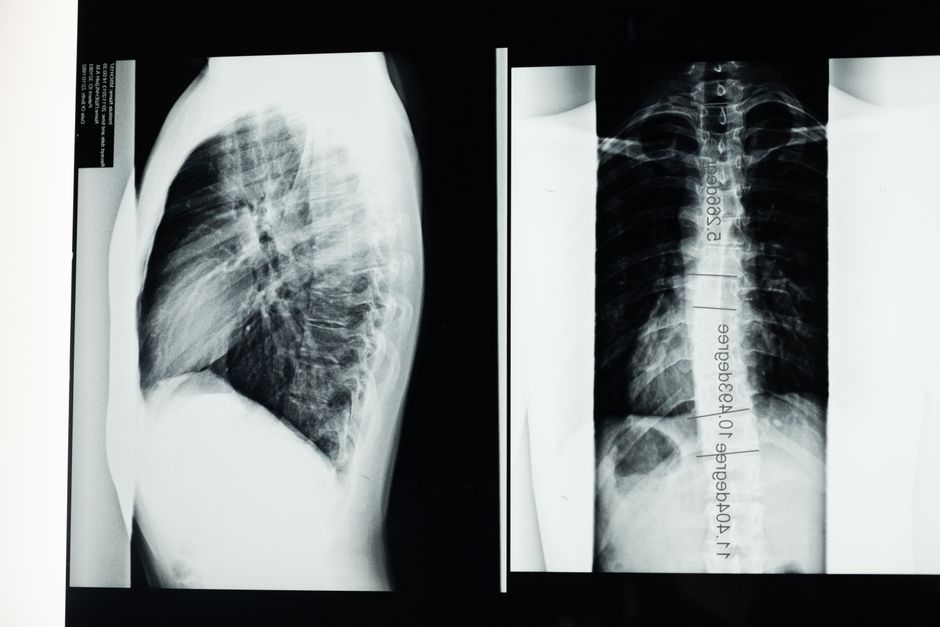
The doctor will do a physical exam. They will check your spine and do the forward bend test. If they see something concerning, they will order X-rays. X-rays are the only way to confirm scoliosis. The X-ray shows the exact curve angle. This is measured in degrees using the Cobb method. A curve of 10 degrees or more is considered scoliosis. Curves under 20 degrees are usually just watched. Curves over 25 degrees may need a brace. Curves over 40 to 50 degrees may need surgery.
Do not wait if you see a clear rib hump or if one shoulder is very uneven. Early detection matters. Curves can get worse during growth spurts. The faster you catch it, the more options you have.
What Happens After a Scoliosis Diagnosis?
If you or your child is diagnosed with scoliosis, the next step depends on the curve size and age. For children with curves under 20 degrees, the standard approach is observation. The doctor will check every 4 to 6 months during growth. They will take X-rays to see if the curve is getting worse. Most curves do not get worse. Only about 10% of kids with scoliosis need treatment.
For curves between 25 and 40 degrees in a growing child, bracing is the main treatment. The brace does not fix the curve. It stops it from getting worse. The Scoliosis Research Society says bracing works best when worn 16 to 20 hours a day. The more hours you wear it, the better it works. A study published in the New England Journal of Medicine in 2013 found that bracing reduced the need for surgery by about 70% when worn consistently.
For curves over 40 to 50 degrees, surgery may be an option. The most common surgery is spinal fusion. The surgeon straightens the curve and fuses the bones together so they heal as one solid piece. This is a major surgery. Recovery takes months. But it can stop the curve from getting worse and improve posture.
For adults, treatment focuses on managing pain and keeping function. Physical therapy can help strengthen the muscles around the spine. Some adults benefit from chiropractic care or acupuncture, though evidence for these is mixed. Surgery is less common in adults and is usually reserved for curves over 50 degrees or curves that cause nerve problems.
Common Misconceptions About Scoliosis
There is a lot of bad information online about scoliosis. Here are the most common myths and what the evidence actually shows.
Myth: Scoliosis is caused by bad posture. This is false. Scoliosis is not caused by slouching, carrying a heavy backpack, or sleeping in a weird position. The most common type has no known cause. Blaming posture adds guilt and does not help.
Myth: Scoliosis always causes pain. Not true. Most kids with scoliosis have no pain at all. Pain is more common in adults. If a child with scoliosis has back pain, doctors look for other causes first.
Myth: Exercise can fix scoliosis. Exercise is good for overall health and can strengthen back muscles. But no exercise can straighten a scoliosis curve. The Schroth method, a physical therapy approach, can improve posture and reduce pain in some people. But it does not change the curve angle. A 2019 review in the European Spine Journal found that Schroth exercises improved quality of life but did not reduce curve size.
Myth: Chiropractic adjustments can cure scoliosis. There is no clinical evidence that chiropractic manipulation can reduce scoliosis curves. Some people report less pain after chiropractic care. But the curve itself does not change. The American Chiropractic Association itself says chiropractic is not a cure for scoliosis.
| Scoliosis Curve Size | Typical Treatment | What to Expect |
|---|---|---|
| Under 20 degrees | Observation only | Check every 4-6 months during growth |
| 20-25 degrees | Observation or bracing | Depends on age and risk of progression |
| 25-40 degrees | Bracing | Wear 16-20 hours a day during growth |
| Over 40 degrees | Surgery may be considered | Spinal fusion is the most common option |
| Over 50 degrees (adults) | Surgery more likely | Higher risk of progression and symptoms |
What to Avoid When Checking for Scoliosis
There are a few things you should not do. First, do not try to diagnose yourself or your child based only on the at-home test. The forward bend test is a screening tool, not a diagnosis. Many people have asymmetry that is not scoliosis. One shoulder being slightly higher can be normal.
Second, do not panic if you see something uneven. Most scoliosis curves are mild. They do not cause health problems. They do not need treatment. They just need to be watched. The vast majority of people with scoliosis live normal, active lives.
Third, do not rely on online posture apps or smartphone tools. There are apps that claim to measure spine curves from photos. They are not reliable. The Scoliosis Research Society warns against using them for diagnosis. Only X-rays can measure a curve accurately.
Fourth, do not ignore clear signs because you hope they will go away. Scoliosis does not fix itself. Curves can get worse during growth spurts. If you see a rib hump or a very uneven shoulder, get it checked. Early action gives you more options.
Finally, do not fall for treatments that promise a “cure.” There is no pill, supplement, or device that can reverse scoliosis. If a product sounds too good to be true, it is. The FDA has not approved any drug for scoliosis. The only proven treatments are observation, bracing, and surgery.
Frequently Asked Questions
Can scoliosis go away on its own?
No. Scoliosis does not go away without treatment. Curves can stay the same or get worse, especially during growth.
Is it too late to treat scoliosis after 18?
No. Adults can still get treatment. Options include physical therapy, pain management, and in some cases surgery.
Does scoliosis show up on an X-ray every time?
Yes. X-rays are the standard way to diagnose scoliosis. They show the exact curve angle and location.
Can you have scoliosis and not know it?
Yes. Many people have mild scoliosis and never notice. It is often found during school screenings or routine checkups.
