
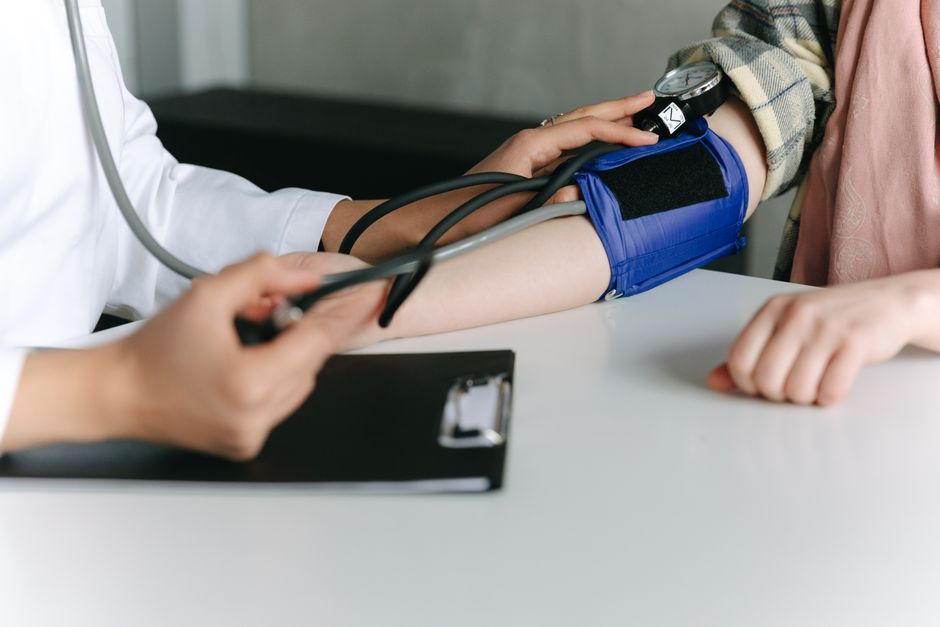
Checking your blood pressure at home is the most reliable way to know if you have hypertension without a doctor’s visit. You need a validated upper-arm cuff monitor and a consistent routine of taking readings at the same times each day. A single high reading does not mean you have hypertension, but a pattern of readings at or above 130/80 mmHg over several days strongly suggests it.
What Is the Right Way to Take Your Blood Pressure at Home?
Most people do not take their blood pressure correctly at home. Small mistakes can make your numbers 10 to 15 points higher than they really are. That difference can make you think you have hypertension when you do not.
Sit in a chair with your back supported and both feet flat on the floor. Rest your arm on a table so the cuff is at heart level. Do not cross your legs. Do not talk during the reading. Empty your bladder first because a full bladder can raise your systolic number by 10 points.
Wait at least 30 minutes after caffeine, exercise, or smoking. Take two readings one minute apart and average them. The American Heart Association recommends doing this morning and evening for at least three days before you trust the results.
What Do the Numbers Actually Mean?
Blood pressure readings have two numbers. The top number is systolic pressure — the force when your heart beats. The bottom number is diastolic pressure — the force when your heart rests between beats.
Normal blood pressure is below 120/80 mmHg. Elevated is 120-129 systolic with diastolic below 80. Stage 1 hypertension starts at 130/80. Stage 2 is 140/90 or higher. A hypertensive crisis is 180/120 or above and requires emergency care.
One high reading does not mean you have hypertension. Blood pressure changes throughout the day. It is usually lower during sleep and higher during stress or activity. The diagnosis depends on the average of many readings taken over time.
How To Know If You Have Hypertension At Home Without Symptoms
This is the part that surprises most people. Hypertension rarely causes symptoms until it is dangerously high. The idea that you can feel your blood pressure rising is mostly a myth.
Some people report headaches or nosebleeds with very high readings, but research published in the American Journal of Hypertension found that these symptoms are not reliable indicators. Most people with stage 1 or stage 2 hypertension feel completely normal.
You cannot rely on how you feel. That is why home monitoring is so important. The only way to know your blood pressure is to measure it. Many people discover they have hypertension only after a routine checkup or a serious event like a stroke.
Relying on symptoms is dangerous. By the time symptoms appear, damage to your arteries may already be happening. Consistent home monitoring catches it earlier.




What Equipment Do You Need for Accurate Home Monitoring?
Use an automatic blood pressure monitor with an upper arm cuff. Wrist monitors are convenient but less reliable. Finger monitors are not accurate enough for diagnosis. The device should be validated by a recognized organization like the Association for the Advancement of Medical Instrumentation.
The cuff size matters more than most people realize. A cuff that is too small will give falsely high readings. A cuff that is too large will give falsely low readings. Measure the circumference of your upper arm and buy a cuff that fits. Most adults need a standard cuff, but larger and smaller sizes are available.
Replace the monitor every two years or if readings seem inconsistent. Batteries lose power over time and affect accuracy. If the monitor has been dropped or exposed to extreme temperatures, check it against a clinic reading.
What Can Make Your Home Readings Inaccurate?
White coat hypertension is real. Some people have high readings in a clinic but normal readings at home. The opposite also happens — masked hypertension — where readings are normal in clinic but high at home. This is one reason home monitoring is essential.
Common mistakes that inflate readings include:
- Taking readings with a full bladder — adds up to 10 points
- Crossing your legs — adds 2 to 8 points
- Talking during the reading — adds 10 points
- Not resting for five minutes before the first reading
- Using a cuff that is the wrong size
Even the time of day matters. Blood pressure is typically highest in the morning after waking and lowest during sleep. The CDC recommends taking readings at the same times each day for consistency.
If your home readings are consistently different from your clinic readings by more than 5 points, bring your monitor to your next appointment. The clinic can check its accuracy against their equipment.
When Should You See a Doctor Based on Home Readings?
If your average home reading over several days is 130/80 or higher, you should schedule an appointment. Do not wait for symptoms. The doctor will confirm the diagnosis with additional readings and may order blood tests or an EKG.
If your reading is 180/120 or higher, this is a hypertensive crisis. Do not wait for an appointment. Go to the emergency room or call 911. This can be a sign of organ damage and requires immediate medical attention.
If your readings are between 120/80 and 129/79, you are in the elevated range. This does not require medication for most people, but it is a warning sign. Lifestyle changes like reducing sodium, increasing exercise, and managing stress can bring it down.
Home monitoring is not a replacement for regular doctor visits. It is a tool for tracking between visits and catching problems early. The combination of home readings and professional care gives the most complete picture.
| Home Reading (mmHg) | Category | What to Do |
|---|---|---|
| Below 120/80 | Normal | Maintain healthy habits |
| 120-129 / Below 80 | Elevated | Make lifestyle changes, monitor |
| 130-139 / 80-89 | Stage 1 Hypertension | See doctor within a month |
| 140-179 / 90-119 | Stage 2 Hypertension | See doctor within a week |
| 180/120 or higher | Hypertensive Crisis | Go to ER immediately |
Common Misconceptions About Home Blood Pressure Monitoring
One myth is that you need to take your blood pressure every day for the rest of your life once you start. That is not true. Once your doctor confirms your numbers are stable, checking once or twice a week is usually enough. Daily monitoring is only needed during initial diagnosis or after medication changes.
Another myth is that home monitors are not as accurate as clinic equipment. Research from the Journal of Clinical Hypertension shows that validated home monitors are just as accurate when used correctly. The problem is usually user error, not the device itself.
Some people believe that taking multiple readings in a row gives a better average. Actually, taking readings too close together can cause inaccurate results because the blood vessels need time to return to normal. Always wait at least one minute between readings.
A final misconception is that anxiety about taking your own blood pressure makes the readings useless. This is called white coat syndrome at home. It is real, but it usually goes away after a few days of consistent monitoring. If it persists, your doctor can help you find strategies to stay calm during readings.
Frequently Asked Questions
Can I use a wrist blood pressure monitor at home?
Wrist monitors are less reliable than upper arm cuffs and are not recommended for diagnosis. If you must use one, keep your wrist at heart level and follow the instructions exactly.
How many days should I take readings before calling my doctor?
Take readings morning and evening for at least three days before reporting results. A single day of high readings could be a fluke.
Does home monitoring replace annual checkups?
No. Home monitoring tracks changes between visits but cannot replace a full medical evaluation that includes blood tests and physical exams.
What if my home readings are normal but I feel dizzy or have headaches?
These symptoms could be caused by something other than blood pressure. See your doctor for a full evaluation even if your numbers look fine.
