
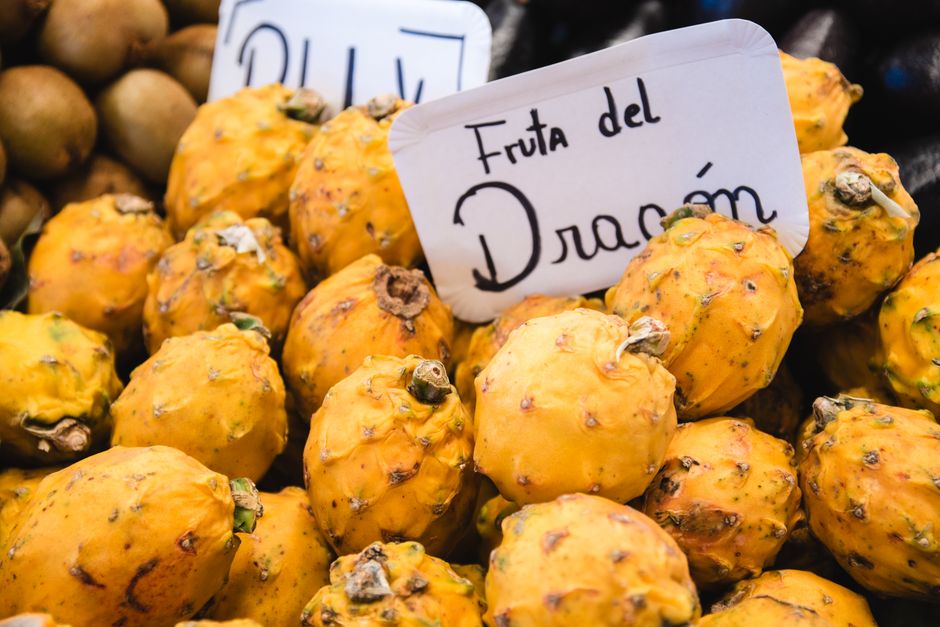
Dragon fruit gives you almost no warning when it’s ready. You can’t smell it from across the kitchen, and it doesn’t soften the way a peach or avocado does. The most reliable sign is how the skin feels under light thumb pressure — a ripe dragon fruit yields slightly, like a ripe kiwi, while an unripe one stays firm and a past-ripe one feels mushy or leaves a dent that doesn’t spring back. Color is the second clue: red-skinned varieties deepen to a full, even red, and yellow varieties turn a bright, uniform yellow. If the skin is still green in patches, wait.
What Does a Ripe Dragon Fruit Look and Feel Like?
A ripe dragon fruit has skin that gives just a little when you press it with your thumb. Not soft. Not squishy. Just a slight yield, the same way a ripe kiwi or a ripe mango feels. If your thumb sinks in and leaves a mark, it’s overripe. If the fruit feels rock-hard, it isn’t ready.
Color matters too, and it depends on the variety. The most common type sold in US stores has bright pink or red skin with green-tipped scales. When those scales start to dry out and turn brown or yellow at the tips, that’s a normal sign of ripeness — not spoilage. The skin itself should be an even, deep color with no large green patches.
Yellow dragon fruit, sometimes called yellow pitaya, ripens to a uniform golden yellow. If you see green anywhere on the skin, it’s underripe.
One thing that trips people up: a few brown spots or dried scale tips are normal on a ripe fruit. Widespread soft brown patches, mold, or a sour smell are not. Those mean the fruit is past its prime.
How To Know If Dragon Fruit Is Ripe Before You Cut It
You can judge ripeness without cutting the fruit open. Here’s what to check, in order:
- Press test: Gently squeeze the fruit with your thumb and fingers. A ripe one gives slightly. A firm one needs more time. A mushy one is overripe.
- Color check: Look for even, deep color across the skin. Green patches mean underripe.
- Scale tips: Brown, dried, or slightly yellowed tips on the scales are normal for a ripe fruit. Bright green, plump scales usually mean it’s not ready.
- Weight: A ripe dragon fruit feels heavy for its size. Light, hollow-feeling fruit tends to be dry inside.
- Smell: A ripe fruit has a faint, mild sweetness near the stem end. A strong or sour smell means it’s past its best.
The press test is the one to trust most. Color and scale appearance vary by variety and growing conditions, but texture is consistent.
Why Color Alone Can Mislead You
Dragon fruit is a tropical cactus fruit, and it ripens differently from stone fruit or berries. It doesn’t go through a dramatic color shift the way a banana does. Many fruits are picked before they’re fully ripe so they survive shipping, and they finish ripening on the shelf.
That means a fruit can look fully colored and still be underripe inside. The flesh may be firm and bland rather than sweet and juicy. This is why the press test matters more than appearance.
There’s also a variety issue. Some dragon fruits have red or magenta flesh, others white. The flesh color is set by the variety and doesn’t tell you anything about ripeness. A white-fleshed fruit and a red-fleshed fruit can both be perfectly ripe or both be underripe.





How Long Does Dragon Fruit Take to Ripen at Home?
If you bought a firm dragon fruit, it usually ripens within a few days at room temperature. The exact time depends on how mature it was when picked, which you can’t know for certain.
Leave it on the counter, away from direct sun. Check it once a day with the press test. Once it yields slightly, it’s ready to eat or move to the refrigerator.
You can speed things up by placing it in a paper bag. Some fruits release ethylene gas, a natural plant hormone that speeds ripening, and trapping that gas can help. Dragon fruit is not a heavy ethylene producer, so this may help only modestly. It’s a reasonable thing to try, not a guaranteed shortcut.
Once ripe, a whole dragon fruit keeps in the refrigerator for several days. Cut fruit should be covered and eaten within a day or two, because the flesh dries out and loses texture quickly.
What About the Inside? Signs of a Good Dragon Fruit
When you cut it open, a ripe dragon fruit shows firm, moist flesh that holds its shape. It should look slightly glossy, not dry or cottony. The small black seeds are edible and give a light crunch.
Underripe flesh is firm and bland, sometimes a little tart. Overripe flesh turns soft, watery, and may look translucent or brownish in spots. If it smells fermented, don’t eat it.
A ripe dragon fruit tastes mildly sweet, similar to a cross between kiwi and pear. It’s not a strongly flavored fruit even at peak ripeness. If yours tastes like almost nothing, it was likely picked too early. That’s a ripeness problem, not a sign you did something wrong.
Common Mistakes When Checking Ripeness
The biggest mistake is judging by color alone. A deeply colored fruit can still be firm and underripe inside. Color tells you the variety and roughly how far along the fruit is, not whether it’s ready to eat right now.
The second mistake is pressing too hard. Dragon fruit skin is thin, and a firm squeeze can bruise the flesh underneath. Use light pressure, not a firm grip.
The third is assuming brown scale tips mean the fruit is spoiled. On many varieties, the scale tips naturally dry and brown as the fruit ripens. That’s expected. Soft, spreading brown patches on the skin are different and do signal spoilage.
Finally, don’t rely on smell as your main test. Dragon fruit has a very mild aroma even when ripe, so a faint smell tells you little. Texture is the better guide.
Quick Comparison: Ripe vs. Unripe vs. Overripe
| Sign | Unripe | Ripe | Overripe |
|---|---|---|---|
| Skin feel | Hard, no give | Gives slightly | Mushy, dents stay |
| Skin color | Green patches present | Even, deep color | Dull, spotted |
| Scale tips | Bright green, plump | Dried, brown or yellow | Withered, dark |
| Smell | None | Faint sweetness | Strong or sour |
| Flesh | Firm, bland | Moist, mildly sweet | Watery, translucent |
Does Dragon Fruit Ripen After Picking?
Dragon fruit does continue to soften and change slightly after harvest, but it doesn’t improve as dramatically as a banana or avocado. A fruit picked very early will soften somewhat but may never develop full sweetness.
This is why the fruit you buy is often close to its final quality. If it’s bland when you cut it, more time on the counter may help texture a little, but it won’t transform the flavor. The best you can do is buy fruit that already feels slightly yielding, or let a firm one sit a few days and hope it was picked mature.
The takeaway is simple. Trust the press test first, use color and scale appearance as supporting clues, and don’t expect a rock-hard fruit to become exceptional. A ripe dragon fruit is mild and pleasant, not intensely sweet — and that’s normal for this fruit.
Frequently Asked Questions
How do I know if dragon fruit is ripe?
Press it gently with your thumb — a ripe dragon fruit gives slightly, like a ripe kiwi. It should also have even, deep color and no large green patches.
Can you eat dragon fruit if it’s not ripe?
Yes, unripe dragon fruit is safe to eat, but the flesh will be firm and bland rather than sweet. It won’t harm you, it just won’t taste like much.
How long does dragon fruit take to ripen on the counter?
A firm dragon fruit usually softens within a few days at room temperature. Check it daily with a light press test and refrigerate it once it yields slightly.
Why does my dragon fruit taste bland?
It was likely picked before it was fully mature, which limits how much sweetness it can develop. Dragon fruit is also a mild-flavored fruit even at peak ripeness.
