
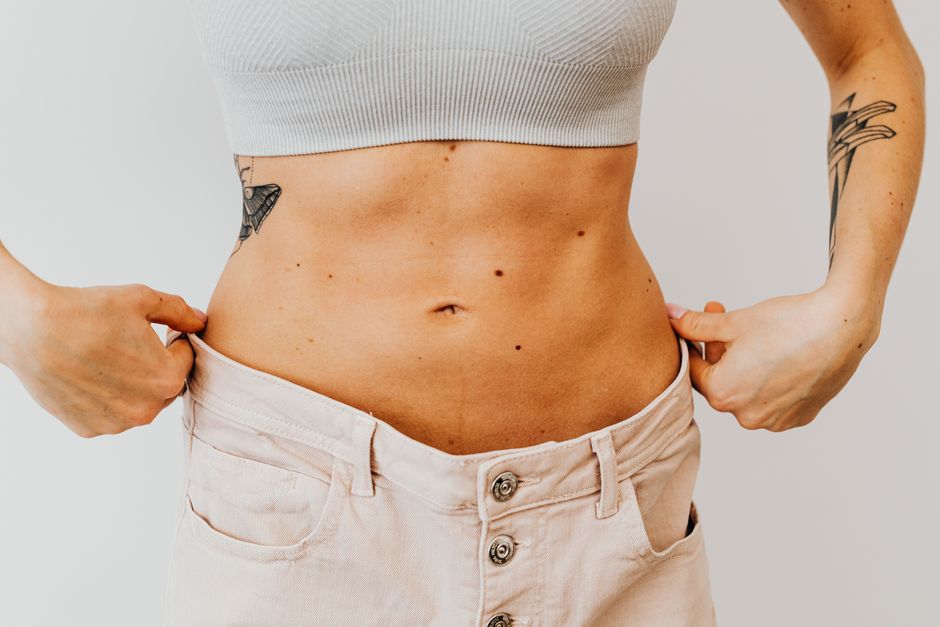
You cannot target fat loss to one spot on your body. That includes the lower belly. No exercise, food, or supplement burns fat only from the area below your navel. The lower belly is often the last place fat comes off and the first place it shows up, which is why it feels stubborn. What you can do is lower your total body fat, reduce bloating that makes the lower belly look larger, and strengthen the muscles underneath. That is the honest starting point, and it works.
Why Does Fat Collect on the Bottom of the Belly?
Where your body stores fat is largely genetic and hormonal. You do not choose it, and you cannot override it with a specific workout.
Fat cells in the lower abdomen and hips tend to be more responsive to insulin and to the hormone estrogen. This is why women often carry more fat in the lower belly and hips, while men more often carry it around the waist and upper abdomen. After menopause, when estrogen levels fall, many women notice fat shifting toward the middle of the body. These patterns are well documented and are not a sign that you are doing something wrong.
There are two main types of belly fat:
- Subcutaneous fat sits just under the skin. It is the soft fat you can pinch. It is the main type in the lower belly.
- Visceral fat sits deep inside, around the organs. It is linked to higher risk of heart disease and type 2 diabetes. You cannot pinch it.
Visceral fat matters more for health, but subcutaneous fat is what most people see and want to change. Both respond to the same general approach: a modest calorie deficit and regular movement.
Can You Spot-Reduce Lower Belly Fat With Exercise?
No. Spot reduction does not work. This is one of the most studied questions in exercise science, and the answer has been consistent for decades.
Researchers have tested this directly. In one classic study, participants trained only one leg for several weeks. They lost fat from the trained leg and the untrained leg at roughly the same rate. The body pulls energy from fat stores all over, not from the muscle you happen to be working. Doing 500 crunches does not burn the fat sitting on top of your abs. It strengthens the muscle underneath, which is a different thing.
That does not make core work useless. A stronger core improves posture and can make your midsection look flatter. But it will not remove the layer of fat covering it. Fat loss comes from your overall energy balance, not from the exercise you aim at one spot.
How To Lose Bottom Belly Fat: What Actually Works
The method is not complicated, even if it is not easy. You need to eat slightly fewer calories than you burn, move more, and do it consistently for months, not days.
Here is what the evidence supports:
- A modest calorie deficit. Aim to lose roughly 0.5 to 1 pound per week. Faster loss is harder to sustain and often means losing muscle along with fat. A slow, steady deficit is the approach most likely to keep fat off.
- Enough protein. Protein helps preserve muscle while you lose fat and keeps you full. Good sources include eggs, poultry, fish, beans, lentils, Greek yogurt, and tofu.
- Strength training. Lifting weights or doing bodyweight resistance work two or more times a week helps you hold onto muscle. More muscle means a slightly higher resting metabolism.
- Regular aerobic activity. Walking, cycling, swimming, or any activity that raises your heart rate adds to your daily calorie burn. Brisk walking is underrated and easy to keep up.
- Sleep and stress control. Short sleep and ongoing stress are linked to higher levels of the hormone cortisol, which is associated with more abdominal fat storage. This link is real, though the exact size of the effect varies between people.
No single food burns belly fat. No supplement has been shown to remove lower belly fat in well-controlled human trials. If a product claims to target belly fat specifically, that claim is not supported by the evidence.





Could Your Lower Belly Be Bloating, Not Fat?
Sometimes the lower belly looks larger than it is because of bloating or posture, not fat. This is worth checking before you assume you need to lose weight.
Bloating is a feeling of fullness or swelling in the abdomen. It can come from gas, constipation, certain foods, hormonal changes, or eating quickly. It often changes through the day. Fat does not. If your lower belly is flat in the morning and larger by evening, bloating may be part of what you are seeing.
Common triggers include:
- Carbonated drinks
- High-sodium meals, which cause water retention
- Certain fibers and sugars that ferment in the gut
- Eating fast or drinking through a straw, which pulls in air
Posture matters too. A forward-tilted pelvis and a weak lower back can push the belly outward, making it look bigger than it is. If bloating is frequent, painful, or comes with weight loss, blood in your stool, or vomiting, see a doctor. Those symptoms need a real evaluation, not a diet.
Do You Need to Count Calories or Cut Carbs?
You do not have to count calories, and you do not have to cut carbs. Both can work. Neither is required.
Weight loss comes down to energy balance. If you eat fewer calories than you burn, you lose fat, regardless of whether those calories came from carbs, fat, or protein. Low-carb diets often produce faster early weight loss, but much of that is water. Over a year or more, most diets produce similar results when people stick to them. The best plan is the one you can actually keep doing.
If counting feels obsessive, try simpler changes. Fill half your plate with vegetables. Eat protein at every meal. Cut back on sugary drinks, which are easy to overconsume. These habits lower calories without math.
One clarification worth knowing: the idea that eating late at night causes belly fat is not well supported. Total calories and overall diet quality matter more than the clock. A late meal is not the problem. A late meal that pushes your total intake too high is.
How Long Does It Take to See Results?
Expect weeks, not days. Most people who stay in a consistent calorie deficit start to notice changes in how their clothes fit within a few weeks. Visible changes in the lower belly often take longer, because that area tends to be among the last to slim down.
The order in which you lose fat is set by your genetics, not your effort. For many people, the lower belly and hips are the last areas to change. This can be frustrating, but it does not mean your plan is failing. If the scale or your waist is trending down over a month, you are on track.
Track progress with a tape measure at the waist and how your clothes fit, not just the scale. Weight can stay flat while fat drops and muscle builds. Measurements often tell the truer story.
What Should You Be Careful About?
Be skeptical of anything promising fast, targeted lower belly fat loss. That includes waist trainers, fat-burning creams, detox teas, and “belly fat” supplements. None of these have been shown to remove fat in controlled human studies.
Waist trainers squeeze the midsection and can make you look thinner while worn, but they do not change fat. Some can restrict breathing and put pressure on the ribs and organs if worn tightly or for long periods.
Rapid weight loss through extreme dieting often backfires. It can cause muscle loss, nutrient gaps, and rebound weight gain. If you have a health condition, are pregnant or breastfeeding, or take medication, talk to a doctor before making big changes to how you eat or exercise. No clinical guidelines exist for quick-fix belly fat products, because there is no evidence they work.
Frequently Asked Questions
Can you lose lower belly fat specifically?
No, you cannot target fat loss to the lower belly or any single area. You lose fat from all over your body when you eat fewer calories than you burn, and genetics decide where it comes off first.
What is the fastest way to lose belly fat?
There is no fast, safe shortcut. A modest calorie deficit of about 0.5 to 1 pound of weight loss per week, combined with strength training and regular activity, is the approach most supported by evidence.
Do crunches burn belly fat?
No, crunches strengthen your abdominal muscles but do not burn fat from your belly. Fat loss comes from your overall energy balance, not from exercising one area.
Why is my lower belly fat so hard to lose?
The lower belly is often the last place fat comes off because of genetics and hormones, and it can also look larger due to bloating or posture. Visible change there usually takes longer than in other areas.
