
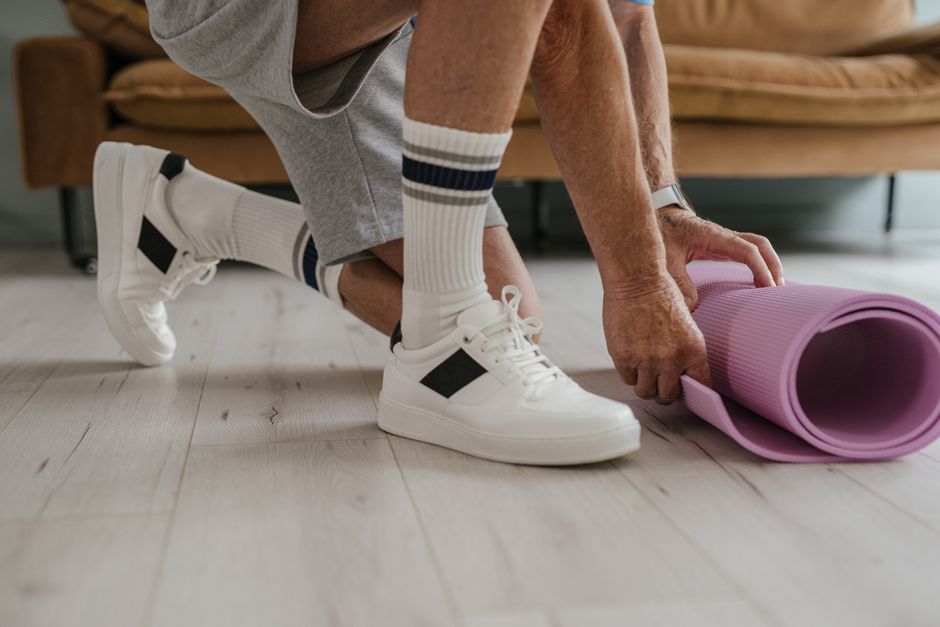
Socks slip off your feet for a few predictable reasons: the sock is too big, the elastic has worn out, the fabric is too smooth to grip your skin or your shoe, or your foot and the sock are sliding together inside a loose shoe. Fixing the problem usually means fixing the fit first, because a sock that matches your foot size and shoe size rarely slides down on its own.
Why Do Socks Slip Down Inside Your Shoes?
A sock stays up through a simple balance of forces. The elastic band grips your ankle or calf. Friction between the sock and your skin, and between the sock and the inside of your shoe, holds the fabric in place. When any one of those forces weakens, the sock migrates downward with every step.
The most common cause is size mismatch. A sock sized for a larger foot has extra fabric that bunches and slides. Elastic that has stretched out or been damaged by heat loses its grip permanently. Some fabrics, especially smooth synthetics and worn cotton, create less friction against skin than a ribbed or textured knit does.
Shoe fit matters too. In a loose shoe, your foot and the sock move together as one unit, and the sock works its way down toward the heel. A shoe that fits snugly around the midfoot holds the sock in place better than a roomy one.
One thing worth knowing: socks are not supposed to stay perfectly still. Some movement of a few millimeters is normal. The problem is when a sock rolls down to the arch or bunches under the heel, which usually points to a fit or elastic issue rather than anything about your feet.
How Do You Choose Socks That Actually Stay Up?
Buy socks in your actual shoe size, not a “one size fits most” range. Sizing charts exist for a reason. A sock labeled for men’s shoe sizes 6 to 12 will fit some feet well and slide off others.
Look at the construction. A few features matter more than brand or price:
- Ribbed or terry-knit fabric creates more friction against skin than a smooth flat knit.
- A wide, reinforced cuff distributes grip over a larger area than a thin elastic band.
- Arch support bands hug the middle of the foot and reduce how much the sock shifts.
- Cotton or cotton-blend socks tend to grip skin better than slick synthetics, though synthetics dry faster and wick moisture.
Fit around the calf or ankle matters as much as fit around the foot. A cuff that is too loose will not grip. A cuff that is too tight can leave marks and feel uncomfortable over a long day.
Does the Way You Put On Socks Matter?
Yes, more than most people realize. A sock that is twisted, half-rolled, or bunched when you pull it on tends to stay that way and slide.
Pull the sock on smoothly from toe to cuff. Smooth out any wrinkles with your hands. Make sure the heel pocket sits on your heel, not on your arch or ankle. A heel pocket in the wrong place means the sock is misaligned and will work its way down.
If you wear two pairs of socks, put the thinner pair on first and the thicker pair over it. This is common in hiking and cold-weather use, and the inner layer helps reduce friction between the outer sock and your skin.




Can Shoe Fit Stop Socks From Slipping?
Shoe fit is one of the most overlooked causes. A shoe that is too loose lets your foot and sock slide as a unit, and the sock ends up bunched at the heel or under the arch.
Lacing matters here. A snug midfoot lacing pattern that holds the middle of your foot steady reduces how much your foot and sock move inside the shoe. If your heel lifts when you walk, the sock is more likely to slip too.
Insoles and heel grips can help if a shoe is slightly too big. They do not fix a sock that is the wrong size. Fix the sock first, then the shoe.
What About Medical Conditions That Affect Foot Swelling?
Swelling in the feet and ankles changes how a sock fits over the course of a day. A sock that fits well in the morning may feel loose by evening, or the reverse. This is common with heart, kidney, and liver conditions, and with some medications.
If your feet or ankles swell noticeably, talk with a clinician about it. Sock fit is a small part of a bigger picture. Compression socks are sometimes recommended for swelling, but the level of compression and how long to wear them should come from a clinician, not from a general article. Compression that is too tight can reduce blood flow and cause harm.
For people with diabetes, foot care deserves extra attention. Poorly fitting socks can rub and cause skin problems that are slow to heal. A clinician can advise on sock type and fit for anyone with reduced sensation in the feet.
Do Sock Garters, Glue, or Other Tricks Work?
Sock garters and sock glue are sold for exactly this problem. Garters use a band or clip to hold the sock up against the calf. Sock glue is a skin-safe adhesive applied to the leg or foot that the sock sticks to.
These products can help in specific situations, such as wearing tall socks with a costume or for a short event. For everyday wear, they are a workaround rather than a fix. The underlying fit problem remains. Some adhesives can irritate sensitive skin, and garters that are too tight can leave marks or reduce circulation.
No clinical evidence supports these products as a long-term solution, and no study confirms they are better than simply wearing a correctly sized sock. They are reasonable to try if fit adjustments have not solved the problem, but they are not a substitute for the right sock.
When Should You Replace Your Socks?
Replace socks when the elastic no longer springs back, when the heel or toe has thinned, or when the cuff leaves deep marks that last after you take them off. A sock that has lost its stretch will not stay up no matter how you put it on.
How long socks last depends on fabric, how often you wear them, and how you wash them. Heat is the main enemy of elastic. Hot water and a hot dryer break down the stretch fibers faster than cool water and air drying. Washing socks inside out in cool water and drying them on low heat or hanging them to dry helps them last longer.
If you have several pairs of the same sock, rotate them. Wearing the same pair every day wears the elastic faster than rotating through several pairs.
Frequently Asked Questions
Why do my socks slide down even when they fit?
The most likely cause is stretched-out elastic or a shoe that is too loose around the midfoot. Check the cuff first — if it no longer springs back when you stretch it, the sock needs replacing.
Do tighter socks stay up better?
Only up to a point. A cuff that is too tight can reduce circulation and leave marks, so the goal is a snug fit that does not pinch, not the tightest sock you can find.
Are compression socks good for everyday wear?
Compression socks are used for specific medical reasons, such as swelling or circulation problems, and the right level of compression should come from a clinician. They are not a general fix for socks that slip.
Does washing socks in hot water make them lose their stretch?
Yes. Heat breaks down the elastic fibers in the cuff over time, which is a common reason socks stop staying up. Cool water and low-heat or air drying help them last longer.
