
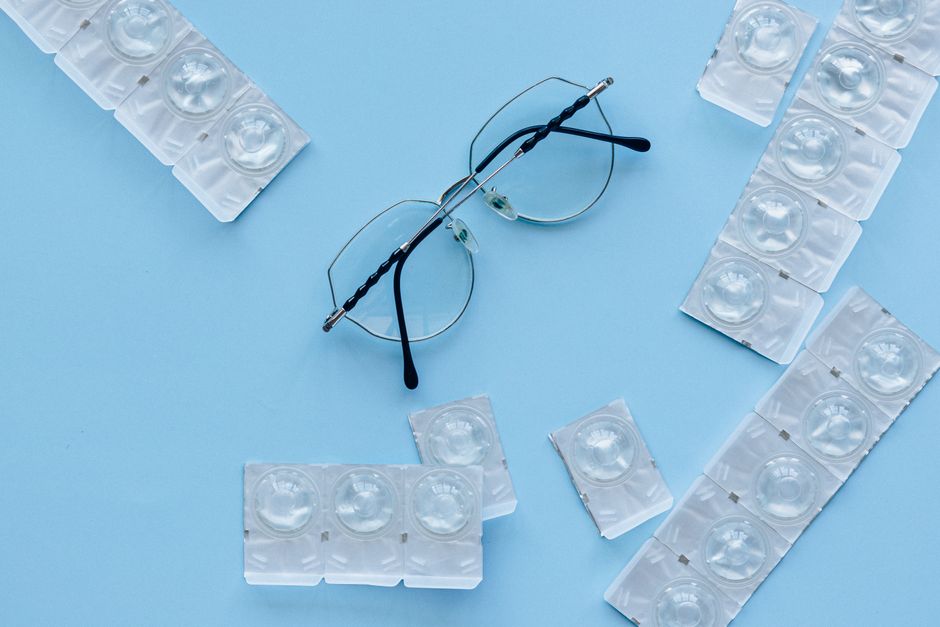
You cannot simply buy contact lenses off a shelf the way you buy reading glasses. In the United States, contact lenses are regulated medical devices, and getting them requires a current prescription from an eye care professional. That means an eye exam, a fitting, and a valid prescription before any lenses can be legally sold to you.
The process is straightforward once you know the steps. This guide walks through how prescriptions work, what a fitting involves, where you can buy lenses, and what to watch out for.
Why Do You Need a Prescription for Contact Lenses?
Contact lenses are classified as medical devices by the U.S. Food and Drug Administration. That classification is not a formality. A lens sits directly on the cornea, the clear front surface of your eye, and it changes how oxygen reaches that tissue.
The cornea has no blood vessels. It gets oxygen mainly from the air and from tears. A lens that fits poorly, or one made from a material with low oxygen permeability, can reduce that supply. Over time this can lead to swelling, new blood vessel growth, and in serious cases, infection or corneal damage.
A prescription confirms that a licensed eye care professional has measured your eyes, checked their health, and selected a lens that fits your specific cornea. The prescription includes more than just your vision correction numbers. It also specifies the lens brand, base curve, and diameter.
Federal law requires sellers to obtain a valid prescription before dispensing contact lenses. That applies to online sellers, warehouse clubs, and any other retailer. Selling lenses without a prescription is illegal.
How Do You Get Contact Lenses Step by Step?
The path from wanting lenses to wearing them usually involves four stages: an eye exam, a contact lens fitting, a trial period, and then your order.
Step 1: Schedule a comprehensive eye exam
This is a full evaluation of your eye health and vision, not just a quick vision test. The exam checks for conditions like glaucoma, cataracts, and retinal problems. It also produces your vision correction numbers. You can get a contact lens fitting at the same visit or at a separate appointment.
Step 2: Complete a contact lens fitting
A fitting is different from a general eye exam. The professional measures your cornea’s curvature, your pupil size, and your tear film. They then select a lens that matches your eye and your lifestyle. You will typically insert and remove the trial lenses in the office so the fitter can confirm you can handle them safely.
Step 3: Wear trial lenses
Most fitters send you home with trial lenses for a short period. This lets them see how your eyes respond in real-world conditions. You may need to return for a follow-up so they can check the fit and your corneal health.
Step 4: Receive your prescription and order
Once the fit is confirmed, you get a written prescription. You can then buy lenses from your eye doctor’s office or from any licensed retailer. Your prescription is yours, and you are entitled to a copy.
What Is Included in a Contact Lens Prescription?
A contact lens prescription contains several measurements that a glasses prescription does not. This is why you cannot use your eyeglasses prescription to order contacts.
- Power (sphere): The vision correction number, often written as a positive or negative number.
- Base curve: The curvature of the lens that matches your cornea.
- Diameter: The width of the lens.
- Cylinder and axis: Present only if you have astigmatism.
- Brand and material: The specific lens your fitter selected.
- Expiration date: Contact lens prescriptions typically expire after one year, though some states allow up to two.
Because the brand and base curve are part of the prescription, a seller generally cannot substitute a different lens without your prescriber’s approval. If you want to switch brands, you usually need a new fitting.





Where Can You Buy Contact Lenses?
You have several options, and they all require a valid prescription.
Your eye doctor’s office is the most direct source. They already have your measurements and can hand you lenses the same day. Prices vary, and some offices match competitor pricing.
Online retailers are often cheaper, especially for larger orders. Reputable sellers will ask for your prescription and may verify it with your eye doctor. Be cautious with any site that sells lenses without asking for a prescription. That is a sign the seller is not operating legally, and the lenses may be counterfeit or expired.
Warehouse clubs and large retail chains also sell lenses. They typically require you to provide a prescription and may offer their own eye exams on site.
One practical point: your prescriber cannot require you to buy lenses from them as a condition of giving you a prescription. You are free to take your prescription elsewhere.
What Types of Contact Lenses Are Available?
Lenses fall into a few broad categories. Your fitter will recommend a type based on your vision, your eye health, and how you plan to wear them.
| Type | Typical wear schedule | Common uses |
|---|---|---|
| Soft daily disposable | Worn once, then thrown away | Convenience, occasional wear, lower cleaning burden |
| Soft reusable | Worn repeatedly, cleaned and stored | Regular wear, cost savings over time |
| Rigid gas permeable | Worn repeatedly, cleaned and stored | Certain prescriptions, some irregular corneas |
| Toric | Varies by brand | Astigmatism |
| Multifocal | Varies by brand | Presbyopia, the age-related loss of near focus |
The right choice depends on factors your fitter assesses, including tear production, corneal shape, and how many hours a day you plan to wear lenses. There is no single best type for everyone.
How Long Does It Take to Get Contact Lenses?
The timeline varies. If your eyes are healthy and the first trial lens fits well, you might leave the office with a prescription the same day. Many people need a follow-up visit a week or two later before the prescription is finalized.
If you have astigmatism, dry eye, or an irregular cornea, it can take longer. Some fittings require multiple trial lenses before the right match is found. In those cases, the process can stretch over several weeks.
Once you have a prescription, ordering is quick. In-office purchases are often same-day. Online orders usually ship within a few business days, though popular prescriptions can take longer.
What Are the Risks of Wearing Contact Lenses?
Contact lenses are generally safe when worn correctly and cared for properly. The risks rise sharply with poor habits.
The most serious concern is microbial keratitis, an infection of the cornea. It is uncommon but can be vision-threatening if not treated promptly. Research consistently links certain behaviors to higher risk, including sleeping in lenses, wearing them past their replacement schedule, and cleaning them with tap water or homemade solutions.
Other problems include dry eye, allergic reactions to lens solutions, and corneal abrasions from a lens that does not fit well or from handling lenses with long fingernails.
Warning signs that need prompt attention include eye pain, redness that does not improve, blurred vision, sensitivity to light, and discharge. If any of these occur, remove the lens and contact an eye care professional right away. Do not wait to see if it clears up on its own.
How Do You Care for Contact Lenses Properly?
Good habits protect your eyes more than any single product. The basics are consistent across lens types.
- Wash and dry your hands before touching your lenses.
- Never use tap water to rinse or store lenses.
- Use only the solution your fitter recommends. Saline alone does not disinfect.
- Replace lenses on the schedule your fitter gives you, even if they still feel fine.
- Replace your lens case regularly, and never top off old solution with new.
- Do not sleep in lenses unless your fitter has specifically approved a lens designed for overnight wear.
Daily disposable lenses remove much of the cleaning burden, which is one reason some fitters recommend them for people who struggle with care routines. They are not right for everyone, but they simplify the process considerably.
Can You Get Contact Lenses Without an Eye Exam?
No, not legally in the United States. Every seller is required to have a valid prescription on file before dispensing lenses. Some online sellers use a verification process where they contact your prescriber directly.
There is a common misconception that colored or decorative lenses are exempt. They are not. So-called plano or cosmetic lenses are still medical devices and still require a prescription, even if they do not correct vision. Wearing them without a proper fit carries the same risks as any other lens.
If a website offers to sell you lenses with no prescription and no verification, treat that as a red flag. The lenses may be counterfeit, and counterfeit lenses have been linked to eye injuries.
How Often Do You Need a New Prescription?
Contact lens prescriptions typically expire after one year. Some states permit up to two years, but annual exams are common practice because they let your eye care professional check for changes in your vision and in your eye health.
Even if your vision has not changed, the exam matters. It catches problems that develop silently, including changes to the cornea that can result from long-term lens wear. Renewing a prescription usually requires at least a brief evaluation.
Frequently Asked Questions
Can I buy contact lenses online with my glasses prescription?
No. A glasses prescription does not include the base curve, diameter, or lens brand that a contact lens prescription requires. You need a separate contact lens fitting and prescription.
How long does a contact lens prescription last?
In most cases, a contact lens prescription expires after one year, though some states allow up to two years. Check the expiration date written on your prescription.
Are colored contact lenses prescription-only?
Yes. Decorative and colored lenses are regulated as medical devices and require a valid prescription in the United States, even if they do not correct vision.
What happens if I wear contact lenses without a prescription?
You may wear a lens that fits poorly or does not match your cornea, which raises the risk of infection and corneal damage. Buying lenses without a prescription is also illegal for the seller.
