
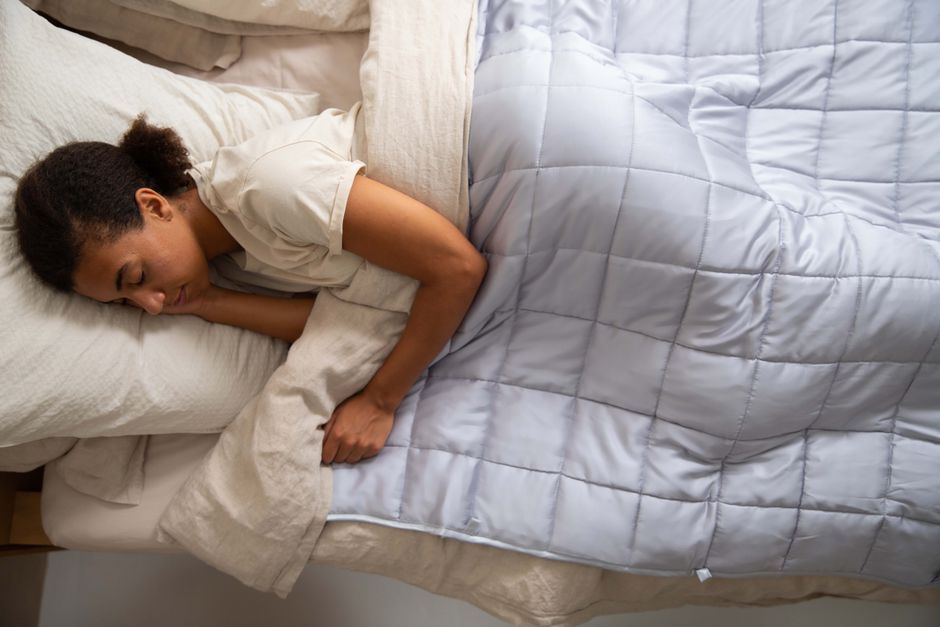
Getting enough deep sleep gets harder as people age. The brain produces less slow-wave activity, which is the marker of deep sleep. For many older adults, deep sleep drops from 20% of total sleep time in young adulthood to under 5% by age 70. The good news is that specific, evidence-backed strategies can help increase deep sleep in elderly adults. These include targeted temperature changes, consistent timing, and avoiding certain medications and habits that disrupt the sleep cycle.
Why Does Deep Sleep Decline With Age?
The brain changes as we get older. The thalamus, which helps regulate sleep, starts to shrink. The prefrontal cortex also loses gray matter over time. These changes directly reduce the brain’s ability to generate the slow, synchronized brain waves that define deep sleep.
Hormones play a role too. Growth hormone, which is mostly released during deep sleep, drops significantly after age 40. Melatonin production also declines. The result is lighter, more fragmented sleep. Research published in the journal Sleep found that by age 60, most people spend less than 10% of their sleep time in deep sleep stages.
Medical conditions and medications make it worse. Pain from arthritis, frequent urination from an enlarged prostate, and side effects from blood pressure or allergy drugs all interfere with sleep depth. The National Institute on Aging notes that sleep disorders like sleep apnea also become more common with age.
Does Temperature Control Really Increase Deep Sleep?
Yes. The body needs to cool down to enter and stay in deep sleep. Your core temperature naturally drops about one to two degrees Fahrenheit at night. If the room is too warm, the body cannot cool down enough, and deep sleep is blocked.
The ideal bedroom temperature for deep sleep is between 65 and 68 degrees Fahrenheit. A 2012 study in the journal Sleep found that even a slight increase in room temperature from 68 to 73 degrees significantly reduced slow-wave sleep in older adults.
Practical steps include using a lighter blanket, opening a window, or using a cooling mattress pad. Taking a warm bath or shower 60 to 90 minutes before bed also helps. The warm water raises body temperature, and the rapid cooldown afterward signals the brain to start deep sleep. The Sleep Foundation reports that this “warm bath effect” is one of the most consistently effective sleep aids.
What Role Does Light Exposure Play?
Light is the strongest signal for the body’s internal clock. Morning light exposure tells the brain to stop producing melatonin and start the day. This helps set a consistent sleep-wake cycle, which directly supports deep sleep at night.
For older adults, morning light is especially important. Many seniors spend less time outdoors. A study from the University of Colorado Boulder found that older adults who got morning sunlight fell asleep faster and had more slow-wave sleep compared to those who stayed indoors.
Aim for 20 to 30 minutes of natural light within an hour of waking. If that is not possible, a light therapy box that produces 10,000 lux can help. On the other end, dim indoor lights two hours before bed. Blue light from phones and tablets is especially disruptive. The American Academy of Sleep Medicine advises avoiding screens for at least one hour before sleep.




How To Increase Deep Sleep In Elderly Adults With Exercise
Exercise improves sleep quality, but the timing and type matter. Aerobic exercise like walking, swimming, or cycling has the strongest evidence for increasing slow-wave sleep. A 2018 meta-analysis in the journal Advances in Preventive Medicine found that regular moderate aerobic exercise increased deep sleep by an average of 18% in older adults.
The key is consistency. Exercising three to five times per week for 30 minutes each session produces the best results. Morning or early afternoon exercise is ideal. Evening exercise within two hours of bedtime can raise core temperature and heart rate, which may delay deep sleep for some people.
Resistance training also helps, though the evidence is less strong. A small study from 2020 found that older adults who did strength training twice a week reported better sleep quality and had slightly more slow-wave activity. Gentle practices like tai chi and yoga have also shown benefits. A study in the Journal of Clinical Sleep Medicine found that older adults who practiced tai chi for 12 weeks had fewer nighttime awakenings and more deep sleep.
What Medications and Supplements Actually Work?
This area is full of hype. Most sleep supplements do not have strong evidence for increasing deep sleep specifically. Melatonin is the most studied. It helps with falling asleep but has little effect on increasing slow-wave sleep. The CDC notes that melatonin is safe for short-term use, but the long-term effects are not well understood.
Magnesium glycinate has some evidence. A small 2021 study found that older adults who took 500 mg of magnesium daily for eight weeks fell asleep faster and had more deep sleep. The effect was modest. Magnesium citrate and magnesium oxide are less well absorbed and are not recommended for sleep.
Prescription sleep medications like zolpidem (Ambien) and eszopiclone (Lunesta) do not increase deep sleep. In fact, they often suppress slow-wave activity. The American Geriatrics Society strongly advises against using these drugs in older adults due to increased risks of falls, confusion, and memory problems.
The table below compares common approaches:
| Method | Evidence for Deep Sleep | Best For |
|---|---|---|
| Cool bedroom (65-68°F) | Strong | Everyone |
| Morning light exposure | Strong | Those with irregular sleep schedules |
| Aerobic exercise | Strong | Sedentary older adults |
| Warm bath before bed | Moderate | Those who struggle to fall asleep |
| Magnesium glycinate | Weak to moderate | Those with low magnesium levels |
| Melatonin | Weak for deep sleep | Circadian rhythm issues |
| Prescription sleep aids | Negative effect | Avoid unless directed by a doctor |
What Habits Disrupt Deep Sleep Without People Realizing?
Alcohol is a major disruptor. Many people believe a nightcap helps sleep. It does help with falling asleep, but it suppresses slow-wave activity in the second half of the night. A 2018 study in Alcoholism: Clinical and Experimental Research found that even one drink before bed reduced deep sleep by 20% in older adults.
Eating late at night also interferes. Digestion raises core body temperature and increases heart rate. Both of these signals tell the brain to stay alert. The National Sleep Foundation recommends not eating within three hours of bedtime.
Napping is another common trap. Long or late afternoon naps reduce the body’s drive for deep sleep at night. If naps are necessary, keep them under 30 minutes and finish before 3 PM. A short nap earlier in the day can be restorative. A long nap after 4 PM often makes nighttime deep sleep harder to achieve.
Loud snoring or gasping during sleep may indicate sleep apnea. This condition causes repeated drops in oxygen levels that pull the brain out of deep sleep all night long. The American Academy of Sleep Medicine estimates that 30% of older adults have sleep apnea, and most do not know it. A sleep study is the only way to confirm it. Treatment with a CPAP machine often restores deep sleep significantly.
Common Misconceptions About Deep Sleep
Many people think that waking up once or twice per night is abnormal. It is normal, especially with age. The problem is not waking up. The problem is not being able to fall back asleep quickly. Deep sleep happens in cycles of 90 to 120 minutes. Waking up between cycles is part of the natural rhythm.
Another myth is that older adults need less sleep. The National Sleep Foundation confirms that adults over 65 still need 7 to 9 hours of sleep per night. The difference is that the sleep is lighter and more fragmented. The goal is not to sleep longer but to protect the deep sleep that remains.
Some people believe that sleeping pills create “good sleep.” They do not. Most sleep medications alter brain wave patterns and reduce slow-wave activity. The quality of sleep on medication is not the same as natural deep sleep. A 2020 review in BMJ found that older adults who used sleep medications had a 40% higher risk of falls and fractures.
Frequently Asked Questions
How much deep sleep should an elderly adult get each night?
Most older adults get between 5% and 10% of total sleep time in deep sleep. That is roughly 20 to 45 minutes per night if sleeping 7 to 8 hours. Less than 5% may indicate a sleep disorder.
Can deep sleep be restored in elderly adults?
Yes, partially. Strategies like cooling the bedroom, morning light exposure, and aerobic exercise can increase deep sleep by 10% to 20%. Full restoration to young adult levels is not possible due to age-related brain changes.
Does CBD help increase deep sleep in older adults?
Some people report better sleep with CBD, but strong clinical evidence is limited. A 2019 study in The Permanente Journal found that CBD improved anxiety-related sleep issues but did not specifically measure deep sleep stages.
Is it safe to take melatonin every night for deep sleep?
Melatonin is generally safe for short-term use, but long-term safety data is lacking. The CDC recommends using the lowest effective dose, usually 0.5 to 3 mg, taken 30 to 60 minutes before bed. It does not reliably increase deep sleep.
