
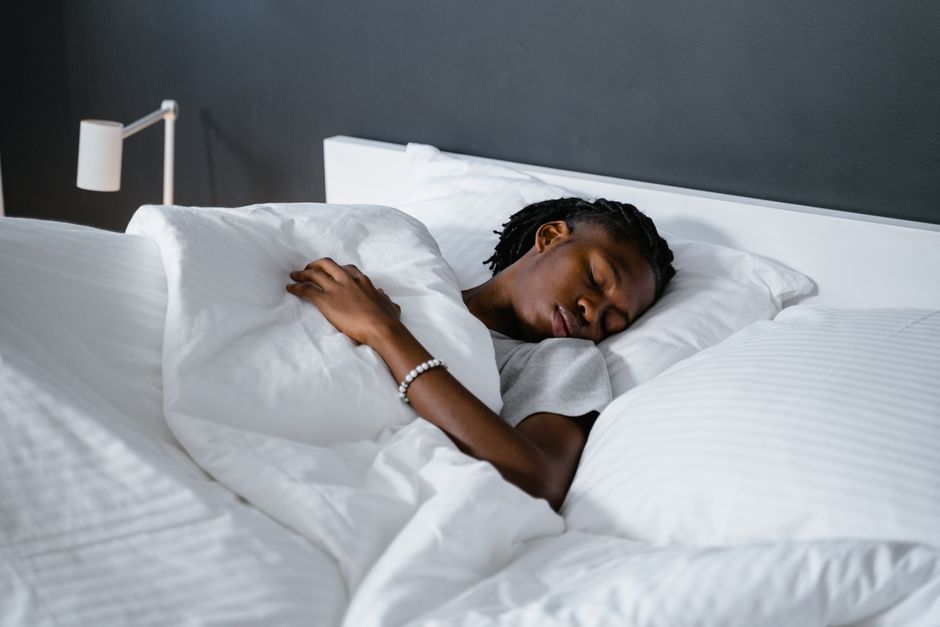
Sleeping on your back is often called the best position for spinal alignment, but for many people it feels impossible to stay comfortable. The key to making back sleeping work involves the right pillow height under your head and a second pillow under your knees. This simple setup keeps your spine in a neutral position and prevents the lower back arch that causes morning pain.
Why Is Sleeping on Your Back So Uncomfortable for Most People?
The main reason back sleeping feels wrong is that your bed is not set up to support a neutral spine. When you lie flat, your lower back has a natural curve called the lumbar lordosis. If your mattress is too soft, your hips sink and your lower back arches more. If your mattress is too firm, your lower back hovers without support.
Your head position also matters. A pillow that is too thick pushes your chin toward your chest. A pillow that is too thin lets your head drop back. Both strain your neck and make you toss and turn.
Many people also have tight hip flexors from sitting all day. When you lie on your back, tight hips pull on your pelvis and tilt it forward. This increases the arch in your lower back and causes discomfort within minutes.
Research published in the journal Sleep Science found that back sleepers report more lower back pain than side sleepers when their pillow and mattress setup does not match their body type. The study confirmed that the problem is not back sleeping itself — it is the wrong support.
What Is the Correct Pillow Setup for Back Sleeping?
Your pillow should fill the gap between your head and the mattress while keeping your neck in a straight line with your spine. For most people, this means a thinner pillow than what side sleepers use.
Here is a simple test. Lie on your back and have someone look at you from the side. If your chin is tilted up, your pillow is too thin. If your chin is tucked toward your chest, your pillow is too thick. The ideal position is a straight line from your ear through your shoulder to your hip.
Memory foam or contoured pillows work well for back sleepers because they hold their shape. A standard feather or polyester pillow flattens overnight and loses support. The American Chiropractic Association recommends a cervical pillow that supports the natural curve of your neck.
One non-obvious point: your pillow should only support your head, not your shoulders. If your shoulders are on the pillow, your neck is bent. Pull the pillow down so it ends at the top of your shoulders.
How Can a Pillow Under Your Knees Fix Back Pain?
Placing a pillow under your knees is the single most effective change for back sleeping comfort. It slightly bends your hips and knees, which relaxes the psoas muscle — a deep hip flexor that connects your lower spine to your upper leg.
When your psoas is relaxed, your pelvis tilts backward slightly. This flattens the arch in your lower back and reduces pressure on the small joints of your spine. A study in the Journal of Orthopaedic & Sports Physical Therapy found that knee elevation significantly reduced lumbar disc pressure in healthy adults.
The pillow should be thick enough to lift your knees about 4 to 6 inches off the mattress. A standard bed pillow works for most people. If you are taller or have tighter hips, you may need a firmer or thicker pillow.
Some people also benefit from a small rolled towel or lumbar support under their lower back. But the knee pillow alone often solves the problem without adding anything under your back.





What Mattress Firmness Works Best for Back Sleepers?
Medium-firm mattresses are consistently rated best for back sleeping by both research and clinical experience. A 2015 study published in The Lancet found that medium-firm mattresses reduced pain-related disability more than firm mattresses in people with chronic lower back pain.
A mattress that is too soft lets your hips and shoulders sink, which twists your spine sideways. A mattress that is too firm creates pressure points at your heels, buttocks, and shoulders. These pressure points make you shift positions frequently, which disrupts deep sleep.
The ideal mattress allows your body to sink about 1 to 2 inches at the heaviest points — your hips and shoulders — while keeping your spine straight when viewed from the side. Memory foam and latex mattresses often work well because they contour without excessive sink.
If you cannot replace your mattress, a medium-firm mattress topper can help. Look for one that is 2 to 3 inches thick and made of latex or high-density memory foam. Avoid soft toppers that make your mattress feel plush — that usually makes back sleeping worse.
How To Sleep Comfortably On Your Back Every Night — Step by Step
Here is a practical checklist to set up your bed for back sleeping tonight. Follow these steps in order.
- Choose a pillow that keeps your head in line with your spine. A cervical or contoured memory foam pillow is a good starting point.
- Place a second pillow under your knees. It should be thick enough to lift your knees 4 to 6 inches off the bed.
- Check your mattress firmness. If you sink more than 2 inches at your hips, add a medium-firm topper or consider a new mattress.
- Lie down and close your eyes for two minutes. If you feel any pressure points or arching in your lower back, adjust your knee pillow height.
- If your arms feel uncomfortable, place a small pillow or rolled towel under each forearm to support them at your sides.
This routine addresses the three main problems with back sleeping: neck strain, lower back arch, and pressure points. Most people notice a difference on the first night, though it may take a few nights to adjust if you are used to side or stomach sleeping.
Some people report that back sleeping makes them snore more or worsens sleep apnea. If you wake up gasping for air or your partner says your snoring is louder, talk to your doctor before continuing back sleeping.
Comparison: Back Sleeping vs. Side Sleeping vs. Stomach Sleeping
| Sleep Position | Spinal Alignment | Common Issues | Best For |
|---|---|---|---|
| Back | Neutral if properly supported | Snoring, sleep apnea, lower back arch | People with neck or shoulder pain |
| Side | Good with proper pillow height | Shoulder pain, arm numbness | People with sleep apnea or acid reflux |
| Stomach | Poor — neck twisted all night | Neck strain, lower back strain | Not recommended by any major health organization |
Stomach sleeping is the worst position for spinal health. To breathe, you must turn your head to one side for hours. This rotates your cervical spine and strains the joints and muscles. The American Academy of Sleep Medicine advises against stomach sleeping for anyone with neck or back pain.
Side sleeping is a good alternative if back sleeping does not work for you. Use a pillow between your knees to keep your hips aligned. Your head pillow should be thicker than a back sleeping pillow to fill the gap between your ear and the mattress.
Back sleeping remains the preferred position for most spine surgeons and physical therapists because it distributes your body weight evenly and minimizes pressure points. The evidence supports it as the best starting point for anyone with back pain.
What to Avoid When Trying to Sleep on Your Back
A common mistake is using multiple pillows under your head. Stacking two pillows pushes your head forward and strains your neck. One properly sized pillow is enough.
Another mistake is lying completely flat without any knee support. This puts maximum tension on your lower back and hip flexors. Even a thin rolled towel under your knees helps.
Do not force yourself to stay on your back all night if you naturally roll to your side. Your body has preferred sleeping positions based on years of habit. Instead of fighting it, set up your bed so that back sleeping is comfortable enough to fall asleep in. If you roll over during the night, that is fine.
Avoid sleeping on your back with your arms above your head. This position pulls your shoulders upward and can compress nerves in your neck. Keep your arms at your sides with a small support pillow if needed.
Do not use a thick pillow under your head and a thin pillow under your knees. The head pillow needs to be thin enough to keep your neck straight. The knee pillow needs to be thick enough to bend your hips. Getting these reversed is a common problem.
Frequently Asked Questions
What is the best pillow height for back sleeping?
Your pillow should be just thick enough to fill the gap between your head and the mattress. For most people this is 3 to 5 inches when compressed.
Can sleeping on your back cause sleep apnea?
Back sleeping can worsen snoring and mild sleep apnea because gravity pulls your soft palate and tongue backward. If you have diagnosed sleep apnea, side sleeping is usually recommended.
How long does it take to get used to sleeping on your back?
Most people adjust within 3 to 7 nights if their pillow and knee support are correct. If you still feel uncomfortable after two weeks, your setup likely needs adjustment.
Should I use a lumbar roll when sleeping on my back?
Only if your lower back feels unsupported after adding a knee pillow. A small rolled towel placed under your lower back can help, but it is not necessary for everyone.
