
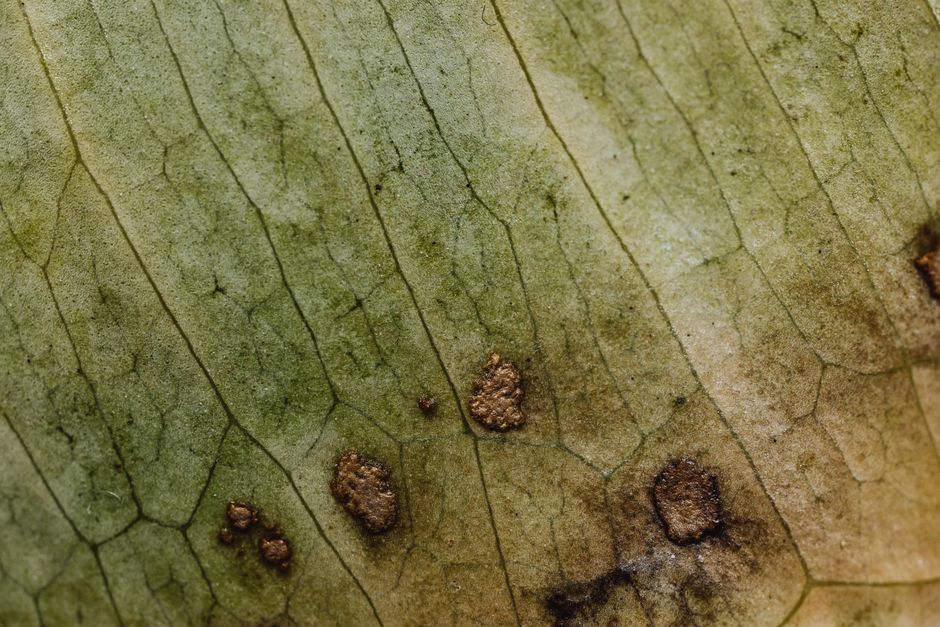
Sclerotinia stem rot is a fungal disease that attacks more than 400 plant species, including some of the most important food and oilseed crops grown worldwide. On canola and rapeseed, it can destroy a large share of a field’s yield in a wet year. On soybeans, sunflowers, and many vegetables, it causes similar damage. It is often called white mold or stem rot, depending on the crop. The disease is hard to control once it takes hold, so identification and prevention matter more than rescue treatment.
What Causes Sclerotinia Stem Rot?
The disease is caused by fungi in the genus Sclerotinia. The most common species is Sclerotinia sclerotiorum, which has an unusually wide host range. A related species, Sclerotinia minor, causes similar symptoms but tends to infect near the soil line.
The fungus survives as hard, black resting structures called sclerotia. These look like small seeds or rat droppings and can sit in the soil for years. When conditions turn cool and wet, sclerotia near the surface produce small stalked cups called apothecia. These cups release spores into the air.
Spores land on flowers, where they germinate and use the dying petals as a food source. From there, the fungus moves into the stem. This is why infection almost always begins during or just after flowering.
Direct root infection is also possible when sclerotia germinate in soil and contact plant tissue. That route is less common in most crops but is more important for S. minor.
What Does Sclerotinia Stem Rot Look Like?
The first visible sign is usually a pale tan or bleached lesion on the stem, often several inches above the soil line. The lesion spreads lengthwise and can girdle the stem. The stem may become brittle and straw-colored.
Leaves above the lesion wilt and die. They often stay attached, turning gray-green to brown. Plants may ripen early and appear to mature ahead of the rest of the field. Lodging — plants falling over — is common because the stem weakens.
Inside and on the surface of infected stems you will find black sclerotia. These are the clearest confirmation. They can be small or as large as a pea, and they form both inside the stem cavity and on the outside.
On some crops, symptoms differ. In sunflowers, the fungus causes a head rot with soft, mushy tissue and white mold. In lettuce, it causes a watery rot at the base. In beans, it produces white cottony growth on pods and stems.
How To Identify And Manage Sclerotinia Stem Rot In The Field
Scouting needs to start at flowering, because that is when the window for infection opens. Walk fields in a pattern rather than checking only field edges, which can look better or worse than the interior.
Look for the combination of a bleached stem lesion, wilted or dead leaves still attached, and black sclerotia. Any one of these alone is not enough. Other stem diseases can cause similar wilting, so confirm the sclerotia before treating the diagnosis as certain.
Management rests on several practices used together. No single measure controls the disease on its own.
- Rotate away from susceptible broadleaf crops for several years. Cereal grains are not hosts.
- Manage irrigation to avoid prolonged leaf and stem wetness during flowering.
- Reduce plant density where practical to improve airflow and lower humidity in the canopy.
- Control broadleaf weeds, which can host the fungus and add to the spore load.
- Consider fungicide at flowering only when conditions and field history justify it.
Fungicides are preventive, not curative. They work when applied before infection, typically at early flowering. Once stems are girdled, no spray will save those plants. Some regions have documented resistance to certain fungicide groups in Sclerotinia populations, so rotating modes of action matters.




When Is The Risk Of Infection Highest?
Cool, wet weather during flowering drives infection. Extended periods of high humidity and frequent rain or heavy dew create the conditions apothecia need to form and release spores.
Canopy density matters too. Dense, lush crops with a closed canopy hold moisture longer and slow drying. That extends the time spores have to germinate on flowers. High nitrogen rates that produce excessive leafy growth can raise risk for the same reason.
Field history is a strong predictor. A field with a prior outbreak likely has a large sclerotia population in the soil, which can persist for years. Sclerotia can survive in the top few inches of soil through multiple growing seasons, so a single clean year does not mean the risk is gone.
Irrigation timing can tip the balance. Overhead irrigation during flowering keeps the canopy wet and increases the chance of infection. Managing the schedule to allow drying periods reduces that risk.
How Does Sclerotinia Spread Between Plants And Fields?
Airborne spores are the main way the disease moves within a field and between nearby fields. Apothecia release spores that travel on wind and can land on flowers some distance away.
Sclerotia also spread through soil and equipment. They mix with soil on tillage tools, boots, and tires, and can move to new fields that way. Seed lots can carry sclerotia as contaminants, which is one reason certified seed and cleaning matter.
Because the host range is so broad, nearby crops and weeds can act as spore sources. A susceptible crop next door or a weedy ditch can add to the spore pressure in your field even if your own history is clean.
Can Sclerotinia Stem Rot Be Cured?
No. Once the fungus has colonized the stem, there is no treatment that reverses the damage. This is the central fact about the disease and the reason management focuses on prevention.
Fungicides applied at flowering can protect healthy tissue from new infections. They do not cure plants that are already infected. This is why timing is everything — a spray applied after symptoms appear rarely helps.
Some crop varieties carry partial resistance. These plants may show less severe symptoms or slower spread, but no variety is fully immune. Partial resistance reduces losses rather than preventing infection.
Biological control products are sold in some markets. The evidence for their field effectiveness is limited and varies by product and conditions. They are not a substitute for the cultural practices above.
Why Is Accurate Diagnosis Important?
Several stem diseases cause wilting and stem discoloration that can look like Sclerotinia. Getting the diagnosis wrong leads to the wrong management, wasted money, and continued losses.
The most reliable confirmation is finding sclerotia. If you cannot find them, have a sample examined by a plant disease diagnostic lab. This is standard practice and worth the cost when a field’s future rotations depend on the answer.
Misdiagnosis cuts both ways. Treating a non-Sclerotinia problem with fungicide wastes money and may mask the real cause. Assuming Sclerotinia when it is something else can lead to unnecessary rotation changes and lost income.
Key Facts At A Glance
| Factor | Detail |
|---|---|
| Cause | Fungi in the genus Sclerotinia, mainly S. sclerotiorum |
| Survival structure | Black sclerotia in soil and crop residue |
| Key infection window | Flowering, especially in cool wet weather |
| Main symptom | Bleached stem lesion with wilted attached leaves |
| Confirmation | Black sclerotia inside or on the stem |
| Cure | None after infection |
| Main control | Prevention: rotation, moisture management, timely fungicide |
Frequently Asked Questions
What does sclerotinia stem rot look like?
It appears as a pale tan or bleached lesion on the stem, usually above the soil line, with wilted leaves that stay attached and black sclerotia inside or on the stem. The sclerotia are the most reliable sign.
Can you cure sclerotinia stem rot once a plant is infected?
No. There is no treatment that reverses infection once the fungus has entered the stem. Fungicides applied at flowering can only protect healthy tissue from new infections.
When should fungicide be applied for sclerotinia?
Fungicide works as a preventive measure and is typically applied at early flowering, before infection occurs. It provides little or no benefit once symptoms are visible.
How long does sclerotinia survive in the soil?
Sclerotia can persist in the top few inches of soil for multiple growing seasons, which is why rotation away from susceptible crops for several years is important. A single clean year does not eliminate the risk.
