
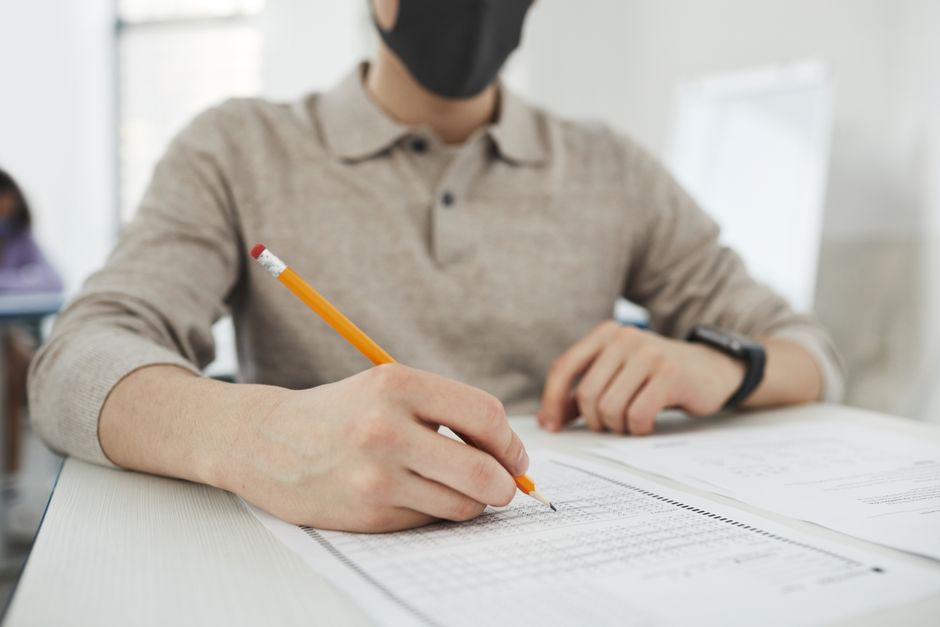
Holding a pencil correctly comes down to one simple test: can you write for a long time without your hand cramping or your fingers aching? The standard grip is called the dynamic tripod grip. You place the pencil between your thumb and index finger, and let it rest on the middle finger. Your thumb and index finger do the controlling, while the middle finger acts as a stable base underneath. This position gives you control without squeezing the pencil too hard, which is the main cause of hand fatigue and messy handwriting.
What Does the Correct Pencil Grip Look Like?
The dynamic tripod grip is the grip most occupational therapists and teachers recommend. It is called “dynamic” because the fingers move slightly as you write, rather than staying locked in place.
Here is exactly how to set it up:
- Pinch the pencil between your thumb and index finger, about 1 to 1.5 inches above the tip.
- Let the pencil rest on the side of your middle finger, near the last joint.
- Your ring finger and pinky should curl gently into your palm. They are not involved in holding the pencil.
- Your wrist should be straight, not bent sharply upward or downward.
- The top of the pencil should point back toward your shoulder, not up toward the ceiling.
If you look down at your hand while holding the pencil this way, you should see a small circle or “O” shape formed between your thumb and index finger. If that circle is flattened or squeezed tight, you are gripping too hard.
Why the Tripod Grip Works Best
Writing is a fine motor skill. It requires small, precise movements from the fingers, not large movements from the whole arm or wrist. The tripod grip positions the fingers so they can make those small movements efficiently.
When you grip the pencil with your thumb and index finger, you get fine control over the tip. The middle finger underneath provides a stable shelf. This three-point contact keeps the pencil from rolling or slipping while you write.
Gripping the pencil too tightly is the most common mistake. Many people squeeze with all their fingers, which tenses the muscles in the hand and forearm. That tension spreads up into the shoulder and neck. Within minutes, the hand cramps. The tripod grip naturally prevents this because it spreads the work across three fingers instead of loading everything onto the thumb and index finger.
Research consistently shows that the tripod grip is the most efficient grip for speed and endurance. Other grips, like holding the pencil with four fingers or clamping it in a fist, work for short notes but cause fatigue during longer writing sessions.
Common Pencil Grips That Cause Problems
Not everyone holds a pencil the same way, and some grips work fine for years before causing trouble. Here are the most common grips that lead to pain or poor handwriting:
- The Fist Grip: The pencil is wrapped in all four fingers like a fist. This gives almost no fine control and forces the wrist to do all the work.
- The Thumb Wrap: The thumb crosses over the index finger and wraps around the pencil. This locks the fingers in place and makes smooth writing difficult.
- The Four-Finger Grip: The pencil rests on the ring finger instead of the middle finger. This reduces stability and often causes the pinky to stick out awkwardly.
- The Vertical Grip: The pencil points straight up toward the ceiling. This forces the wrist to bend sharply and makes writing slow and tiring.
Some of these grips develop because of weak hand muscles, while others are simply habits formed early in childhood. The good news is that grip habits can be changed, even in adulthood. It takes time and conscious effort, but the hand adapts.





How To Hold A Pencil Correctly While Writing: Step-by-Step
If you want to switch to the tripod grip, start slowly. Your hand will feel clumsy at first because it is used to the old grip. That is normal.
Follow these steps:
- Sit at a table with your feet flat on the floor and your forearm resting on the table.
- Pick up the pencil with your thumb and index finger, pinching near the tip.
- Let the pencil fall back so it rests on the middle finger.
- Relax your ring finger and pinky. They should curl inward gently, not press against the palm.
- Check the angle. The pencil should be at about a 45-degree angle to the paper.
- Write slowly at first. Focus on keeping your fingers relaxed rather than on making perfect letters.
Practice for just five minutes a day. Short, frequent practice sessions work better than one long session. Your hand muscles need time to build new movement patterns.
One useful trick is to hold a small object, like a cotton ball or a coin, in your palm with your ring finger and pinky. This forces those fingers to stay curled and prevents them from joining the grip. Many occupational therapists use this technique with children and adults alike.
Does the Pencil Grip Matter for Left-Handed Writers?
Left-handed writers face a specific challenge. When they write with the tripod grip, their hand naturally drags across what they just wrote, smudging the ink and covering the words.
For left-handed writers, the solution is not a different grip. It is a different hand position. The tripod grip still works, but the wrist should be positioned so the hand stays below the writing line rather than to the side of it.
Left-handed writers should also tilt the paper in the opposite direction. Right-handed writers tilt the paper to the left. Left-handed writers tilt it to the right, so the writing line runs diagonally away from the body. This allows the hand to sit below the words instead of on top of them.
Some left-handed writers prefer what is called the “overhand” grip, where the pencil is held with the hand positioned above the writing line. This works for some people but can cause the wrist to bend awkwardly over time. The tripod grip with a tilted paper remains the most sustainable option for most left-handed writers.
When to Use a Pencil Grip Aid
Pencil grips are small rubber or silicone sleeves that slide onto the pencil. They come in many shapes, from simple triangles to molded designs with finger guides.
These aids can help in two situations. First, for children who are still developing fine motor skills and need a physical reminder of where their fingers belong. Second, for adults who are trying to break an old grip habit and need something to guide their fingers into the correct position.
However, pencil grips are not a permanent solution. They are training tools. The goal is to use them temporarily until the correct grip becomes automatic, then remove them. Some research suggests that certain grip designs are more effective than others, but the evidence is limited. What matters most is that the grip encourages the tripod position rather than allowing an alternative grip.
If you have hand pain that does not improve after a few weeks of practicing the correct grip, see a doctor or an occupational therapist. Persistent hand pain while writing can be a sign of an underlying condition like arthritis or a nerve compression issue, and no grip change will fix those.
Does the Grip Affect Handwriting Quality?
Yes, but not in the way most people expect. A correct grip does not automatically produce beautiful handwriting. It produces controlled, comfortable handwriting.
Grip affects legibility indirectly. When your hand is relaxed and your fingers move freely, you have better control over letter shapes and spacing. When you grip too tightly, the muscles in your hand shake slightly from tension, and that tremor shows up in your letters. The handwriting looks jagged or uneven, not because you lack skill but because your hand is fighting itself.
Speed is also affected. A relaxed tripod grip allows faster writing because the fingers can move quickly without fatigue. A tight grip slows you down because the muscles tire quickly and need frequent breaks.
That said, handwriting quality depends heavily on practice and technique beyond the grip. Letter formation, spacing, and slant are separate skills. The grip simply provides the physical foundation for those skills to develop.
Frequently Asked Questions
Can adults change their pencil grip?
Yes, adults can change their pencil grip with consistent practice. It typically takes several weeks of daily short practice sessions for the new grip to feel natural.
What is the best pencil grip for children?
The dynamic tripod grip is the standard recommendation for children. Most children develop it naturally between ages 4 and 6, but some need explicit instruction or a pencil grip aid.
Does holding a pencil incorrectly cause hand pain?
Yes, incorrect grips that involve tight squeezing or awkward wrist positions can cause hand, wrist, and forearm pain over time. Switching to a relaxed tripod grip often relieves this pain.
Are ergonomic pens better than pencils for writing comfort?
Ergonomic pens with a triangular or contoured barrel can help maintain a correct grip, but the grip technique matters more than the writing instrument. A standard pencil held correctly works just as well.
