
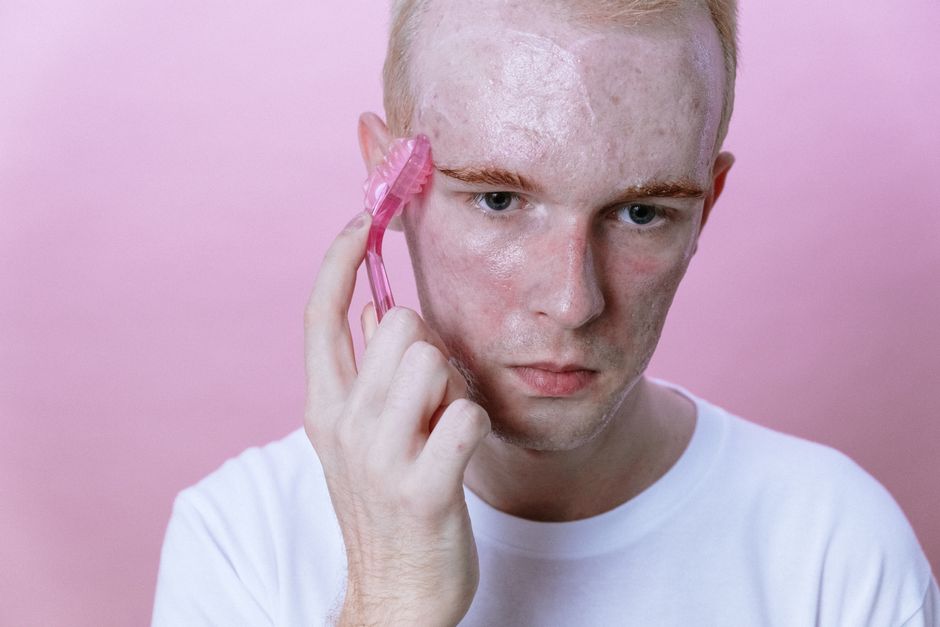
Forehead acne has a way of showing up right where everyone can see it. The causes usually come down to hair products, sweat, friction from hats or helmets, and ordinary acne biology. The fix is less about scrubbing harder and more about changing a few habits and choosing products labeled non-comedogenic.
How To Help Forehead Acne Causes Products And Habits?
Forehead breakouts happen when pores get blocked by oil, dead skin cells, and debris, and that blockage becomes inflamed. On the forehead specifically, the debris is often something you put there on purpose: shampoo, conditioner, pomade, gel, or sunscreen that drips down and sits on the skin.
Dermatologists sometimes call this pattern “pomade acne.” It was first described decades ago in people who used heavy oil-based hair products, and the mechanism is simple. Ingredients that stay on the skin near the hairline can plug follicles. The result is small bumps along the upper forehead and temples, sometimes with blackheads and sometimes with inflamed pimples.
There is a second common driver: mechanical irritation. Hats, headbands, bike helmets, and tight caps rub against the forehead and trap sweat and oil against the skin. This is a form of acne mechanica — acne caused by friction and occlusion rather than by a product ingredient. Athletes, cyclists, and anyone who wears headgear for hours often notice it.
Underneath both of these sits the same biology that drives acne anywhere: sebaceous glands produce oil, hair follicles shed cells, and the bacterium Cutibacterium acnes lives in the follicle. When a pore is blocked, that normally harmless bacterium can contribute to inflammation. Hormones influence how much oil the glands make, which is why acne tends to flare during the teen years and around menstrual cycles.
The practical takeaway: forehead acne usually responds to removing the things that block pores and reducing friction, combined with standard acne treatment if needed. Nothing exotic required.
Is Forehead Acne Different From Acne Elsewhere?
Not fundamentally. The same four processes — excess oil, blocked pores, bacterial activity, and inflammation — drive it. What differs is where the blockage comes from.
Acne on the cheeks and chin is often hormonal or tied to cosmetics applied there. Forehead acne is more often tied to things that touch the forehead: hair, headgear, and hands. People touch their forehead absentmindedly more than they realize, and resting a hand there transfers oil and dirt.
One pattern worth knowing about: a breakout concentrated in a band right along the hairline, with clear skin below it, points strongly toward a hair product or sweat issue. Breakouts spread more evenly across the forehead are more likely to be ordinary acne or a reaction to something applied broadly.
Which Hair And Skin Products Make Forehead Acne Worse?
Products that contain heavy oils, butters, or occlusive ingredients are the usual suspects when breakouts cluster at the hairline. This does not mean every oil is a problem — some are far more likely to clog pores than others — but the general rule is that anything designed to leave a heavy film on the skin is a risk.
Common culprits include:
- Pomades, waxes, and gels with heavy petroleum or oil bases
- Leave-in conditioners and serums applied close to the roots
- Heavy oil-based sunscreens on the forehead
- Hair oils applied to the scalp that migrate to the hairline
- Thick face creams marketed for “nourishing” or “repairing” that sit heavily on skin
The label term that matters most is non-comedogenic, which means the product was formulated and tested not to clog pores. It is not a perfect guarantee — testing is done on a limited panel and individual skin varies — but it is a useful filter. Products labeled “oil-free” are also generally less likely to cause problems, though oil-free is not the same as non-comedogenic.
If you suspect a product, there is a simple test. Stop using it for two to three weeks and change nothing else. If the forehead clears, you have your answer. If it does not, the product was not the cause.


What Habits Actually Reduce Forehead Breakouts?
The habits that help are unglamorous and mostly about reducing what sits on your skin. Washing your face twice a day with a gentle cleanser removes oil and debris without stripping the skin. Harsh scrubs and over-washing tend to make acne worse by irritating the skin and disrupting its barrier.
Shampoo and condition before you wash your face, not after. This lets you rinse away any product that lands on your forehead during hair washing. If you use styling products, apply them away from the hairline and try not to let them touch the forehead.
Change pillowcases regularly. Oil, product residue, and bacteria accumulate on fabric, and you press your face into it for hours each night. A clean pillowcase every few days is a low-effort change that some people find helpful, though the evidence for it is not strong.
Keep your hands off your forehead. This is harder than it sounds, but picking and resting your hand there both add irritation and bacteria.
If you wear hats, helmets, or headbands, clean them. A helmet liner that never gets washed is a reservoir of oil and sweat pressed against your skin. Wash headgear regularly and give your forehead a rinse after sweating heavily.
For hair that touches the forehead — bangs especially — consider keeping it off your skin, at least during exercise and sleep. Bangs trap oil and product against the forehead for hours.
What About Sweat And Exercise?
Sweat itself does not cause acne. It is mostly water and salt. But sweat mixed with oil, dead skin cells, and friction from headgear can contribute to blocked pores. Rinsing your face with cool water after a workout, or washing gently if you have been sweating heavily, helps remove that mixture before it sits.
Do not scrub aggressively after exercise. A gentle rinse or a mild cleanser is enough. Over-cleansing after every workout can irritate skin and make things worse.
If you exercise in a helmet or cap, consider a thin cotton or moisture-wicking liner that you wash after each use. It absorbs sweat and reduces direct friction against the skin.
When Should You See A Doctor About Forehead Acne?
See a doctor or dermatologist if acne is not improving after about two to three months of consistent home care, if you are developing deep painful nodules or cysts, or if acne is leaving scars. Scarring is the main reason not to wait — once a scar forms, treating it is harder than preventing it.
Prescription options exist for moderate to severe acne, including topical retinoids, topical antibiotics, and in some cases oral medications. These require a clinician’s assessment because the right choice depends on the type and severity of acne, your history, and other factors. Some treatments are not appropriate during pregnancy or breastfeeding, so that conversation matters.
For mild forehead acne tied to hair products or friction, home changes are often enough. For acne that is widespread, painful, or persistent, professional treatment works better than anything you can buy without a prescription.
Does Diet Affect Forehead Acne?
The evidence on diet and acne is mixed but not empty. Some research suggests that high-glycemic diets — those heavy in refined sugars and quickly digested carbohydrates — may be associated with more acne. Some studies also suggest a possible link with certain dairy products, particularly skim milk.
These findings are associations, not proof that cutting a food will clear your skin. Results vary between people, and the effect sizes in most studies are modest. If you want to test whether diet matters for you, change one thing at a time and give it several weeks. Do not eliminate entire food groups without reason.
What is well established is that diet is not the primary driver of forehead acne in most people. Hair products, friction, and ordinary acne biology matter more.
Do Home Remedies For Forehead Acne Work?
Some do, some do not, and several popular ones can cause harm. Tea tree oil has shown some antibacterial activity in studies, but it can irritate skin, especially undiluted. Apple cider vinegar is acidic and can burn or dry the skin. Lemon juice is a common internet suggestion and a bad idea — it is irritating and can make skin more sensitive to sunlight.
Toothpaste is another folk remedy with no good evidence behind it, and it can irritate or burn the skin. Baking soda is alkaline and disrupts the skin’s natural acid barrier.
The ingredients with the most support for mild acne are benzoyl peroxide and salicylic acid, both available over the counter. Benzoyl peroxide reduces C. acnes bacteria and helps clear blocked pores. Salicylic acid helps exfoliate inside the follicle. Both can dry or irritate skin, so start with lower concentrations and use them consistently rather than aggressively.
No home remedy replaces prescription treatment for moderate to severe acne. If over-the-counter options are not working after a couple of months, that is a signal to see a clinician, not to try something harsher.
Frequently Asked Questions
Why do I only get acne on my forehead?
Forehead-only breakouts usually point to something touching that area, most often hair products, bangs, hats, or helmets. If the rest of your face is clear and the bumps sit along the hairline, a product or friction cause is more likely than hormones.
Does washing my face more often help forehead acne?
No. Washing more than twice a day tends to irritate skin and can make acne worse. Twice daily with a gentle cleanser is enough for most people.
Can my shampoo cause forehead acne?
Yes. Shampoos, conditioners, and styling products that contain heavy oils or occlusive ingredients can clog pores when they sit on the forehead. Rinsing your face after washing your hair helps remove residue.
How long before forehead acne clears up?
With consistent changes, mild forehead acne often improves within a few weeks, but full clearing can take two to three months. If nothing improves after that, see a doctor.
