
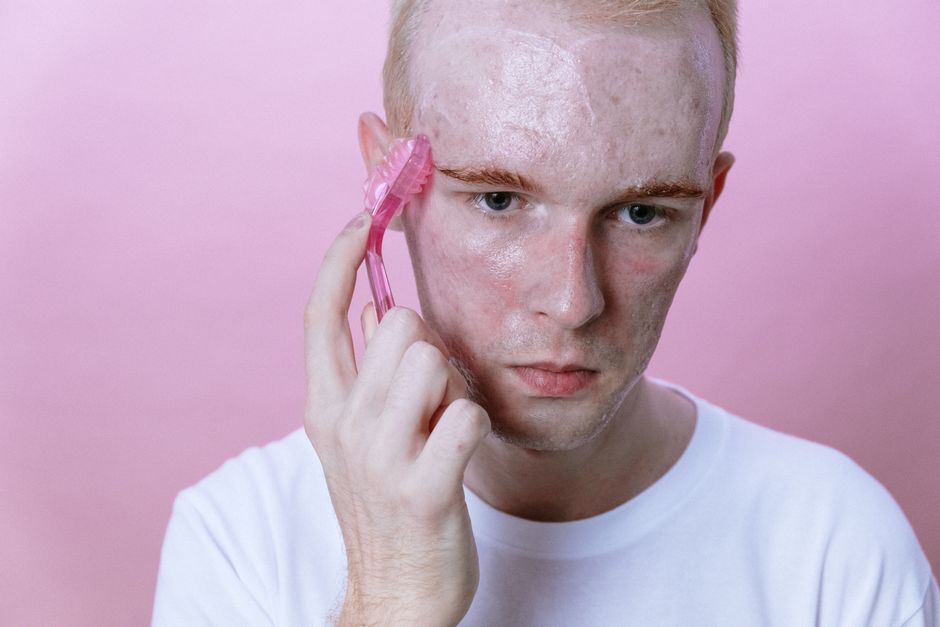
Acne on your forehead is not a sign that your liver is failing or that you are unclean. It is the same skin condition that shows up on your chin, back, or chest, driven by oil glands, skin cells that shed abnormally, bacteria, and inflammation. Where it appears is mostly a matter of which oil glands are busiest and what touches that area of skin. The forehead is one of the most sebaceous-rich zones on the face, which is why it is a common spot for breakouts — and why it is also one of the most responsive to changes in hair products, hats, and daily habits.
What Does Forehead Acne Mean Causes Fixes?
Forehead acne means hair follicles in that area are clogged and inflamed. The cause is a mix of excess oil, dead skin cells that do not shed normally, and Cutibacterium acnes bacteria that live on everyone’s skin. The fix depends on which of those factors is dominant for you.
Acne forms when a pore becomes blocked by a plug of oil (sebum) and dead skin cells. That plug creates a low-oxygen environment where C. acnes can multiply. Your immune system responds with inflammation, which is what turns a blocked pore into a red, tender bump.
Hormones drive the whole process. Androgens — testosterone and related hormones present in both men and women — signal the sebaceous glands to produce more oil. This is why acne tends to flare during puberty, around menstrual cycles, and during times of hormonal shift. Forehead oil glands are dense and responsive to those signals.
What forehead acne does not reliably mean: poor hygiene, a toxic liver, or a specific food allergy. Those claims circulate widely online. The evidence does not support them as general explanations for forehead breakouts specifically.
Why Does Acne Show Up on the Forehead and Not Elsewhere?
Location matters because different zones of the face have different numbers and sizes of oil glands, and because different zones get exposed to different things.
The forehead and the T-zone (forehead, nose, chin) tend to be oilier than the cheeks. That is largely genetic and hormonal. If your forehead is your main breakout area, it usually means those follicles are producing more sebum or shedding cells less efficiently than the follicles elsewhere on your face.
There is also a mechanical factor. Your forehead is where hair, hats, helmets, and hands make the most contact. Friction and pressure can push oil and dead cells deeper into pores. This is a recognized pattern sometimes called acne mechanica — acne caused or worsened by physical pressure and rubbing on the skin.
A traditional map that ties forehead acne to liver problems, or chin acne to hormonal issues, is mostly not supported by dermatology. The face-mapping idea is popular, but it does not hold up as a diagnostic tool. That said, one version of it has real backing: breakouts along the jawline and chin are commonly linked to hormonal fluctuation in women. Forehead location on its own is not a reliable signal of an internal organ problem.
What Everyday Habits Cause Forehead Breakouts?
Several common habits reliably worsen forehead acne, and most are within your control.
- Hair products. Pomades, gels, oils, and leave-in conditioners can migrate onto the forehead and clog pores. This pattern is well documented and sometimes called pomade acne.
- Hats and helmets. Sweat, heat, and friction under a band or brim create ideal conditions for clogged pores.
- Touching and picking. Hands transfer oil and bacteria, and picking turns a minor clog into an inflamed lesion that can scar.
- Sweat left on skin. After workouts, sweat mixed with oil and dead cells sits in pores. Rinsing soon after helps.
- Harsh scrubbing. Over-washing and abrasive scrubs damage the skin barrier and can trigger more oil production and irritation.
Diet is a more debated area. Some research suggests that high-glycemic diets — those heavy in refined sugars and fast-digesting carbs — are associated with more acne. The evidence for dairy is mixed and weaker. Neither is a proven universal trigger, and cutting out food groups is not a guaranteed fix. If you notice a personal pattern, that observation is worth more than a general rule.





How Is Forehead Acne Treated?
Treatment follows the same principles as acne anywhere on the face. The goal is to unclog pores, reduce oil, kill or reduce C. acnes, and calm inflammation.
Over-the-counter options are usually the first step:
- Benzoyl peroxide reduces bacteria and helps unclog pores. It is one of the most established topical acne ingredients.
- Salicylic acid helps break down the plugs that block pores. It tends to suit oily skin.
- Adapalene is a retinoid available over the counter in the US. It helps normalize how skin cells shed, which addresses one of the root causes.
For persistent or inflamed acne, a clinician may prescribe stronger retinoids, topical antibiotics, or other agents. Oral treatments exist for moderate to severe cases. This is where a doctor’s input matters, because the right choice depends on your skin, your history, and whether you are pregnant or planning to be.
One point worth stating plainly: no product works overnight. Topical treatments typically take several weeks to show clear improvement, and skin often gets worse before it gets better when starting a retinoid. Stopping early is one of the most common reasons people conclude a treatment “did not work.”
Do not start or stop prescription acne medication based on general information alone. If you are pregnant, breastfeeding, or trying to conceive, some acne treatments are not safe, and this must be discussed with a clinician rather than decided from an article.
When Should You See a Doctor About Forehead Acne?
Most forehead acne is manageable at home. Some situations call for medical care.
- Acne that is deep, painful, or leaving scars or dark marks
- Acne that has not improved after a few months of consistent over-the-counter treatment
- Sudden severe breakouts, especially with other symptoms
- Signs of a skin infection — spreading redness, warmth, swelling, or fever
- Acne affecting your confidence or mood enough to disrupt daily life
A dermatologist can confirm what you are dealing with. Not every red bump on the forehead is acne. Folliculitis (inflamed hair follicles, often from bacteria or fungus), rosacea, and a form of dermatitis sometimes look similar. These need different treatments, and using the wrong one can make things worse. This is one reason a persistent or unusual breakout is worth a professional look rather than a guess.
Can You Prevent Forehead Acne?
You cannot prevent acne entirely, because hormones and genetics set the baseline. You can reduce the factors that make it worse.
Keep your hair off your forehead when you can, especially if you use styling products. Wash hats and pillowcases regularly. Rinse your face after sweating. Use a gentle cleanser twice a day rather than scrubbing hard. Choose skincare and hair products labeled non-comedogenic, meaning they are formulated to be less likely to clog pores.
Be patient and consistent. Acne responds to steady treatment, not to switching products every week. If one approach is not working after a reasonable trial, that is useful information — and a good reason to get professional guidance rather than trying more products at random.
Frequently Asked Questions
Does forehead acne mean something is wrong with my liver?
No, there is no reliable evidence that forehead acne indicates liver problems. The face-mapping idea linking forehead breakouts to the liver is popular but not supported by dermatology.
What causes acne only on the forehead?
Forehead skin has many oil glands, and it also gets the most contact from hair, hats, and hands. That combination of oiliness and friction makes it a common breakout zone.
How long does forehead acne take to clear up?
Topical treatments usually take several weeks to show clear improvement, and skin may worsen briefly when starting a retinoid. Consistency matters more than speed.
Can hair products cause forehead acne?
Yes, oils and styling products can migrate onto the forehead and clog pores, a pattern known as pomade acne. Choosing non-comedogenic products and keeping hair off the forehead can help.
