
If your legs feel heavy, tired, or swollen at the end of the day, you are not alone. Poor circulation in the legs is common, especially as people get older or spend long hours sitting. The good news is that most people can improve leg circulation with simple daily habits, movement, and lifestyle changes. This guide covers what actually works based on real evidence and what is just hype.
What Causes Poor Circulation in the Legs?
Blood moves through your legs with help from your heart and your muscles. When you walk or move your legs, the muscles squeeze the veins and push blood back upward toward your heart. This is called the calf muscle pump. If you sit or stand still for long periods, that pump does not work well.
Several conditions can make poor circulation worse. Peripheral artery disease (PAD) affects about 8.5 million adults in the United States, according to the CDC. PAD happens when plaque builds up in the leg arteries and narrows them. Diabetes can damage blood vessels over time. Varicose veins weaken the valves inside veins, letting blood pool instead of flowing upward.
Smoking is one of the most direct causes of circulation problems. The chemicals in tobacco damage the lining of blood vessels and make them constrict. The American Heart Association reports that smoking doubles the risk of PAD. Even one cigarette a day reduces circulation in the legs.
Obesity and a sedentary lifestyle also contribute. Extra body weight puts pressure on veins and makes the heart work harder to pump blood through the legs. Sitting for more than six hours a day is linked to lower blood flow in the lower limbs.
Does Exercise Help Circulation in the Legs?
Yes, and it is the most effective thing you can do. Research published in the Journal of the American Heart Association found that walking for 30 minutes three to five times per week improved leg circulation in people with PAD. Some participants could walk longer distances without pain after just three months.
Walking is the simplest option. It activates the calf muscle pump directly. When you walk, each step squeezes the veins in your calves and pushes blood upward. Swimming and cycling also work well because they involve repeated leg movement without putting stress on the joints.
Leg exercises you can do at home also help. Calf raises are one of the most effective. Stand on the edge of a step with your heels hanging off. Raise up on your toes, hold for a second, then lower your heels below the step. Repeat 15 times. This motion mimics the pumping action of walking.
Ankle pumps are another good option. Sitting or lying down, point your toes away from you, then pull them back toward your shins. Do this 20 times on each foot. This movement keeps blood moving when you cannot get up and walk.
How To Help Circulation in Legs With Daily Habits
Small changes throughout the day add up. If you sit at a desk, stand up and walk for two minutes every hour. Set a timer if you need to. Even a short walk to the bathroom or water cooler keeps blood from pooling in your lower legs.
Avoid crossing your legs when sitting. This position compresses the veins behind your knees and slows blood flow. Keep both feet flat on the floor. If your chair is too high and your feet dangle, use a footrest.
Elevate your legs when you rest. Lying down with your legs raised above heart level for 15 to 20 minutes helps blood drain back toward your torso. This is especially helpful if you have swelling in your ankles or feet at the end of the day.
Wear compression socks if you stand or sit for long hours. These socks apply gentle pressure at the ankle and gradually release pressure higher up the leg. The pressure helps veins push blood upward. A 2023 review in the Cochrane Database found that compression stockings reduced leg swelling and discomfort in people who stand for work.
Compression socks come in different pressure levels. Mild compression (8-15 mmHg) is enough for general tired legs. Moderate compression (15-20 mmHg) is better if you have noticeable swelling or varicose veins. Higher levels require a doctor’s prescription.





What Does the Research Say About Compression and Circulation?
Compression therapy has strong evidence behind it. The Cochrane review mentioned earlier looked at 12 studies with over 1,500 participants. People who wore compression stockings reported less leg pain, less swelling, and less heaviness compared to people who did not wear them.
But compression is not a cure. It manages symptoms while the underlying cause remains. If you have PAD, compression can actually be harmful in some cases. People with PAD already have narrowed arteries, and adding external pressure can reduce blood flow further. Always check with a doctor before using compression if you have known circulation problems or diabetes.
Graded compression is the only type with evidence. Stockings that say “uniform compression” or “support hose” do not have the same effect. True medical compression stockings have a gradient — tighter at the ankle, looser at the thigh. This design works with the body’s natural blood flow direction.
The table below compares common methods for improving leg circulation based on current evidence.
| Method | How It Works | Evidence Strength | Best For |
|---|---|---|---|
| Walking 30 min, 3-5x/week | Activates calf muscle pump | Strong — multiple clinical trials | General poor circulation, PAD |
| Compression stockings | Graded pressure assists vein flow | Strong — Cochrane review | Swelling, varicose veins, standing work |
| Leg elevation | Gravity helps blood return to heart | Moderate — limited controlled studies | Swelling, heavy legs at day’s end |
| Massage | Mechanical pressure moves fluid | Weak — mostly subjective reports | Temporary relief only |
| Supplements (gingko, horse chestnut) | Claimed vessel dilation | Weak to none for legs | Not recommended as primary treatment |
What About Diet and Hydration for Leg Circulation?
Diet plays a supporting role but does not fix circulation problems on its own. A diet high in sodium causes fluid retention. When your body holds extra water, blood volume increases and veins have to work harder. The American Heart Association recommends keeping sodium under 2,300 mg per day. Most Americans eat closer to 3,400 mg.
Potassium helps balance sodium. Foods like bananas, sweet potatoes, spinach, and avocados are good sources. Potassium helps blood vessel walls relax, which can improve blood flow. But no study shows that eating these foods alone reverses poor circulation.
Dehydration makes blood thicker and harder to push through small vessels. Drinking enough water keeps blood volume stable. A simple gauge is urine color — pale yellow means you are hydrated. Dark yellow means you need more water.
Avoid supplements that claim to “clean your arteries” or “reverse poor circulation.” As of 2026, no supplement has clinical evidence to support these claims for leg circulation. Gingko biloba is widely marketed for circulation, but a 2022 review in the Journal of the American Medical Association found no benefit for leg circulation specifically. Horse chestnut seed extract has some evidence for vein health but only under medical supervision due to potential side effects.
What To Avoid When Trying To Improve Leg Circulation
Some popular recommendations do not hold up. Standing still for long periods is not better than sitting. Both positions prevent the calf muscle pump from working. If you must stand for work, shift your weight from foot to foot, walk in place, or do ankle pumps every few minutes.
Hot baths and heating pads can make swelling worse. Heat causes blood vessels to dilate, which increases blood flow into the legs. If your veins already struggle to push blood upward, more blood pooling can worsen symptoms. Cold water or cool compresses are better for reducing swelling.
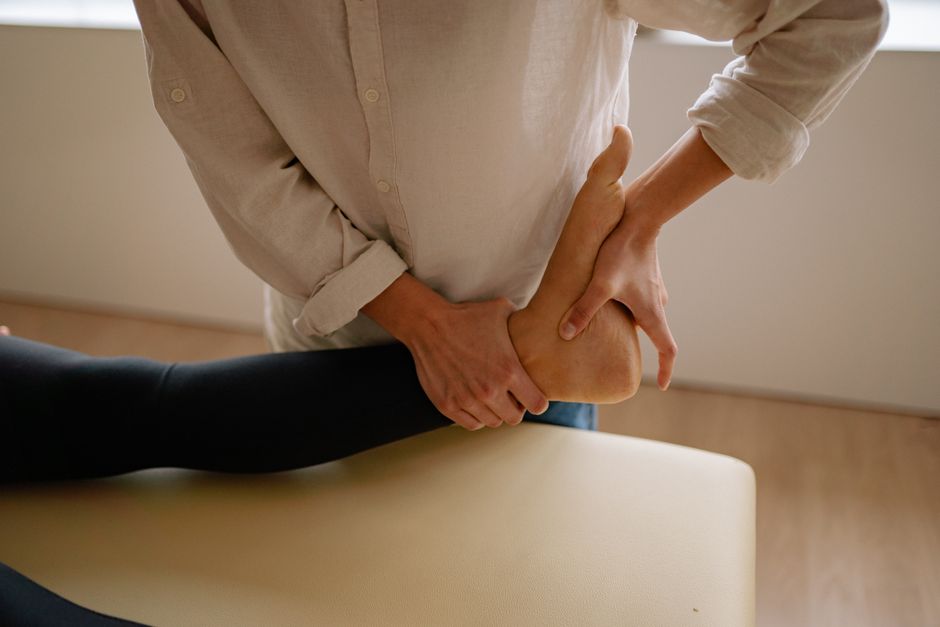
Massage guns and deep tissue massage can break up temporary fluid but do not improve circulation long term. Some people report feeling better after massage, but research shows the effect lasts less than an hour. Massage does not strengthen the calf muscle pump or change the underlying causes of poor circulation.
Avoid tight clothing around your waist or legs. Tight belts, waistbands, and skinny jeans can compress veins and restrict blood flow. This is especially true for pants that are tight around the upper thighs. If you notice red marks or indentations after removing clothing, the pressure is too high.
Frequently Asked Questions
Frequently Asked Questions
How can I improve circulation in my legs fast?
Stand up and walk for two minutes or do 20 ankle pumps while seated. These actions activate the calf muscle pump and get blood moving again quickly.
Does drinking water help leg circulation?
Yes, staying hydrated keeps blood volume stable and prevents blood from becoming too thick. Dehydration forces the heart to work harder to push blood through the legs.
Are compression socks worth it for circulation?
Yes, for people who stand or sit for long hours. Graded compression stockings reduce swelling and leg heaviness, but you should check with a doctor if you have PAD or diabetes.
What is the best exercise for circulation in legs?
Walking is the best overall exercise because it naturally activates the calf muscle pump. Calf raises and ankle pumps are good alternatives when you cannot walk.
