
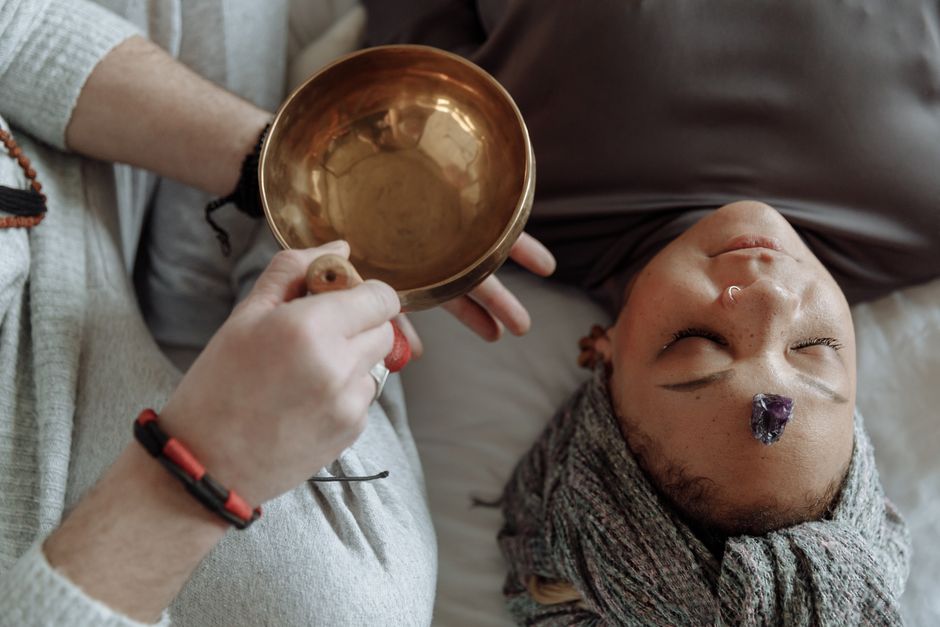
The crown chakra, or Sahasrara, sits at the top of the head. It is the energy center associated with consciousness, connection, and spiritual awareness. When it is blocked, people often feel disconnected, foggy, or deeply uninspired. Healing this chakra involves grounding practices, mindful breathwork, and a deliberate shift in how you process daily stress. The most direct path to clearing a blockage is to combine meditation with physical practices that release tension from the neck, head, and shoulders, alongside honest self-reflection about what is holding you back.
What Does a Blocked Crown Chakra Actually Feel Like?
People describe a blocked crown chakra differently. Some report a constant mental fog that makes focus difficult. Others feel a profound sense of isolation, as if they are watching life from behind a glass wall.
Physical symptoms often appear in the scalp, jaw, and neck. Tension headaches, unexplained dizziness, and chronic fatigue are common reports. This makes sense anatomically—the crown chakra corresponds to the area around the pineal gland and the cerebral cortex, which is highly sensitive to stress hormones.
Psychologically, a blockage often shows up as rigid thinking. You might feel stuck in old patterns, unable to see new perspectives. A sense of purposelessness or a feeling that “something is missing” frequently accompanies this state. These are not signs of failure. They are signals that your nervous system is overloaded and needs a reset.
How To Heal Your Crown Chakra And Clear Blockages With Meditation
Meditation is the most consistently supported method for addressing crown chakra blockages. The goal is not to force a feeling of enlightenment. The goal is to quiet the mental noise that masks your natural awareness.
A simple practice works best for most people. Sit comfortably with your spine straight. Close your eyes and bring your attention to the very top of your head. Breathe naturally. Imagine a soft light entering through that point with each inhale. Do not strain. If your mind wanders—and it will—gently return your focus to the crown of your head.
Start with five minutes daily. Consistency matters more than duration. Research on mindfulness meditation consistently shows that regular practice reduces activity in the default mode network, the brain region responsible for mind-wandering and self-referential thoughts. This reduction correlates with feeling more connected and less “stuck in your head.”
Some people find guided meditations specifically designed for the crown chakra helpful. These often use visualization of a violet or white light. The color is symbolic, not magical. The benefit comes from the focused attention and relaxation response the practice triggers.
Physical Practices That Release Crown Tension
The crown chakra is not isolated from the body. Tension in the neck and jaw directly affects how energy flows through this area. Releasing physical tension is a practical, evidence-based way to support chakra work.
Neck stretches are simple and effective. Gently tilt your head toward each shoulder, holding for 30 seconds per side. This releases the upper trapezius muscles, which hold significant stress. Jaw tension is equally important. Many people clench without realizing it. Place your fingertips on your jaw joint, just in front of your ears, and apply light pressure while opening and closing your mouth slowly.
Scalp massage is another direct approach. Use your fingertips to make small circles across your entire scalp for two to three minutes. This increases blood flow to the area and stimulates the trigeminal nerve, which is linked to relaxation responses. Some people report immediate relief from the “pressure” feeling associated with a blocked crown chakra.
Inversions—like a gentle headstand or simply lying on the floor with your legs up a wall—increase circulation to the head. These positions are safe for most people but should be avoided if you have uncontrolled high blood pressure or neck injuries. The benefit is physiological: increased blood flow and reduced venous pressure in the lower body.





Breathwork To Clear Mental Fog
Breathwork directly influences the autonomic nervous system. Slow, controlled breathing activates the parasympathetic response, which lowers heart rate and blood pressure. This creates the physiological conditions for mental clarity.
Alternate nostril breathing is a traditional practice often recommended for crown chakra work. Close your right nostril with your thumb. Inhale through the left nostril. Close the left nostril with your ring finger, release the right nostril, and exhale. Repeat this cycle for five to ten minutes. This technique balances the hemispheres of the brain and is used in clinical settings for anxiety reduction.
A simpler option is coherent breathing: inhale for a count of five, exhale for a count of five. Continue for ten minutes. This pace—about six breaths per minute—is associated with improved heart rate variability, a marker of stress resilience. The mental fog that accompanies a crown chakra blockage often lifts simply because the nervous system calms down.
Lifestyle Factors That Quietly Block The Crown Chakra
Chakra blockages are not mystical punishments. Often they are downstream effects of lifestyle choices that keep your nervous system in a heightened state.
Sleep deprivation is a major contributor. The glymphatic system, which clears waste products from the brain, is most active during deep sleep. Without adequate sleep, cognitive function declines and the feeling of being “disconnected” intensifies. Most adults need seven to nine hours per night. If you are consistently below that, addressing sleep is foundational to any chakra work.
Chronic screen exposure also plays a role. Blue light from screens suppresses melatonin production and keeps the brain in an alert state. The constant stream of information overstimulates the prefrontal cortex, the area associated with higher-order thinking. Taking deliberate breaks from screens—especially in the hour before bed—supports the mental quiet that crown chakra healing requires.
Nutrition matters too. Dehydration is a common cause of headaches and mental fatigue. The brain is roughly 75% water, and even mild dehydration impairs concentration. Omega-3 fatty acids, found in fish and flaxseed, support neuronal membrane health. These are not “chakra foods” in a mystical sense. They are basic physiological supports that allow the brain to function optimally.
When To Seek Professional Help
Some symptoms attributed to a blocked crown chakra overlap with treatable medical conditions. Persistent headaches, dizziness, or brain fog warrant a medical evaluation. These can be signs of vitamin deficiencies, thyroid dysfunction, or neurological conditions.
If you feel persistently disconnected, apathetic, or unable to experience pleasure, consider screening for depression. Depression is a medical condition, not a spiritual failure. It responds well to therapy and medication. Chakra practices can complement treatment, but they should not replace it.
No clinical evidence supports the idea that a specific chakra “blockage” causes physical disease. However, the practices associated with chakra healing—meditation, breathwork, stretching, and improved sleep—have robust evidence for reducing stress and improving quality of life. You can engage with these practices for their measurable benefits while remaining clear-eyed about what they are: tools for nervous system regulation, not medical treatments.
How Long Does Crown Chakra Healing Take?
There is no fixed timeline. Some people notice a shift in mental clarity within a few days of starting a consistent meditation practice. Others work for months before feeling a significant change.
The variable is not effort. It is the depth of the underlying stress load. If you are chronically sleep-deprived, overworked, and anxious, your nervous system needs time to recalibrate. Be patient with the process. The goal is not to “fix” yourself. The goal is to create conditions where your natural clarity and connection can emerge.
A practical approach is to commit to 30 days of daily practice. Meditate for five minutes, do neck stretches, and practice coherent breathing. At the end of 30 days, assess honestly. If you feel clearer, continue. If not, consider whether unaddressed stress—work, relationships, health—is the real obstacle. Sometimes the blockage is not in the chakra. It is in the circumstances of your life.
Frequently Asked Questions
What causes a crown chakra blockage?
Chronic stress, sleep deprivation, and unresolved emotional trauma are the most common contributors. Overstimulation from constant screen use and information overload also plays a significant role.
Can yoga help open the crown chakra?
Yes, yoga helps by releasing physical tension and activating the relaxation response. Poses that lengthen the spine and open the neck, like shoulder stands and gentle forward folds, are particularly relevant.
How often should I meditate for crown chakra healing?
Daily practice of five to ten minutes is more effective than longer sessions done sporadically. Consistency signals to your nervous system that safety is the new baseline.
Are there crystals that heal the crown chakra?
No scientific evidence supports the ability of crystals to heal chakras. Some people find them useful as focal points for meditation, which may provide benefit through the same mechanisms as any mindfulness practice.
