
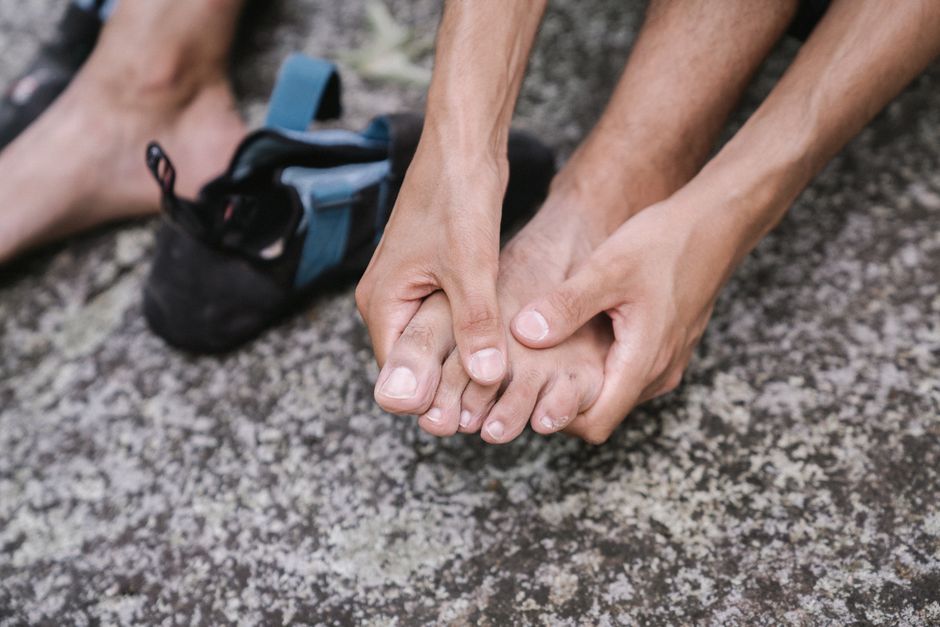
A blister on your foot is fluid trapped under a layer of skin that has been damaged by friction. Most unbroken blisters heal on their own in a few days to about a week if you stop the rubbing and keep the area clean and covered. The fastest realistic approach is to protect the blister, avoid popping it, and fix the shoe or sock problem that caused it. Prevention works the same way — reduce friction, control moisture, and break in footwear gradually.
What Actually Causes Blisters On Feet?
Friction is the main cause. When your skin rubs against the inside of a shoe over and over, the top layer of skin separates from the layer beneath it. Fluid fills the gap. That fluid cushions the tissue underneath while it repairs itself.
Three things make friction worse:
- Moisture. Sweat softens skin and makes it stick to fabric instead of gliding over it. Damp skin tears more easily.
- Heat. Warm feet sweat more, which adds to the moisture problem.
- Pressure and shear. A shoe that slips, a seam that presses, or a sock that bunches creates repeated dragging force on one spot.
Blisters most often form on the heel, the sides of the toes, and the ball of the foot. Those are the areas where the shoe grips and the foot moves.
Less common causes include burns, frostbite, chemical exposure, and some skin conditions. If you get blisters without any friction or pressure, or they appear in clusters, that is worth having a clinician look at. Several different conditions can produce blisters that look similar, and identifying the cause matters for treatment.
How To Heal Blisters On Feet Fast
Leave an intact blister alone. The roof of the blister is a natural bandage, and the fluid inside is sterile. Opening it creates a wound and raises the risk of infection.
Here is what helps:
- Cover it. A loose bandage or a hydrocolloid dressing cushions the area and keeps dirt out. Hydrocolloid dressings are widely used for friction blisters and are designed to stay on for a day or more.
- Change your footwear. Switch to shoes that do not press on the spot. If you can, avoid the shoes that caused it until the skin has closed.
- Keep it clean. Wash gently with mild soap and water, then pat dry. Do not scrub.
- Reduce activity on that foot. Continued rubbing on a fresh blister slows healing and can make it worse.
Most blisters that stay intact and stay clean do not need anything else. Pain usually eases as the fluid reabsorbs and new skin forms underneath.
If a blister is large and in a spot where you cannot avoid pressure — the heel, for example — some clinicians recommend draining it. That is a procedure, not a do-it-yourself project. Draining at home with a non-sterile needle is a common way people introduce infection. If a blister is severe enough that you feel you must drain it, that is a reasonable reason to see a healthcare provider.
Should You Pop A Foot Blister?
No, not if you can avoid it. An intact blister is a sealed, sterile environment. Once you break the roof, bacteria have a way in and the skin underneath is exposed.
There are situations where a blister breaks on its own. When that happens:
- Do not peel off the loose skin. It still protects the raw area beneath.
- Wash the area with mild soap and water.
- Apply a thin layer of petroleum jelly or a similar protective ointment if your clinician recommends it.
- Cover with a non-stick dressing.
- Watch for signs of infection over the next few days.
People with diabetes, poor circulation, or a weakened immune system should treat any foot blister as a medical matter rather than a minor annoyance. Foot wounds in these groups can become serious quickly, and clinical guidance for them is more cautious than for the general population.



How To Prevent Blisters On Feet
Prevention comes down to reducing friction and controlling moisture. Both matter, and fixing only one usually is not enough.
Get The Fit Right
Your shoe should hold your foot without squeezing it. A heel that lifts slightly with each step will rub. So will a toe box that is too narrow. Measure your feet when they are at their largest — usually later in the day — because feet swell with activity and heat.
Break in new shoes gradually. Wearing stiff new boots for a long hike on day one is a reliable way to get blisters.
Manage Moisture
Moisture-wicking socks move sweat away from the skin. Cotton holds moisture against your foot, which is the opposite of what you want. Some people wear a thin liner sock under a thicker outer sock, which lets the two layers slide against each other instead of the sock sliding against skin.
Change socks if they get wet. On long walks or hikes, a dry pair mid-way can make a real difference.
Use Friction-Reducing Products
There is reasonable evidence that some topical products reduce friction blisters. Powders and antiperspirants can help by keeping skin drier. Lubricants and barrier balms reduce the drag between skin and sock. Adhesive patches and tapes placed on known hot spots before activity are commonly used and can work well if they stay stuck.
The evidence for these products varies. Some have been studied more than others, and results are not identical across all of them. The general principle — less friction, less moisture — is well supported. The specific product matters less than using something consistently and testing it before a long event rather than during one.
Condition Your Feet
Gradual exposure to the activity builds tolerance in the skin. If you are training for a long walk or race, build distance slowly. Skin that has adapted to friction blisters less than skin that has not.
When A Blister Needs Medical Attention
Most foot blisters resolve without treatment. Some do not, and a few signs mean you should stop self-treating.
See a healthcare provider if you notice:
- Increasing pain, swelling, or warmth around the blister
- Redness spreading outward from the area
- Pus or cloudy fluid
- A foul odor
- Fever or chills
- Red streaks running away from the blister
These can point to a skin infection, which may need treatment. Do not wait on these signs, especially if you have diabetes or circulation problems.
Also seek care if blisters keep coming back with no clear friction cause, if they appear in clusters, or if they show up along with other symptoms. Blisters have multiple possible causes, and the right treatment depends on which one is behind them.
What About Blood Blisters And Blisters That Keep Returning?
A blood blister forms when friction damages small blood vessels under the skin along with the skin itself. The fluid inside looks dark red or nearly black. The care is the same: keep it intact, keep it clean, and protect it. Do not drain it yourself.
Blisters that keep forming in the same spot usually mean the underlying cause has not changed. The shoe still rubs. The sock still bunches. The activity still loads that area the same way. Fixing the blister without fixing the cause means it will come back.
Track where the blister forms and what you were wearing and doing. That pattern usually points straight to the fix — a different shoe, a different sock, a patch on that spot, or a slower build-up in training.
Frequently Asked Questions
How long does a foot blister take to heal?
Most uncomplicated blisters heal in a few days to about a week when you keep them clean, covered, and free of further rubbing. Healing takes longer if the blister breaks or becomes infected.
Can I walk on a blister?
You can usually walk on a small intact blister if it is covered and not painful. If walking makes the pain worse or the blister is large and under constant pressure, rest it or switch footwear until it settles.
What is the fastest way to dry out a blister?
There is no safe way to speed up the fluid reabsorbing — that happens on its own as the skin underneath repairs. The fastest route to healing is protecting the blister and removing the friction that caused it.
Should I put a bandage on a blister overnight?
Yes, covering it overnight keeps it clean and protects it from rubbing against bedding or socks. Use a loose, non-stick dressing and change it if it gets wet or dirty.
