
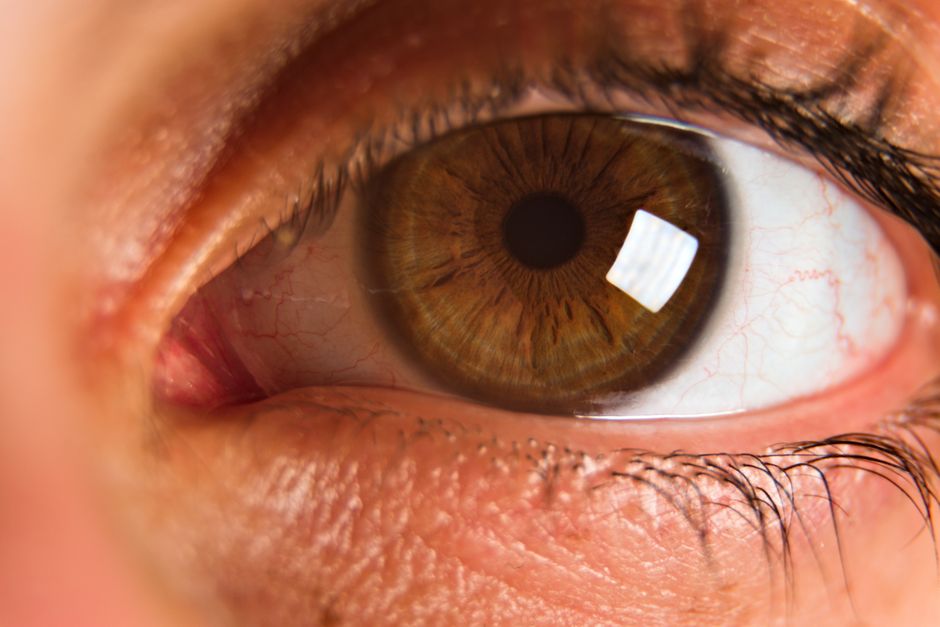
A scratched cornea, also called a corneal abrasion, is one of the most common eye injuries. The good news is that most heal on their own within 24 to 48 hours. The key is to let the eye rest, avoid rubbing it, and use a doctor-recommended lubricating eye drop. Never try to treat it yourself with anything other than preservative-free artificial tears. If the pain is severe, your vision changes, or you have a history of eye problems, see a doctor right away.
What Does a Scratched Cornea Actually Feel Like?
People describe the sensation as something stuck in the eye that won’t come out. It can feel like sand or grit rubbing against the eyelid with every blink. The eye often waters heavily as your body tries to flush out the irritant. Light sensitivity, redness, and blurred vision are also common.
The cornea is packed with nerve endings. That is why even a tiny scratch can cause intense pain. The American Academy of Ophthalmology reports that corneal abrasions are among the most painful eye injuries because of this dense nerve supply. The pain usually peaks in the first few hours and then gradually decreases as the outer layer of cells starts to repair itself.
If you have any discharge that looks like pus, or if the pain gets worse instead of better after a few hours, that is not normal. Those signs point to an infection, not a simple scratch. An infection needs medical treatment right away.
Can You Heal a Scratched Cornea at Home?
For a minor scratch, yes. Most corneal abrasions heal without any special treatment. The cornea has an amazing ability to regenerate its outermost layer. Research published in Cornea journal shows that healthy corneal epithelial cells can resurface a small defect in 24 to 48 hours.
What you can do at home is simple. Use preservative-free artificial tears every few hours. They keep the eye moist and help the healing cells move across the scratch. Blink frequently to spread the tears evenly. Rest your eyes by keeping them closed when possible. Wearing sunglasses can help with light sensitivity.
What you should never do is try to remove anything from your eye with tweezers, a cotton swab, or your fingernail. Flush the eye with saline or clean water if something is in it. If the object does not wash out, see a doctor. Do not use red-eye drops like Visine. They constrict blood vessels and can slow healing. Do not patch the eye unless a doctor tells you to. Old advice about patching is no longer recommended because it can create a dark, warm environment where bacteria grow.
When Should You See a Doctor for a Scratched Cornea?
You should see a doctor if the pain is severe enough to stop you from opening your eye. You should also go if your vision is blurry and does not clear up after blinking or using artificial tears. If you wear contact lenses and scratch your eye, see a doctor the same day. Contact lens wearers have a much higher risk of developing a corneal infection called keratitis.
Other reasons to see a doctor include if the scratch happened from a tree branch, a piece of metal, or anything dirty. Objects like plant matter or metal can introduce bacteria or fungi into the cornea. The CDC notes that contact lens-related corneal infections are a leading cause of preventable vision loss in the United States. If you have a history of herpes simplex virus, even a cold sore, a scratched cornea can trigger a more serious condition called herpetic keratitis. That needs antiviral treatment.
Doctors will put a numbing drop in your eye so they can examine the cornea under a blue light with a dye called fluorescein. This test shows the exact size and depth of the scratch. They can also check for any foreign body that might be stuck under the eyelid.





How To Heal A Scratched Cornea: What the Research Really Shows
Research shows that the most effective treatment for a simple corneal abrasion is time and lubrication. A study in Ophthalmology compared antibiotic eye drops to artificial tears for small abrasions and found no difference in healing rates. The cornea healed just as fast with simple lubrication. Antibiotics are only needed if there is an infection or if the scratch was caused by something contaminated.
Some people think that antibiotic drops are always necessary. That is not what the evidence says. Overusing antibiotics can irritate the eye and contribute to bacterial resistance. The American Academy of Ophthalmology recommends against routine antibiotic use for uncomplicated abrasions. They suggest using antibiotic drops only when the risk of infection is higher, such as with contact lens wearers or dirty injuries.
There is also no good evidence that eye patches speed up healing. A Cochrane review of multiple studies found that patching does not reduce pain or improve healing time compared to no patch. In fact, patching can delay healing by keeping the eyelid from naturally blinking and spreading tears. The old practice of patching has been largely abandoned by eye doctors.
What Treatments Should You Avoid for a Scratched Cornea?
Avoid any eye drops that say “get the red out.” These contain vasoconstrictors like tetrahydrozoline. They reduce redness but also reduce blood flow to the cornea. The cornea needs good blood flow to heal. These drops also contain preservatives that can sting and slow cell regrowth.
Do not use any ointments or drops that are not specifically labeled for eye use. Some people try home remedies like honey, coconut oil, or breast milk. There is no clinical evidence that any of these help heal a corneal abrasion. They can introduce bacteria and cause serious infection. The only safe home treatment is preservative-free artificial tears.
Do not rub your eye. It is hard not to, but rubbing can turn a small scratch into a larger one. It can also push debris deeper into the cornea. If the urge to rub is strong, try applying a cold compress over the closed eyelid. The cold helps numb the area and reduces the urge to rub.
Do not wear contact lenses until the eye is completely healed. The FDA recommends discarding any contact lens that was in your eye at the time of the injury. Bacteria can stick to the lens and cause infection later. Throw away the lens and the case, and use a fresh pair once your doctor says it is safe.
What Can Slow Down Healing of a Scratched Cornea?
Several factors can slow healing. Dry eyes are a major one. If your eyes do not produce enough tears, the healing cells have a harder time moving across the scratch. Using preservative-free artificial tears helps, but if you have chronic dry eye, you may need a doctor-prescribed drop like cyclosporine (Restasis) or lifitegrast (Xiidra).
Diabetes can slow corneal healing significantly. High blood sugar damages the nerves in the cornea and reduces the ability of cells to regenerate. If you have diabetes, even a small scratch should be checked by an eye doctor. The American Diabetes Association notes that people with diabetes are at higher risk for corneal complications after minor injuries.
Smoking is another factor. Cigarette smoke contains chemicals that reduce oxygen supply to the cornea. The cornea has no blood vessels of its own. It gets oxygen directly from the air. Smoking reduces that oxygen and slows cell repair. Quitting or at least avoiding smoking during the healing period can make a real difference.
| Factor | How It Affects Healing | What to Do |
|---|---|---|
| Dry eyes | Slows cell movement across the scratch | Use preservative-free artificial tears every 2-3 hours |
| Contact lens use | Increases infection risk, blocks oxygen | Stop wearing lenses until doctor says healed |
| Smoking | Reduces oxygen supply to cornea | Avoid smoking during healing period |
| Diabetes | Damages corneal nerves, slows regeneration | See eye doctor for any corneal injury |
| Rubbing the eye | Can enlarge the scratch or cause infection | Use cold compress to reduce urge to rub |
What Are the Signs That a Scratched Cornea Is Not Healing?
Most scratches heal within two days. If the pain, redness, or light sensitivity lasts longer than 48 hours, something may be wrong. You should also watch for increased pain instead of less. Pain that gets worse after the first 24 hours can mean an infection is developing.
Blurred vision that does not improve is another warning sign. The cornea needs to be clear for good vision. If the scratch is deep, it can leave a scar. Corneal scars can cause permanent blurring. A doctor can see a scar with a slit lamp exam and tell you if it is likely to fade or stay.
Discharge from the eye, especially thick yellow or green discharge, is a sign of bacterial infection. You may also notice crusting on the eyelashes in the morning. If you have any of these signs, see a doctor immediately. Delaying treatment for a corneal infection can lead to vision loss that cannot be reversed.
- Pain lasting more than 48 hours: Could indicate infection or a deeper injury.
- Worsening pain after 24 hours: Often a sign of bacterial keratitis.
- Blurred vision that does not clear: May mean a corneal scar is forming.
- Yellow or green discharge: Strong indicator of infection.
- Sensitivity to light that gets worse: Common with iritis or corneal inflammation.
Frequently Asked Questions
Can a scratched cornea heal overnight?
Minor scratches often heal within 24 to 48 hours because the cornea’s outer layer regenerates quickly.
Should I sleep with my eye closed if I scratched it?
Yes, keeping the eye closed during sleep helps it stay moist and promotes natural healing.
Can I use regular eye drops for a scratched cornea?
Only use preservative-free artificial tears. Regular eye drops with preservatives can irritate the scratch.
How do I know if my scratched cornea is infected?
Signs of infection include worsening pain after 24 hours, yellow or green discharge, and increasing redness.
