
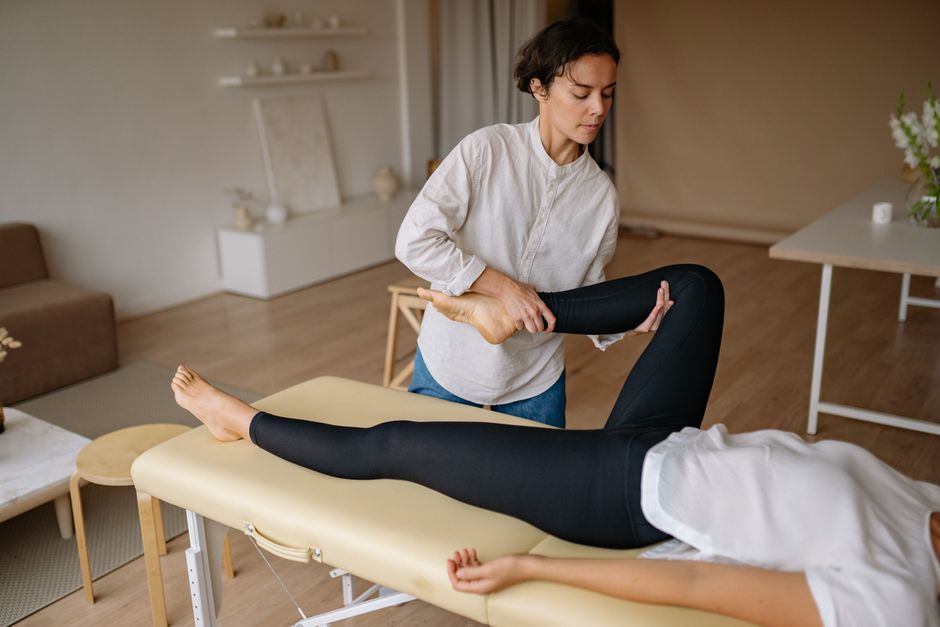
A pulled groin happens when the muscles on the inside of your thigh stretch too far or tear. It is a common injury in sports that involve sudden stops, starts, or side-to-side moves. The good news is that most groin pulls heal fully with rest and a careful, step-by-step recovery plan. The process takes time, usually several weeks, and pushing too hard too soon often leads to re-injury.
What Exactly Is a Pulled Groin?
A pulled groin is an injury to the adductor muscles. These are the five muscles on the inner thigh that pull your leg toward your body. They run from your pelvis down to your thigh bone and knee.
These muscles work hard when you change direction, kick, or push off sideways. When they are forced beyond their limit, the muscle fibers stretch or tear. The medical name for this is an adductor strain.
Doctors grade these injuries by severity. A grade 1 strain is mild with only a few torn fibers. A grade 2 strain involves a partial tear and more pain. A grade 3 strain is a complete tear of the muscle, which is rare and may require surgery.
How Do I Know If My Groin Is Pulled?
The main symptom is sudden pain on the inside of your thigh or in the crease where your leg meets your body. The pain often comes on during activity, not after. You may also feel tightness, swelling, or bruising in the area.
Walking may be painful, and you will likely struggle to bring your legs together against resistance. If you cannot put weight on the leg, or if you felt a pop and have significant swelling, see a doctor. These signs can point to a more serious tear.
Groin pain is not always a pulled muscle. A sports hernia, hip joint problems, or nerve irritation can cause similar symptoms. If the pain does not improve after a few days of rest, or if it came on slowly without a specific injury, get a medical opinion.
How To Heal A Pulled Groin Step By Step Recovery
Step 1: Protect the area immediately. Stop the activity that caused the pain. Do not try to play through it. Continuing to use the muscle makes the tear worse and lengthens your recovery time.
Step 2: Apply ice in the first 48 hours. Wrap an ice pack in a thin towel and place it on the area for 15 to 20 minutes every 2 to 3 hours. Ice reduces pain and limits swelling. Do not apply ice directly to bare skin.
Step 3: Use compression and elevation. A snug elastic bandage around the upper thigh can help control swelling. When resting, keep your leg slightly elevated on a pillow. The bandage should be firm but not so tight that it cuts off circulation.
Step 4: Rest but do not stay still. Avoid activities that stretch or strain the muscle for the first few days. Gentle walking is usually fine if it does not cause pain. Complete bed rest is not recommended because it leads to stiffness and muscle weakness.
Step 5: Start gentle movement after 2 to 3 days. Once the sharp pain settles, begin pain-free range of motion exercises. Slowly move your leg in and out, and gently stretch the inner thigh. Stop immediately if you feel a pulling sensation. Pain during exercise means the muscle is not ready.
Step 6: Rebuild strength gradually. This is the phase people often skip, and it is why many groin pulls return. Start with isometric exercises, where you tense the muscle without moving the joint. Then progress to light resistance exercises like squeezing a ball between your knees.
Step 7: Return to sport slowly. You should be pain-free with daily activities and have full range of motion before returning to sport. Start with straight-line jogging, then add gentle turns. Progress to sprinting and cutting movements only when you feel strong and pain-free.


What Is the Best Stretch for a Pulled Groin?
Stretching is only helpful once the initial pain has settled. In the first days after injury, stretching can worsen the tear. Wait until you can walk without pain before you begin any stretching routine.
The standing groin stretch is a good starting point. Stand with your feet wider than shoulder-width apart. Shift your weight to one side, bending that knee while keeping the other leg straight. You should feel a gentle stretch along the inside of the straight leg. Hold for 20 to 30 seconds and repeat on the other side.
A second useful stretch is the butterfly position. Sit on the floor with the soles of your feet pressed together. Let your knees fall outward. You can gently press your knees toward the floor, but never bounce. The stretch should feel mild, not sharp.
Stretch only to the point of mild tension. If you feel sharp pain or pulling in the injured area, back off. The muscle is still healing, and forcing a stretch can restart the injury cycle.
How Long Does a Pulled Groin Take To Heal?
Recovery time depends on the severity of the tear. A mild grade 1 strain may heal in 1 to 2 weeks. A grade 2 strain commonly takes 4 to 8 weeks. A complete grade 3 tear can take 3 months or longer, and may require surgical repair.
These timelines assume you follow a proper rehabilitation program. Returning to sport before the muscle has fully healed is the single biggest risk factor for re-injury. A second groin pull is often worse than the first.
Age and fitness level also play a role. Older adults tend to heal more slowly. People who stay active during recovery, with pain-free exercise, often regain function faster than those who rest completely.
Pain is your most reliable guide. If an activity causes pain during or after the exercise, you are doing too much too soon. Scale back to the previous step and give the muscle more time.
Can I Exercise With a Pulled Groin?
Yes, but you must choose activities that do not strain the inner thigh. During the early healing phase, upper body strength training is generally safe. Swimming can be a good option, but avoid breaststroke because the frog kick heavily engages the groin muscles.
Cycling on a stationary bike with low resistance can be introduced once walking is pain-free. Keep the seat high enough that your knees do not come up too high, which reduces strain on the hip. Start with 5 to 10 minutes and increase gradually.
Core strengthening exercises are valuable during groin recovery. The adductor muscles attach to the pelvis, and a strong core supports the whole area. Planks, bird dogs, and gentle abdominal work can be done early in recovery without aggravating the groin.
Avoid any exercise that requires sudden direction changes, jumping, or kicking until you have completed a full strengthening program. This includes running on uneven ground, which places unpredictable stress on the adductors.
When Should I See a Doctor for a Pulled Groin?
See a doctor promptly if you cannot walk normally, if you felt a pop at the time of injury, or if you have significant bruising and swelling. These signs may indicate a more serious tear that needs imaging and professional treatment.
You should also seek medical advice if the pain does not improve within a few days of rest and ice. Persistent pain can indicate a different problem, such as a hip labral tear, inguinal hernia, or stress fracture. These conditions require different treatment and will not improve with groin strain rehabilitation alone.
A physical therapist can be valuable even for mild strains. They can assess your movement patterns and identify weaknesses that may have contributed to the injury. Addressing these issues reduces the chance of recurrence.
Do not rely on painkillers to mask the pain so you can keep training. Anti-inflammatory medication can reduce pain in the early days, but it does not heal the muscle. Exercising on a numb or masked injury is a fast track to a worse tear.
What Can I Do To Prevent a Groin Pull?
Strong adductor muscles are the best protection. Regular strength training for the inner thighs, not just during recovery but as part of your normal routine, builds resilience in the area. Squeezing a ball between your knees or using a resistance band for side steps are simple effective exercises.
Warm up properly before exercise. Cold muscles tear more easily than warm ones. A warm-up should raise your heart rate and include dynamic movements that mimic your sport, not just static stretching.
Gradually increase the intensity of your training. Sudden jumps in mileage, speed, or training frequency put you at higher risk. The adductor muscles need time to adapt to new demands.
Address any previous injuries. People who have had one groin pull are significantly more likely to have another. Completing a full rehabilitation program, including strength work after the pain resolves, is the most effective way to break this cycle.
Frequently Asked Questions
Should I stretch a pulled groin immediately?
No. Stretching in the first few days can worsen the tear. Wait until you can walk without pain before starting gentle stretching.
Is heat or ice better for a groin strain?
Ice is better in the first 48 hours to reduce pain and swelling. Heat can be used after a few days to relax tight muscles before gentle exercise.
Can I walk on a pulled groin?
Yes, gentle walking is usually safe if it does not cause sharp pain. If walking is painful, reduce your pace or use crutches temporarily.
When can I return to sports after a groin pull?
Return only when you have no pain with daily activities, full range of motion, and equal strength in both legs. This typically takes at least 2 to 3 weeks for mild strains and longer for more severe ones.
