
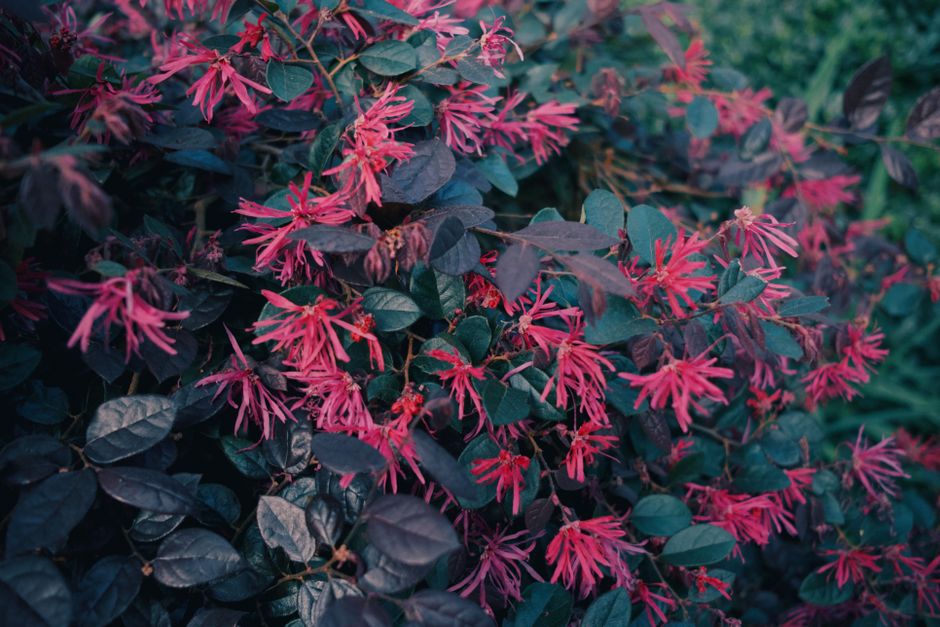
Loropetalum Cherry Blast is a striking evergreen shrub known for its deep burgundy foliage and bright pink, fringe-like flowers that appear in spring. It is a relatively low-maintenance plant that thrives in USDA hardiness zones 7 through 9. To grow it successfully, plant it in well-draining, acidic soil with full sun to partial shade, water it regularly until established, and prune lightly after the spring bloom to maintain its shape.
What Makes Loropetalum Cherry Blast Unique?
Loropetalum chinense var. rubrum ‘Cherry Blast’ is a specific cultivar of the Chinese fringe flower. What sets Cherry Blast apart from other loropetalum varieties is its compact, rounded growth habit. It typically reaches about 4 to 6 feet tall and wide, making it suitable for smaller gardens or foundation plantings.
The foliage is the main attraction. New growth emerges a rich cherry-red color before maturing to a deep burgundy or plum tone. In fall, the color often intensifies. The flowers are spidery and vibrant pink, appearing in clusters along the branches in early spring, with occasional repeat blooms through the summer.
What Are the Ideal Growing Conditions?
Loropetalum Cherry Blast performs best when its basic needs are met. It is not a fussy plant, but getting the location right makes a significant difference in flowering and foliage color.
Sunlight: Full sun, meaning at least 6 hours of direct sunlight, produces the densest growth and deepest foliage color. In hotter southern climates, afternoon shade is beneficial and can prevent leaf scorch. Too much shade results in leggy growth and greener leaves.
Soil: This shrub prefers acidic soil with a pH between 4.5 and 6.5. Well-draining soil is essential. Loropetalum does not tolerate wet feet, and consistently soggy soil can lead to root rot. If your soil is heavy clay, amend it with organic matter like compost before planting.
Hardiness: Cherry Blast is reliably evergreen in zones 7 through 9. In zone 7, it may suffer some dieback during unusually cold winters, but it typically recovers in spring. It is not suited for climates colder than zone 7 without significant winter protection.
How Do You Plant Loropetalum Cherry Blast?
Planting at the correct depth is critical. Dig a hole that is twice as wide as the root ball but no deeper. The top of the root ball should sit level with the surrounding soil. Planting too deep is a common cause of failure, as it suffocates the roots.
Backfill the hole with the native soil you removed. Adding compost at planting time is optional, but mixing in a small amount can help poor soils. Do not add fertilizer to the planting hole, as this can burn young roots.
Water thoroughly after planting. Apply a 2 to 3 inch layer of mulch around the base, keeping it a few inches away from the trunk. Mulch conserves moisture and regulates soil temperature, but mulch piled against the stem can cause rot.




How Often Should You Water Loropetalum Cherry Blast?
Newly planted loropetalum needs consistent moisture for the first year. Water deeply once or twice a week, depending on weather conditions, to encourage deep root growth. The goal is to keep the root ball moist but not waterlogged.
Once established, Cherry Blast is moderately drought-tolerant. It will survive dry periods, but it looks best with occasional supplemental watering during extended droughts. During the first two summers, if rainfall is sparse, water deeply every 7 to 10 days.
Always check the soil before watering. Insert your finger about 2 inches into the soil. If it feels dry, water. If it feels damp, wait a day or two. Overwatering is a more common problem than underwatering for this shrub.
When and How Should You Fertilize?
Loropetalum Cherry Blast is not a heavy feeder. In most garden soils, a single application of a slow-release, balanced fertilizer in early spring is sufficient. Look for a fertilizer formulated for acid-loving plants, such as one labeled for azaleas or camellias.
Apply the fertilizer just as new growth begins in late winter or early spring. Follow the package directions for the correct amount based on the size of your shrub. Water the fertilizer in well after applying.
Avoid fertilizing in late summer or fall. This can push new tender growth that is susceptible to frost damage in winter. If your soil is naturally rich, you may not need to fertilize at all. Yellowing leaves can indicate a nutrient deficiency, but they can also indicate poor drainage.
How Do You Prune Loropetalum Cherry Blast?
Cherry Blast has a naturally neat, rounded form. It requires minimal pruning to look good. The best time to prune is immediately after the main spring bloom has finished. This allows the plant to set buds for the following year without cutting them off.
Use sharp, clean bypass pruners. Remove any dead, damaged, or crossing branches first. To shape the shrub, make cuts just above a leaf node or a outward-facing branch. Avoid shearing the plant into a formal shape, as this removes the natural arching character of the branches.
If the shrub has become leggy or overgrown, you can do a more severe renovation prune in late winter. Loropetalum tolerates hard pruning well and will regrow from old wood. However, this will sacrifice the spring bloom for that year.
What Pests and Diseases Should You Watch For?
Loropetalum Cherry Blast is generally pest-resistant. Healthy plants rarely have serious insect problems. Occasionally, you may see aphids or spider mites, especially during hot, dry weather. These can usually be washed off with a strong stream of water.
Root rot is the most significant disease threat. It is caused by fungal pathogens that thrive in poorly drained soil. Symptoms include wilting leaves, yellowing foliage, and branch dieback. Once root rot takes hold, it is difficult to reverse. Prevention through proper planting and watering is the best strategy.
Chlorosis, or yellowing leaves with green veins, indicates an iron deficiency. This is common in alkaline soils where iron is unavailable to the roots. Treating with a chelated iron supplement can help, but adjusting the soil pH to the acidic range is the more permanent solution.
How Do You Use Loropetalum Cherry Blast in the Landscape?
Cherry Blast is a versatile plant in the landscape. Its compact size and colorful foliage make it a strong choice for foundation plantings, mixed borders, or as a low hedge. The dark burgundy leaves provide excellent contrast against green shrubs and plants with silver or chartreuse foliage.
It pairs well with other acid-loving plants like azaleas, camellias, and gardenias. The pink flowers of Cherry Blast echo the colors of many spring bulbs. You can also grow it in a large container on a patio or balcony, provided the pot has adequate drainage holes.
Because it is an evergreen, it provides year-round structure and color to the garden. In winter, the foliage deepens to a dark plum, offering visual interest when many other plants are dormant.
Frequently Asked Questions
How fast does Loropetalum Cherry Blast grow?
Cherry Blast is a moderate grower, typically adding 6 to 12 inches per year. It will reach its mature size of 4 to 6 feet in about 5 to 7 years.
Can Loropetalum Cherry Blast grow in full shade?
No, it will not thrive in full shade. It needs at least 4 to 6 hours of direct sun for good flowering and to maintain its deep burgundy foliage color.
Is Loropetalum Cherry Blast deer resistant?
Deer usually avoid loropetalum, but no plant is completely deer-proof. In areas with high deer pressure, they may browse on it when other food sources are scarce.
Why is my Loropetalum Cherry Blast losing its leaves?
Leaf drop is often a response to stress. It can be caused by sudden temperature changes, drought, or overwatering. Check your watering habits and ensure the soil drains well.
