
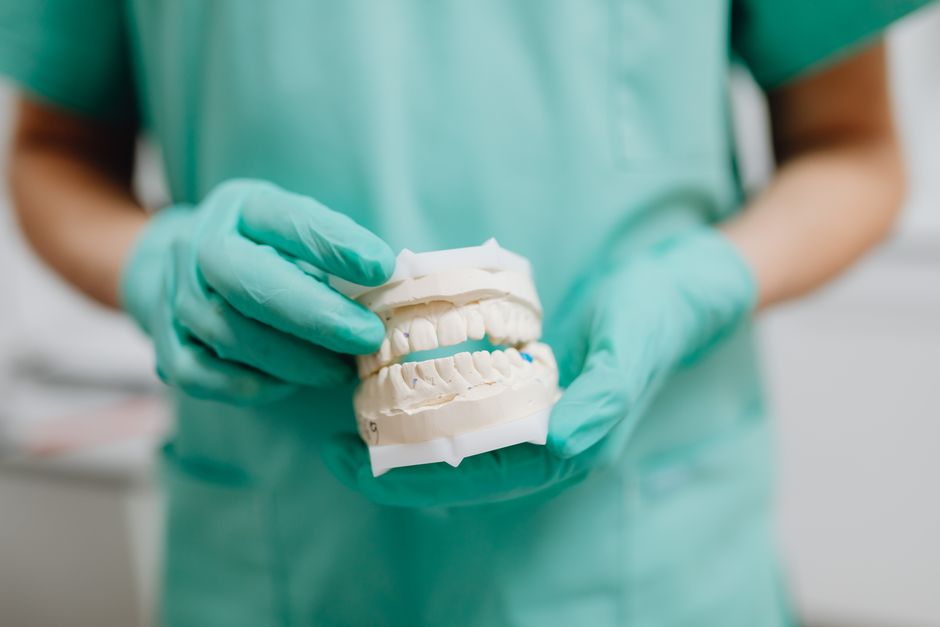
Getting new dentures often triggers a gag reflex. It is one of the most common complaints new denture wearers report. The good news is that for most people, this sensation fades as your mouth adapts. The key is understanding why it happens and using specific strategies to retrain your brain and mouth during the first few weeks.
Why Do New Dentures Cause Gagging?
The gag reflex is a protective mechanism. It prevents foreign objects from entering your throat. Your brain sees your new dentures as a foreign object at first.
Dentures cover the palate, or the roof of your mouth. This area is highly sensitive. When a denture extends too far back toward the soft palate, it triggers the reflex. The soft palate is the fleshy part at the back of the mouth. Pressure here is the most common cause of denture-related gagging.
Another factor is excess saliva. New dentures stimulate saliva production. Swallowing becomes harder when you are not used to the bulk of the appliance. This extra saliva pooling in the back of the throat can also trigger the gag reflex.
How To Get Used To New Dentures Without Gagging: Key Facts
Adaptation is a process. It does not happen overnight. Most dental professionals agree that the initial adjustment period lasts from a few days to several weeks. The key facts involve gradual exposure and retraining your swallowing pattern.
Start by wearing your dentures for short periods. Wear them for a few hours at a time. Remove them when the gagging becomes intense. This prevents your brain from forming a strong negative association with the dentures.
Distraction is a practical tool. When you first wear them, keep yourself busy. Go for a walk. Watch a show. Focus on a task. The less you think about the dentures, the less your brain focuses on the sensation in your mouth.
Practical Techniques To Suppress The Gag Reflex
Several physical techniques can help you manage the reflex in the moment. These are simple actions you can do at home.
- Focus on breathing through your nose. Mouth breathing increases saliva flow and makes gagging more likely.
- Suck on a hard candy. The act of sucking redirects your focus. It also increases saliva in a controlled way that encourages swallowing.
- Press your thumb. Make a fist with your left hand and press your thumb inside the fist. Some people find this pressure point reduces the gag reflex. The evidence for this is anecdotal, but it is a harmless trick to try.
- Hum or speak out loud. Vocalizing changes the position of your soft palate. This can interrupt the reflex before it starts.
Practice swallowing with the dentures in your mouth. Take a small sip of water. Swallow slowly and deliberately. This helps you learn a new swallowing pattern that accommodates the dentures.





Adjusting Your Eating Habits
Eating with new dentures is a learned skill. Start with soft foods. Cut food into small pieces. Chew on both sides of your mouth at the same time. This keeps the dentures balanced and prevents them from shifting.
Avoid foods that are sticky or hard during the first week. These require more chewing force. More chewing force increases the chance of the dentures moving and triggering your gag reflex.
Eat slowly. Take smaller bites than you normally would. This gives your mouth time to manage the food and the dentures together. Rushing increases the risk of choking and gagging.
The Role Of Denture Adhesives
A well-fitting denture should not require adhesive. However, during the adjustment period, adhesive can be helpful. A stable denture moves less. Less movement means less stimulation of the sensitive palate.
Use adhesive sparingly at first. Too much adhesive can cause the denture to sit higher than intended. This creates a poor fit and can worsen gagging. Follow the instructions on the product. If you are unsure, ask your dentist to demonstrate the correct amount.
If your dentures continue to move or feel loose, do not rely on adhesive alone. This is a sign that the fit may need adjustment. A dentist can reline or adjust the denture to improve its fit.
When To See Your Dentist
Persistent gagging is not something you should simply endure. If the gagging does not improve after two weeks of consistent wear, you need professional help. Your dentist can check the fit and the extension of the denture.
Sometimes the denture extends too far back into the soft palate. A simple adjustment to shorten the back edge can resolve the problem. This is a common and straightforward fix.
Some people have a naturally strong gag reflex. For these individuals, the dentist may recommend a different type of denture. Implant-supported dentures are more stable and cover less of the palate. Discuss this option with your dentist if standard dentures remain problematic.
Do not stop wearing your dentures entirely when you are not eating. Complete removal for days at a time resets your progress. Your mouth will never adapt if you do not give it consistent exposure. If the gagging is severe enough that you cannot wear them at all, contact your dentist immediately.
Understanding The Psychological Component
Anxiety plays a significant role in gagging. If you expect to gag, you are more likely to gag. This is a real physiological response. Anticipation activates the same neural pathways as the actual trigger.
Relaxation techniques can help. Take slow, deep breaths before inserting your dentures. Remind yourself that this sensation is temporary. Most people report significant improvement within the first month of consistent wear.
Research on the gag reflex and dentures shows that desensitization is effective. This means repeated, gradual exposure reduces the reflex over time. Your brain learns that the dentures are not a threat. This learning process takes time and patience.
Oral Hygiene During The Adjustment Period
Keeping your mouth clean is important during this time. Food particles trapped under the dentures can cause irritation. Irritation can make the gag reflex more sensitive.
Remove and rinse your dentures after meals. Brush your tongue gently. A coated tongue can contribute to a heightened gag reflex. Use a soft toothbrush or a tongue scraper.
Give your mouth a break. Remove your dentures for at least six hours per day, usually while you sleep. This allows the tissues of your mouth to recover. Healthy oral tissues are less sensitive than irritated ones.
Frequently Asked Questions
How long does it take to stop gagging with new dentures?
Most people notice a significant decrease in gagging within two to four weeks of consistent wear. If gagging persists beyond this period, you should see your dentist for a fit adjustment.
Can dentures be adjusted to stop gagging?
Yes, a dentist can shorten the back edge of the denture if it extends too far into the soft palate. This is a common and often immediate fix for denture-related gagging.
Is it better to wear dentures all day to get used to them faster?
No, wearing them all day without breaks can increase irritation and worsen the gag reflex. Start with short periods of a few hours and gradually increase the time as your mouth adapts.
Does denture adhesive help with gagging?
Adhesive can help if the gagging is caused by a loose denture that moves around. A stable denture is less likely to trigger the reflex, but adhesive cannot fix a poorly fitting denture.
