
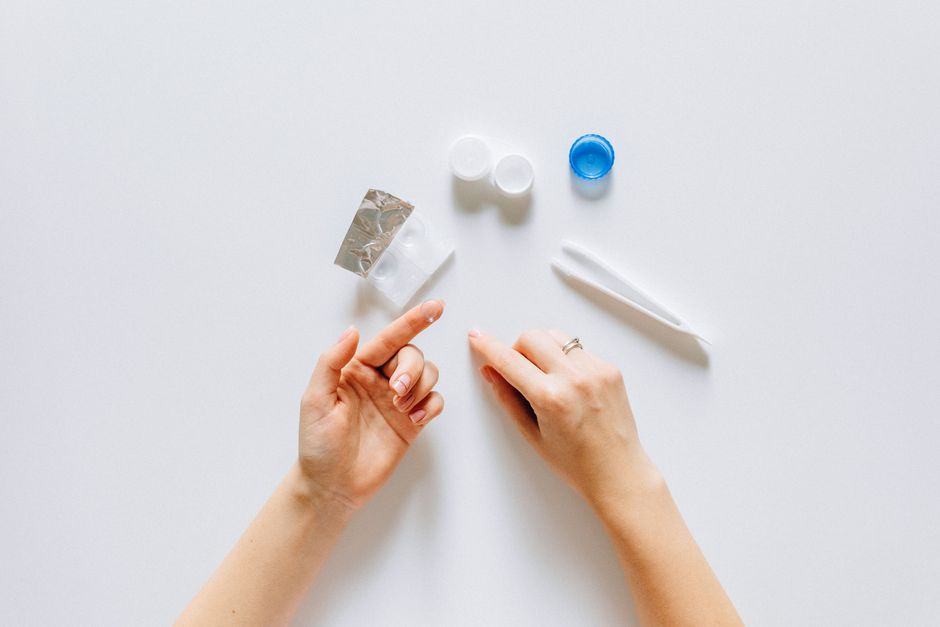
Putting in contact lenses for the first time can feel strange. Your eyes may water, blink rapidly, or feel like something is stuck in them. This is normal. Most people adapt within a week or two if they follow a steady routine. The key is to start with short wearing times, keep your lenses clean, and give your eyes a break when they need it. Your brain and eyelids need time to learn that a foreign object on your eye is safe.
Why Do Contacts Feel So Uncomfortable At First?
Your cornea is one of the most sensitive tissues in your body. It is packed with nerve endings that detect anything touching the surface of your eye. When a contact lens sits on your cornea, those nerves send alarm signals to your brain. Your eyelids also have sensitive edges that brush against the lens edge with every blink.
This sensitivity is a protective reflex. Your eye is designed to reject foreign objects. The lens is not causing damage — it is simply triggering a normal defense response. Over days or weeks, your nerve endings become less reactive to the lens. This is called neural adaptation. Your brain learns that the lens is not a threat, and the blinking reflex calms down.
Some people adapt in two or three days. Others need two weeks. If discomfort persists beyond two weeks of consistent wear, talk to your eye care provider. Persistent pain, redness, or blurred vision is not normal adaptation — it is a sign to stop wearing the lenses and seek advice.
How Long Does It Take To Get Used To Contacts?
Most first-time wearers feel comfortable after 3 to 7 days of consistent use. Full adaptation — where you no longer notice the lenses at all — typically takes 1 to 2 weeks. Some people never fully forget they are wearing contacts, but the constant awareness fades significantly.
The timeline depends on several factors. The type of lens matters. Modern silicone hydrogel lenses allow more oxygen to reach your cornea than older materials, which reduces dryness and improves comfort. Daily disposable lenses tend to feel more comfortable than monthly lenses because they are fresh every day and have no protein buildup.
Your natural tear production also plays a role. People with dry eyes take longer to adapt because the lens rubs against a drier surface. If you have allergies, your eyes may be more reactive during allergy season. If you wear glasses most of the time and only use contacts occasionally, adaptation may take longer because your eyes never fully adjust.
What Is The Best Way To Start Wearing Contacts?
Your eye care provider will give you a wearing schedule. Follow it exactly. A common starting schedule looks like this:
- Day 1: Wear lenses for 4 hours
- Day 2: Wear lenses for 6 hours
- Day 3: Wear lenses for 8 hours
- Day 4 onward: Increase by 1-2 hours per day up to your prescribed maximum
This gradual approach gives your cornea time to adjust to reduced oxygen flow and your eyelids time to adjust to the lens edge. Skipping the ramp-up can cause irritation, redness, and a feeling that the lenses are unbearable.
Always remove your lenses before sleeping unless your provider has specifically told you they are approved for overnight wear. Sleeping in regular lenses significantly increases the risk of corneal infection. Even lenses labeled for extended wear carry higher infection risk with overnight use.





Why Do My Eyes Water Or Burn When I Put Lenses In?
Watering is a reflex. When your eye detects a foreign object, your lacrimal glands produce extra tears to try to flush it out. This usually calms down within a few minutes as your eye realizes the lens is not moving.
Burning is different. If your lenses burn immediately after insertion, the most common cause is a solution issue. Your lens may not be fully rinsed of storage solution, or the solution itself may not agree with your eyes. Some people are sensitive to preservatives in multipurpose solutions. If burning happens consistently, ask your provider about a preservative-free solution or a different lens material.
A burning sensation that develops after hours of wear is more likely dryness. The lens is absorbing moisture from your tear film. Re-wetting drops made for contact lenses can help. Do not use regular eye drops — many contain preservatives that build up on lenses and cause irritation.
How Do I Stop Blinking So Much When Wearing Contacts?
Excessive blinking is a natural response to a foreign object near your eye. You cannot simply will yourself to stop. The reflex fades as your brain adapts. You can speed this up by practicing in a low-stress environment.
Sit at a table with a book or screen. Put your lenses in. Then deliberately slow your blinking. Blink fully but slowly, pausing for a second with your eyes closed. Do this for five minutes. This trains your eyelids to move smoothly over the lens instead of fluttering.
Another technique is to look at a distant object for a few minutes after insertion. This relaxes the focusing muscles and reduces the urge to squint. Squinting tightens your eyelid muscles and makes the lens edge more noticeable.
What Should I Do If A Contact Lens Feels Stuck Or Painful?
Stop. Do not try to “push through” pain. Pain is different from discomfort. Discomfort is a mild awareness of the lens. Pain is sharp, burning, or aching. If a lens hurts, remove it immediately.
Wash your hands. Look up and pull your lower eyelid down. Use your fingertip to slide the lens toward the white part of your eye. Gently pinch the lens between your thumb and index finger to remove it. If the lens feels stuck to your eye, do not pry it off. Apply a few drops of contact lens rewetting solution and wait 30 seconds. The lens should loosen.
If the lens will not come out or your eye remains red and painful after removal, seek medical attention. A torn lens or a corneal scratch requires professional care. Do not keep trying to remove it — you can cause more damage.
How Do I Care For Lenses To Avoid Discomfort?
Lens care directly affects comfort. Dirty lenses are uncomfortable lenses. Protein deposits, dust, and bacteria accumulate on the lens surface over time. These deposits irritate your eye and increase infection risk.
Follow these steps every time you handle your lenses:
- Wash your hands with soap and water. Dry them with a lint-free towel.
- Clean your lens with fresh solution. Rub it gently for 10-20 seconds even if the solution says “no rub.”
- Rinse the lens with solution before placing it in your eye.
- Replace your lens case every 1-3 months. Bacteria grow in cases.
- Never top off old solution in your case. Always use fresh solution.
Never use tap water, saliva, or homemade saline on your lenses. These are not sterile and can cause serious eye infections. Tap water contains microorganisms that can adhere to the lens and infect your cornea.
When Should I See My Eye Doctor?
Schedule a follow-up visit about one week after you start wearing contacts. Your provider will check the fit, look for any corneal changes, and confirm you are handling the lenses properly. This visit is standard and important — many problems are invisible to you but visible under a slit lamp.
See your provider sooner if you experience any of these symptoms:
- Persistent redness that does not fade after removing lenses
- Pain that lasts more than a few minutes after lens removal
- Blurred vision that does not clear with blinking or rewetting drops
- Light sensitivity
- A feeling that something is still in your eye after removing the lens
These symptoms can indicate a corneal abrasion or infection. Early treatment is simple. Waiting can turn a minor problem into a serious one. Do not wait to see if it improves on its own.
Can I Wear Contacts If I Have Dry Eyes?
Yes, but you may need specific lens types. Daily disposable lenses are often better for dry eyes because they start fresh and retain moisture better than reused lenses. Some brands are specifically designed for dry eye sufferers with higher water content or specialized surface treatments.
You may also benefit from switching to a different contact lens solution. Some solutions are marketed for sensitive eyes and contain fewer preservatives. Artificial tears approved for contact lens use can help during the day. Use them before you feel dryness, not after — once your eyes are dry, the lens has already started to dehydrate.
If dryness persists despite these changes, talk to your provider about scleral lenses or other specialty options. These are larger lenses that vault over the cornea and hold a reservoir of fluid, keeping the eye surface hydrated. They are more expensive and require a specialist fit, but they can be life-changing for severe dry eye.
Frequently Asked Questions
How many hours a day should I wear contacts the first week?
Start with 4 hours on day one and increase by 1-2 hours daily. Most people reach full wearing time by day 5-7.
Why does my contact lens feel like it is moving when I blink?
A lens that shifts slightly with each blink is normal during the adaptation period. If it moves excessively or causes blurred vision that changes with blinking, your lens fit may be incorrect and needs professional evaluation.
Can I nap while wearing contact lenses?
No. Napping in contacts — even for 20 minutes — reduces oxygen to your cornea and increases infection risk. Remove lenses before any sleep.
What is the easiest type of contact lens for beginners?
Daily disposable soft lenses are the easiest for most beginners. They require no cleaning, start fresh every day, and are less likely to cause solution-related irritation.
