
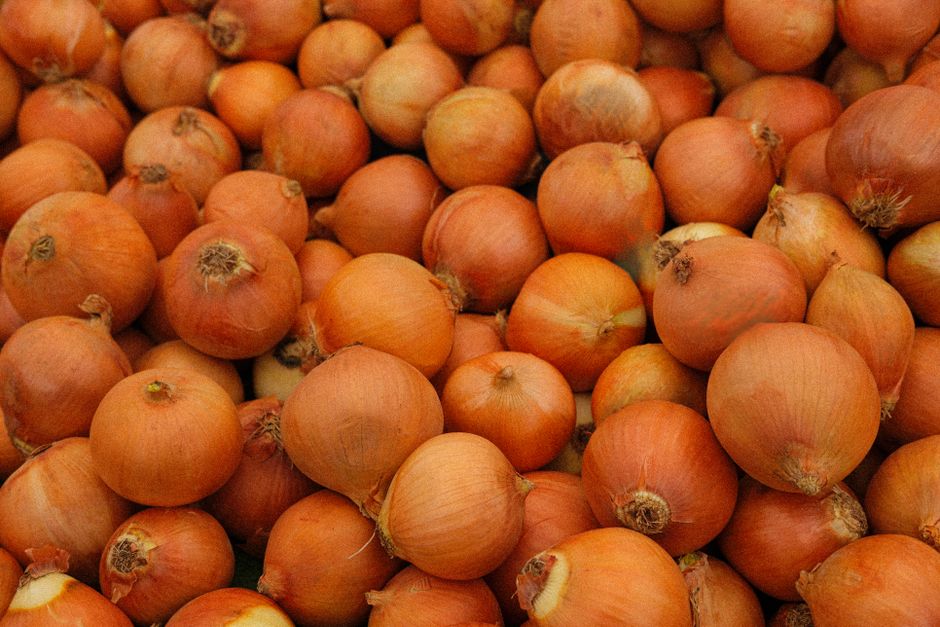
Yes, onions are vegetables. More specifically, they are root vegetables, though the part you eat grows mostly above the soil. Botanically, they belong to the Allium family, which also includes garlic, leeks, shallots, and chives. For cooking, nutrition, and daily life, they are treated as a vegetable in every practical sense.
What Makes an Onion a Vegetable?
A vegetable is any edible part of a plant that people eat as part of a savory dish. This includes roots, stems, leaves, flowers, and bulbs. Onions fit this definition because the bulb is the edible part of the plant.
Botanists define vegetables differently than chefs or nutritionists do. In botany, a fruit develops from the flower of a plant and contains seeds. A vegetable is any other edible part. Since the onion bulb does not develop from a flower and contains no seeds, it is clearly a vegetable.
Some people confuse onions with fruits because of this botanical definition. But the onion bulb is a modified underground stem that stores energy for the plant. It is not a fruit by any standard definition.
Are Onions Root Vegetables?
Yes, onions are classified as root vegetables, but the bulb is technically not a root. The bulb is a modified stem with fleshy leaves that store nutrients. True roots grow below the bulb and anchor the plant in the soil.
In grocery stores and nutrition guides, onions are grouped with root vegetables like potatoes, carrots, and turnips. This is because they grow underground and are used in cooking the same way. The classification is practical, even if the botany is slightly different.
This distinction rarely matters in real life. Whether you call the onion a root, a bulb, or simply a vegetable, it is used the same way in the kitchen and provides the same nutrients.
How Onions Compare to Other Vegetables
Onions are low in calories but rich in flavor. A medium onion contains about 44 calories and provides vitamin C, vitamin B6, potassium, and manganese. They are also a source of fiber, though not a major one.
The most studied compounds in onions are flavonoids, especially quercetin. Quercetin is an antioxidant that may help reduce inflammation. Some research suggests diets rich in flavonoid-containing foods are linked to lower risk of certain chronic diseases.
Onions also contain prebiotic fibers called fructans. These feed the beneficial bacteria in your gut. This is why eating onions can support digestive health, though the same fibers cause gas and bloating in some people.
Compared to leafy greens or cruciferous vegetables, onions are not the most nutrient-dense option. But they are one of the most widely consumed vegetables worldwide, which means their cumulative contribution to nutrition is significant.





Do Onions Count Toward Your Daily Vegetable Intake?
Yes. Onions count fully toward your daily vegetable servings. Health guidelines generally recommend eating 2 to 3 cups of vegetables per day for adults, and onions can be part of that total.
A serving of vegetables is typically half a cup of chopped onion. This counts the same as half a cup of broccoli, carrots, or spinach. No special rules apply to onions.
One note: onions are not a substitute for leafy greens or colorful vegetables. They provide different nutrients. Eating a variety of vegetables matters more than eating any single one.
Are Onions Fruits or Vegetables in Cooking?
In cooking, onions are always treated as a vegetable. They are used in savory dishes to add flavor and texture. They are never used in desserts or sweet preparations, except in rare cases where they are caramelized to bring out natural sugars.
This is different from some other foods that are botanically fruits but used as vegetables. Tomatoes, peppers, and cucumbers are botanical fruits but culinary vegetables. Onions do not have this split identity. They are both botanically and culinarily vegetables.
The confusion about onions being fruits likely comes from the general question of how fruits and vegetables are classified. But the onion is one of the clearest examples of a vegetable in both systems.
Nutritional Profile of Onions
Onions are mostly water and carbohydrates. A medium raw onion contains about 10 grams of carbohydrates, of which about 1.9 grams are fiber and 4.7 grams are natural sugars. They contain almost no fat and very little protein.
Despite being low in calories, onions provide meaningful amounts of several nutrients. One medium onion gives you about 20% of your daily vitamin C needs. It also provides small amounts of folate, calcium, and iron.
The antioxidant content of onions varies by color. Red onions contain more anthocyanins, which give them their color and add antioxidant activity. Yellow and white onions are still nutritious but have slightly different phytochemical profiles.
Shallots, which are closely related to onions, are similar in nutrition but slightly higher in some minerals. Green onions, or scallions, are harvested before the bulb forms and provide more vitamin K than mature onions.
Health Benefits of Eating Onions
Research consistently shows that people who eat more vegetables have lower rates of chronic disease. Onions specifically have been studied for their potential effects on heart health, blood sugar, and inflammation.
Some studies suggest that onion consumption may help lower blood pressure and improve cholesterol levels. These effects are likely due to the antioxidant and anti-inflammatory compounds in onions, though the exact mechanisms are not fully understood.
Onions may also help with blood sugar control. The sulfur compounds in onions have been studied for their ability to improve insulin sensitivity. However, the evidence is mostly from animal studies or small human trials, so it is not conclusive.
The prebiotic fibers in onions support gut health by feeding beneficial bacteria. A healthy gut microbiome is linked to better digestion, immune function, and even mood. This is one of the more solid benefits of regular onion consumption.
No food is a cure or a prevention on its own. Onions are a healthy addition to a balanced diet, but they do not replace other vegetables or medical treatments.
Are There Any Downsides to Eating Onions?
Some people experience digestive discomfort after eating onions. This is caused by fructans, a type of carbohydrate that ferments in the large intestine. People with irritable bowel syndrome (IBS) often find onions trigger bloating, gas, and abdominal pain.
Cooking onions can reduce their digestive effects. Longer cooking breaks down some of the fructans, making them easier to tolerate. However, people with severe fructose intolerance may need to avoid onions entirely.
Onions are safe for most people in normal food amounts. There is no established upper limit for onion consumption. Eating very large amounts could cause stomach upset, but this is not a common concern.
People taking blood-thinning medications should know that onions contain vitamin K, which plays a role in blood clotting. However, the amount in onions is small, and most people do not need to restrict onion intake while on these medications.
How to Choose and Store Onions
Choose onions that feel firm and heavy for their size. Avoid onions with soft spots, dark patches, or signs of sprouting. The papery skin should be dry and intact.
Store whole onions in a cool, dry, well-ventilated place. Do not refrigerate whole onions, as the cold and moisture can make them soft and moldy. They can last for several weeks to a few months when stored properly.
Once cut, onions should be refrigerated in a sealed container and used within 7 to 10 days. Cut onions absorb odors from other foods, so keep them covered.
Green onions and scallions are the exception. These should be refrigerated and used within a week. You can extend their life by placing the roots in a small glass of water in the refrigerator.
Frequently Asked Questions
Are onions a fruit or a vegetable?
Onions are vegetables. They are bulbs that grow underground and do not develop from flowers or contain seeds, which is how botanists define fruits.
Can onions count as a serving of vegetables?
Yes, half a cup of chopped onion counts as one serving of vegetables toward your daily recommended intake.
Are onions good for you every day?
Eating onions daily is safe and healthy for most people. They provide antioxidants, fiber, and vitamin C, though they should be part of a varied vegetable intake.
Why do onions make some people feel bloated?
Onions contain fructans, a type of carbohydrate that ferments in the gut and can cause gas and bloating, especially in people with IBS.
