
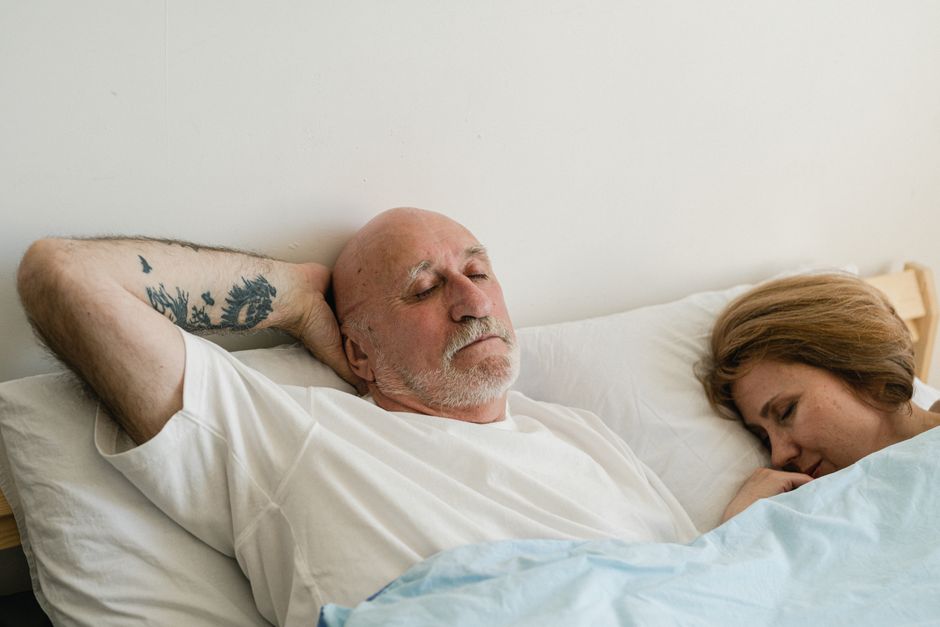
If you suspect you have sleep apnea, the path to a diagnosis starts with a conversation with a doctor, not with a device you buy online. From there, testing usually happens one of two ways: a sleep study in a lab, or a home sleep apnea test you take in your own bed. Which one you get depends on your symptoms, your overall health, and what your doctor thinks is appropriate.
How Do You Get Tested for Sleep Apnea at Home or in a Lab?
Home testing and lab testing are not interchangeable, and your doctor decides which fits your situation. A home sleep apnea test is a small set of sensors you wear overnight in your own bed. A lab study, called polysomnography, is a supervised overnight recording in a sleep center with far more equipment and a technologist watching the data.
The reason the choice matters comes down to what each test can and cannot see. Home tests are designed to detect obstructive sleep apnea in adults who are likely to have it and who do not have other major medical conditions. Lab studies capture more information and are used when the picture is more complicated.
Neither test is something you schedule on your own. Both require a referral or order from a physician, and the results are interpreted by a sleep specialist.
What Is a Home Sleep Apnea Test and How Does It Work?
A home sleep apnea test is a portable device you take home and wear for one night. It typically measures breathing effort, airflow at the nose and mouth, blood oxygen levels through a finger clip, and sometimes body position or snoring. It does not usually record brain waves, so it cannot tell how much you actually slept or how your sleep was structured.
You pick up the device or have it mailed to you, follow instructions to place the sensors before bed, and return it the next day. A sleep physician then reviews the recording and writes a report.
Home testing has real advantages. It is generally less expensive than a lab study, it happens in your normal sleep environment, and there is no waiting list for a bed in a sleep center. The trade-off is that it collects less data and can fail if sensors slip off or the recording is incomplete.
One point that surprises many people: a home test is not a screening tool for the general public. Clinical guidance generally reserves it for adults with a high likelihood of moderate to severe obstructive sleep apnea and without significant heart, lung, or neurological disease. If you have those conditions, or if the home test result is negative but your doctor still suspects a problem, a lab study is usually the next step.
What Happens During a Sleep Study in a Lab?
A lab sleep study, or polysomnography, is the more detailed test. You spend the night in a sleep center, and a technologist attaches sensors that record brain activity, eye movements, muscle tone, heart rhythm, breathing, airflow, oxygen levels, and leg movements.
Those extra channels are the whole point. Brain activity lets the study measure how long you actually slept and how much time you spent in each sleep stage. That matters because sleep apnea severity is calculated as the number of breathing pauses or drops per hour of sleep, not per hour in bed. A home test has to estimate this differently because it does not measure sleep directly.
Lab studies can also detect central sleep apnea, where the brain fails to signal the muscles that control breathing, and they can catch other sleep disorders such as narcolepsy or periodic limb movement disorder. Some labs offer a split-night study, where the first half of the night is used for diagnosis and the second half for starting positive airway pressure treatment if apnea is found.
The downsides are cost, the unfamiliar environment, and the wait for an appointment. Some people also sleep worse than usual in a lab, though technologists are trained to work around this.

Home Test vs Lab Study: How Do They Compare?
| Feature | Home Sleep Apnea Test | Lab Sleep Study |
|---|---|---|
| Where it happens | Your own bed | Sleep center |
| Supervision | None | Technologist present all night |
| Measures brain waves | No | Yes |
| Detects central sleep apnea | Limited | Yes |
| Typical cost | Lower | Higher |
| Who it suits | Adults likely to have obstructive apnea, otherwise healthy | Complex cases, suspected central apnea, other sleep disorders |
Cost figures vary widely by insurance, region, and facility, so treat any single number with caution. The clinical difference is more reliable than the price difference: the lab test simply sees more.
What Symptoms Suggest You Should Be Tested?
The classic symptom is loud snoring combined with pauses in breathing that someone else notices. Many people with sleep apnea do not know they stop breathing, so a bed partner’s observation is often the first clue.
Other common signs include waking up gasping or choking, waking with a dry mouth or sore throat, morning headaches, and feeling unrefreshed no matter how long you slept. Daytime sleepiness is a hallmark, especially falling asleep during quiet activities like reading or driving.
Not everyone fits the stereotype. Sleep apnea is more common in people who are overweight, but it also occurs in people of normal weight, and it is more common in men than in women, though women are frequently underdiagnosed. In women, symptoms may show up more as fatigue, insomnia, or mood changes rather than loud snoring.
If you have any of these signs, bring them up with a doctor. Do not self-diagnose from a phone app or a consumer wearable. Those tools can flag possible breathing disturbances, but they are not diagnostic tests, and no major clinical guideline endorses them for diagnosing sleep apnea.
How Do You Actually Get the Test Scheduled?
The process is straightforward, though it can take time.
- See your primary care doctor or a sleep specialist and describe your symptoms, including anything a partner has noticed.
- Your doctor reviews your history, medications, and other conditions, and may ask you to complete a questionnaire about daytime sleepiness.
- Based on that, the doctor decides whether a home test or a lab study is appropriate and writes an order.
- You complete the test, return the equipment, and wait for the interpretation.
- A sleep physician reviews the results and discusses treatment options if apnea is found.
If you have significant heart failure, lung disease, a history of stroke, or you use opioids, a lab study is more likely to be recommended. If your home test comes back negative but your symptoms persist, ask about a lab study rather than accepting the result as final.
What Do the Test Results Mean?
Both types of test produce a number called the apnea-hypopnea index, or AHI. It counts the average number of breathing pauses (apneas) and partial blockages (hypopneas) per hour of sleep or, for home tests, per hour of recording.
The standard thresholds are widely used. An AHI under 5 is considered normal. An AHI of 5 to 15 is mild, 15 to 30 is moderate, and above 30 is severe. These cutoffs come from established clinical criteria and are consistent across sleep medicine.
A diagnosis is not based on the number alone. Doctors also weigh your symptoms, oxygen levels, and how much the apnea affects your daytime function. Someone with a mildly elevated AHI and no symptoms may be managed differently than someone with the same number who is exhausted and falling asleep at work.
If you are diagnosed, treatment options include positive airway pressure therapy, oral appliances, positional therapy, weight management where relevant, and in some cases surgery. Which one fits is a conversation with your sleep physician, not a decision to make from a search result.
Can You Buy a Home Sleep Test Without a Doctor?
You can find direct-to-consumer sleep tests online, and some are marketed as a way to skip the doctor. This is where caution matters. A test result without a physician’s interpretation is not a diagnosis, and no established guideline supports self-diagnosing sleep apnea from a consumer kit.
Some of these services do include a physician review, which makes them closer to a legitimate home test. Others simply hand you a number. The difference is not cosmetic. Sleep apnea is linked to high blood pressure, heart rhythm problems, stroke, and type 2 diabetes, and it needs proper medical management, not a gadget.
If cost or access is your barrier, ask your doctor about home testing specifically. It is often the cheaper route, and it is the one that comes with clinical oversight.
Frequently Asked Questions
Can I get tested for sleep apnea at home?
Yes, if a doctor orders it. A home sleep apnea test is a portable device you wear overnight in your own bed, but it is generally used only for adults likely to have obstructive sleep apnea and without other major conditions.
Is a home sleep test as accurate as a lab study?
For uncomplicated obstructive sleep apnea in adults, home tests can be reliable, but they measure less and cannot detect central sleep apnea or other sleep disorders. Lab studies record brain activity and more channels, so they give a fuller picture.
What AHI score means I have sleep apnea?
An AHI of 5 or higher with symptoms generally supports a diagnosis. Severity is classified as mild at 5 to 15, moderate at 15 to 30, and severe above 30.
Do I need a referral to get a sleep study?
In most cases, yes. Both home and lab testing require an order from a physician, and the results are interpreted by a sleep specialist.
