
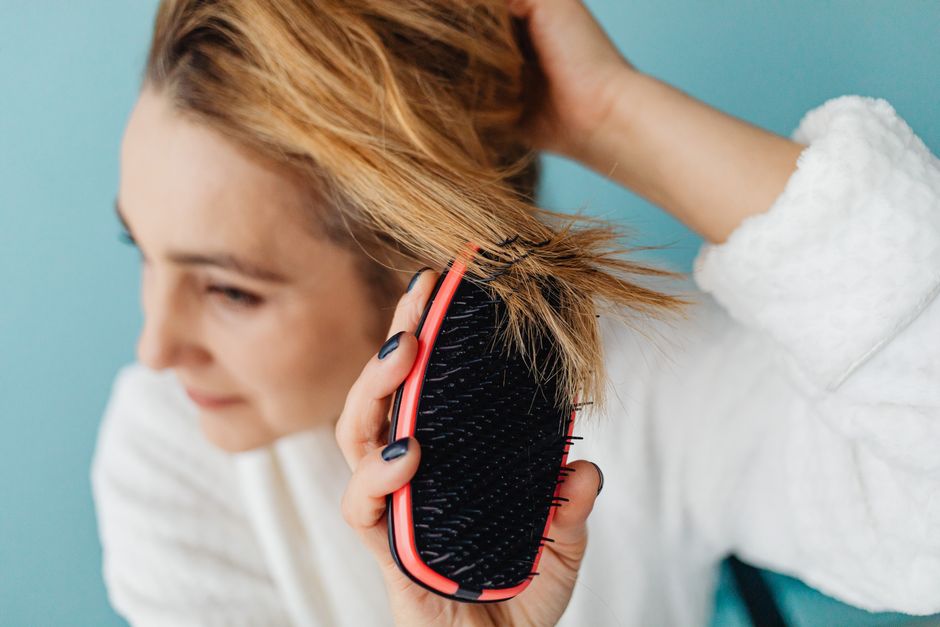
Tangled hair happens when individual strands wrap around each other and lock into knots. The fix is to work from the ends upward, use a wide-tooth comb or your fingers, apply a slippery conditioner or detangler, and never rip through a knot from the top down. That approach removes tangles with the least breakage, whether your hair is fine, curly, coarse, or chemically treated.
Most people make the same mistake: they start at the scalp and drag a brush straight down. That pushes every knot tighter and stretches strands until they snap. A little patience and the right technique change the outcome more than any single product.
Why Does Hair Tangle So Easily?
Hair tangles because of the structure of the hair shaft itself. Each strand is covered by an outer layer of overlapping scales called the cuticle. When the cuticle is smooth and flat, strands slide past each other. When it is rough, raised, or damaged, those scales catch on neighboring strands like Velcro and hold them in place.
Several things raise the cuticle or increase friction between strands:
- Dryness. Hair that lacks moisture and natural oils is rougher and more prone to static and friction.
- Damage. Heat styling, coloring, bleaching, and repeated rough brushing lift and crack the cuticle.
- Curl pattern. Curly and coily hair naturally wraps around itself, which is why it tangles and forms knots more readily than straight hair.
- Length and fineness. Long, fine hair has more surface area to catch on itself and on clothing.
- Friction sources. Cotton pillowcases, wind, scarves, and rubbing against a coat collar all roughen the cuticle over time.
Understanding this matters because it explains why the same technique does not work equally for everyone. A person with straight, healthy hair may detangle in seconds. A person with fine, color-treated curly hair may need a slower, wetter method every time.
What Is the Best Way To Get Tangles Out Of Hair?
The most effective method is to detangle from the bottom up, on damp hair, with a lubricating product and a wide-tooth comb. Working in small sections keeps you from fighting the whole head of hair at once and lets you isolate each knot.
Here is a step-by-step approach that works for most hair types:
- Start on damp, not soaking-wet or bone-dry hair. Damp hair is more elastic and the cuticle is more pliable. Soaking-wet hair is fragile and stretches easily. Bone-dry hair has more friction.
- Apply a conditioner or detangling spray. A product with slip — often containing silicones, glycerin, or oils — lets strands slide apart instead of catching.
- Divide hair into sections. Use clips or ties to hold the rest out of the way. Smaller sections mean less tugging.
- Hold the hair above the knot. Grip the strand between the knot and your scalp so the pull stays at the tangle rather than at the root.
- Comb from the ends upward. Work out the last inch first, then move up an inch at a time. Never start at the top.
- Use your fingers first on stubborn knots. Gently pull the knot apart sideways rather than downward. This separates the strands instead of tightening them.
- Add more product as needed. If you are pulling hard, you need more slip, not more force.
The single most important rule: if you feel resistance, stop and add lubrication or use your fingers. Force is what causes breakage.
Should You Detangle Wet or Dry Hair?
For most people, detangling damp hair causes less damage than detangling dry hair. Wet hair stretches more before it breaks, and conditioner provides slip that dry hair lacks. This is the standard approach recommended for curly and textured hair in particular.
There is one important exception. Hair is at its most fragile when it is soaking wet. The same elasticity that lets it stretch also means it can stretch too far and break. So “damp” is the target, not “dripping.” Some people with very fine or fragile hair do better detangling when hair is mostly dry with a light leave-in product.
The honest position: there is no single correct answer for every head of hair. The general direction from dermatologists and hair scientists is that gentle, lubricated detangling beats dry, forceful brushing. But the ideal moisture level varies by hair type, and you may need to experiment to find yours.





What Tools Actually Help With Tangled Hair?
A wide-tooth comb is the workhorse tool for detangling. The wide spacing lets strands pass through without catching, and the teeth flex rather than rip. A fine-tooth comb, by contrast, tightens knots and should be avoided on tangled hair.
Here is how common tools compare:
| Tool | Best for | Caution |
|---|---|---|
| Wide-tooth comb | Most hair types, wet or damp detangling | Cheap combs with rough seams can snag |
| Fingers | Stubborn knots, very fragile hair | Slower, but gentlest |
| Detangling brush | Thick or long hair, quick sessions | Can pull if used from the top down |
| Boar-bristle brush | Smoothing finished, tangle-free hair | Not for detangling; it worsens knots |
| Fine-tooth comb | Smoothing and styling | Avoid on tangled or wet hair |
Material matters less than the spacing of the teeth and the smoothness of the surface. A comb with rough, molded seams can catch and tear hair even if the spacing is right.
How Do You Prevent Tangles Before They Start?
Prevention comes down to keeping the cuticle smooth and reducing friction. Hair that stays moisturized and undamaged tangles far less, no matter its texture.
Steps that help most people:
- Condition every wash. Conditioner smooths the cuticle and reduces friction between strands.
- Use a leave-in conditioner or detangler on hair prone to knots, especially before combing.
- Limit heat styling. Repeated high heat lifts and cracks the cuticle, which makes hair rougher and more tangle-prone.
- Sleep on a satin or silk pillowcase. These create less friction than cotton, which helps reduce overnight tangling and breakage.
- Loosely braid or tie long hair before bed. This keeps strands from wrapping around each other during sleep.
- Trim regularly. Split and frayed ends catch on neighboring strands and start knots.
- Avoid rubbing hair dry with a rough towel. Squeeze water out gently instead.
None of these steps is dramatic on its own. Combined, they lower the friction that starts tangles in the first place.
What Should You Do About Severe Knots and Mats?
A true mat — a dense, felted clump of hair — is different from an ordinary tangle. Mats form when knots are left in place and more strands weave into them over days or weeks. They can happen after illness, bed rest, or periods when hair is not combed.
For a severe mat, do not try to rip a comb through it. Work slowly:
- Soak the mat in conditioner or a detangling oil and let it sit to soften the strands.
- Separate the mat into smaller sections with your fingers, working from the outer edges inward.
- Use a wide-tooth comb or a needle to gently loosen strands one layer at a time.
- Take breaks. This can take more than one session.
If a mat is very tight, painful, or close to the scalp, or if the scalp underneath looks irritated or broken, a professional stylist can often remove it safely. In rare cases where mats cannot be separated, cutting may be the only option. This is a situation where patience and professional help beat home heroics.
Does Hair Type Change How You Detangle?
Yes. Hair type changes both the technique and the products that work best, because curl pattern and texture affect how strands interact.
Straight hair generally tangles least and can often be detangled with a wide-tooth comb on damp hair with minimal product.
Wavy hair sits in the middle. It benefits from detangling while damp and from leave-in conditioner to reduce friction.
Curly hair tangles more because the strands wrap around each other. Detangling while wet with plenty of conditioner is common practice, and many people detangle in the shower with conditioner still in.
Coily and textured hair is the most tangle-prone. Sectioning, working in small parts, and using generous slip are standard. Dry detangling is generally avoided because it causes breakage.
Fine hair tangles easily but breaks easily too, so gentle handling matters more than force. Coarse hair can take a bit more, but the bottom-up rule still applies.
Do Detangling Products Really Work?
Detanglers work by lowering friction between strands. Most contain ingredients that coat the hair shaft and let strands slide apart — silicones, glycerin, oils, or conditioning polymers. This is a real physical effect, not marketing.
What is less clear is whether any specific product is meaningfully better than another for a given person. The evidence for one brand outperforming another is limited. What matters most is that the product provides enough slip for your hair type and that you use enough of it.
Be cautious about claims that a product “repairs” split ends or permanently smooths damaged hair. No topical product can fuse a split end back together. Products can temporarily smooth the surface and reduce friction, which reduces tangling, but they do not reverse structural damage. Only trimming removes split ends.
Frequently Asked Questions
What is the fastest way to get tangles out of hair?
The fastest safe method is to apply a detangler or conditioner, section the hair, and comb from the ends upward with a wide-tooth comb. Ripping from the top down feels faster but causes breakage and usually takes longer overall.
Should I detangle my hair wet or dry?
For most people, damp hair with conditioner causes less damage than dry hair, because wet hair stretches further before breaking and conditioner adds slip. Very fragile or fine hair may do better mostly dry with a light leave-in product.
Why does my hair tangle so much even when it is clean?
Clean hair can still tangle if it is dry, damaged, or naturally curly, since those factors raise the cuticle and increase friction between strands. Dryness and damage matter more than how recently you washed.
Can detangling spray repair damaged hair?
No. Detangling products reduce friction and make hair easier to comb, but they cannot repair split ends or structural damage. Only trimming removes split ends.
