
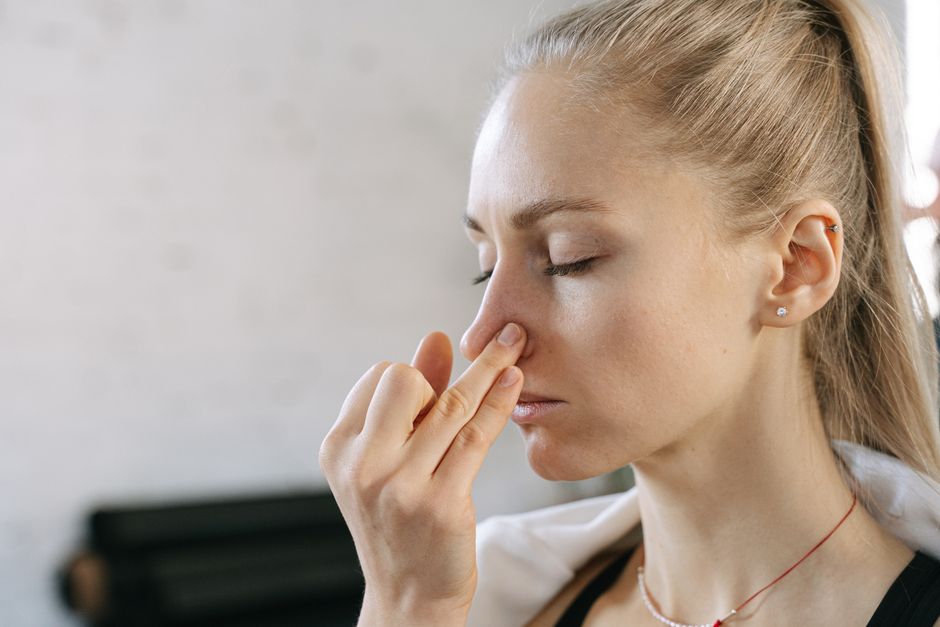
A stuffy nose happens when the tissues lining your nasal passages swell and narrow the airway. That swelling comes from inflamed blood vessels, not from excess mucus alone. Most viral congestion clears on its own within about a week, and simple measures like saline rinses, fluids, and rest ease symptoms in the meantime. Antibiotics do not help viral congestion, and no product cures it faster than your immune system does.
What Actually Causes A Stuffy Nose?
The sensation of a blocked nose comes mostly from swollen tissue, not from mucus plugging the airway. The lining of your nose is rich in blood vessels that expand when triggered. As they swell, the passage narrows and airflow drops.
Common triggers include:
- Viral infections like the common cold
- Allergies to pollen, dust, or pet dander
- Dry air, which irritates and inflames nasal tissue
- Cold outdoor temperatures
- Irritants such as smoke or strong fumes
- Hormonal changes, including pregnancy
- Certain medications, including some blood pressure drugs
A stuffy nose is not the same as a runny nose, though the two often occur together. Congestion is the blockage. A runny nose is the drainage. They have different causes and respond to different approaches.
One detail worth knowing: the nose naturally alternates airflow between nostrils throughout the day. This is called the nasal cycle. If one side feels more blocked at a given moment, that is often normal physiology, not a sign that something is wrong.
How To Get Rid Of Your Stuffy Nose What Works Best At Home?
Saline nasal rinses and sprays are the most reliable home measure for congestion. They thin mucus, moisten irritated tissue, and physically flush out irritants and allergens.
You can buy saline spray at any pharmacy or make your own rinse solution. If you make it at home, use distilled, sterile, or previously boiled and cooled water. Tap water is not safe for nasal rinsing because it can carry organisms that cause serious infection. This is a well-documented risk, not a theoretical one.
Other measures with reasonable support:
- Fluids. Drinking water keeps mucus thinner and easier to clear.
- Humidity. A cool-mist humidifier or steam from a shower can ease dryness.
- Elevation. Sleeping with your head slightly raised may reduce nighttime congestion.
- Warm compresses. A warm, damp cloth over the sinuses can feel soothing, though evidence for measurable decongestion is limited.
- Rest. Your immune system does the actual work of clearing a viral infection.
These measures ease symptoms. They do not shorten a cold or cure an infection. That distinction matters when you are deciding whether something is working.
Do Decongestant Sprays And Pills Work?
Decongestant nasal sprays containing oxymetazoline do reduce swelling and open the airway. They work quickly and are effective for short-term relief.
The problem is rebound congestion. If you use these sprays for more than three days in a row, the nasal tissue can become dependent on them. When you stop, congestion returns worse than before. This condition is called rhinitis medicamentosa. It is common and entirely preventable by limiting use to three days or fewer.
Oral decongestants such as pseudoephedrine also reduce swelling. They affect the whole body, not just the nose, so they can raise blood pressure and cause jitteriness or trouble sleeping. People with high blood pressure, heart disease, or thyroid conditions should talk to a clinician before using them.
There is an important regulatory update here. In recent years, the US Food and Drug Administration determined that oral phenylephrine, a common decongestant found in many over-the-counter products, is not effective when taken by mouth. If you have been using a pill containing phenylephrine and it seemed to do nothing, that matches the evidence.





What About Antihistamines And Steroid Sprays?
Antihistamines help congestion caused by allergies. They do not help congestion caused by a cold. If your nose runs and itches along with being stuffy, and it happens around the same triggers each time, allergies are more likely.
Nasal steroid sprays are among the most effective treatments for ongoing or allergic congestion. They reduce inflammation in the nasal lining over days, not minutes. They are not a quick fix. They also require consistent use to work, and some people need to use them for a week or more before noticing a difference.
These sprays are generally well tolerated. Minor nose irritation or dryness can occur. If you have frequent nosebleeds or recent nasal surgery, check with a clinician first.
When Should You See A Doctor For A Stuffy Nose?
Most congestion is not serious. Seek medical care if you have:
- Symptoms lasting more than 10 days without improvement
- Symptoms that improve, then get worse again
- Fever above 102°F (38.9°C)
- Severe facial pain or pressure
- Thick green or yellow discharge along with fever and facial pain
- Vision changes, swelling around the eyes, or severe headache
- One-sided congestion that persists for weeks, especially with nosebleeds
Those last two points deserve attention. Persistent one-sided blockage, particularly with bleeding, needs evaluation. It can have several causes, and a clinician should determine which one applies.
Congestion lasting 12 weeks or longer is considered chronic. Chronic sinusitis and structural issues like a deviated septum are common reasons. These require a proper diagnosis, not trial and error with over-the-counter products.
What Does Not Work For A Stuffy Nose?
Antibiotics do not treat viral congestion. Most colds are viral, and antibiotics have no effect on viruses. Using them unnecessarily carries risks, including side effects and antibiotic resistance.
Some popular remedies have little or no supporting evidence:
- Menthol rubs and vapors can create a cooling sensation that feels like clearer breathing, but they do not reduce swelling or open the airway.
- Spicy foods may temporarily loosen mucus but do not treat the underlying congestion.
- Vitamin C taken after a cold starts has not been shown to shorten or cure congestion in most people.
- Zinc nasal gels have been linked to loss of smell and should be avoided.
None of this means these products are dangerous. It means they do not do what the label implies. Feeling like your nose is clearer is not the same as your airway actually being wider.
How Long Does A Stuffy Nose Usually Last?
Viral congestion from a cold typically peaks in two to three days and improves within about a week. Some lingering congestion can last up to 10 days. That timeline is well established.
Allergic congestion lasts as long as you are exposed to the trigger. Seasonal allergies follow pollen seasons. Year-round allergies, often to dust mites or pets, can cause ongoing congestion without a clear end point.
If your congestion follows a pattern tied to a season or a specific environment, allergy testing may help identify the cause. If it does not follow a pattern and lasts weeks, a clinician should evaluate it.
Can You Prevent A Stuffy Nose?
You cannot prevent every cold, but you can reduce some triggers.
- Wash your hands often during cold and flu season.
- Avoid close contact with people who are sick.
- Use a humidifier if your home air is dry.
- Reduce exposure to known allergens, such as keeping pets out of the bedroom or using dust-mite covers.
- Avoid cigarette smoke and other irritants.
For people with allergic congestion, avoiding triggers is often more effective than treating symptoms after they start. That requires knowing what you are reacting to.
Frequently Asked Questions
How long does a stuffy nose from a cold last?
Most viral congestion improves within about a week, though some cases last up to 10 days. If it lasts longer than 10 days without improvement, see a clinician.
Can I use decongestant spray every day?
No. Oxymetazoline sprays should not be used for more than three days in a row because of the risk of rebound congestion. If you need longer relief, talk to a clinician about other options.
Does a stuffy nose mean I have a sinus infection?
Not usually. Most stuffy noses come from colds or allergies. A sinus infection is more likely when congestion lasts more than 10 days, or when it improves and then worsens with facial pain and fever.
Is it safe to rinse my nose with tap water?
No. Use distilled, sterile, or previously boiled and cooled water for nasal rinsing. Tap water can contain organisms that cause serious infections.
