
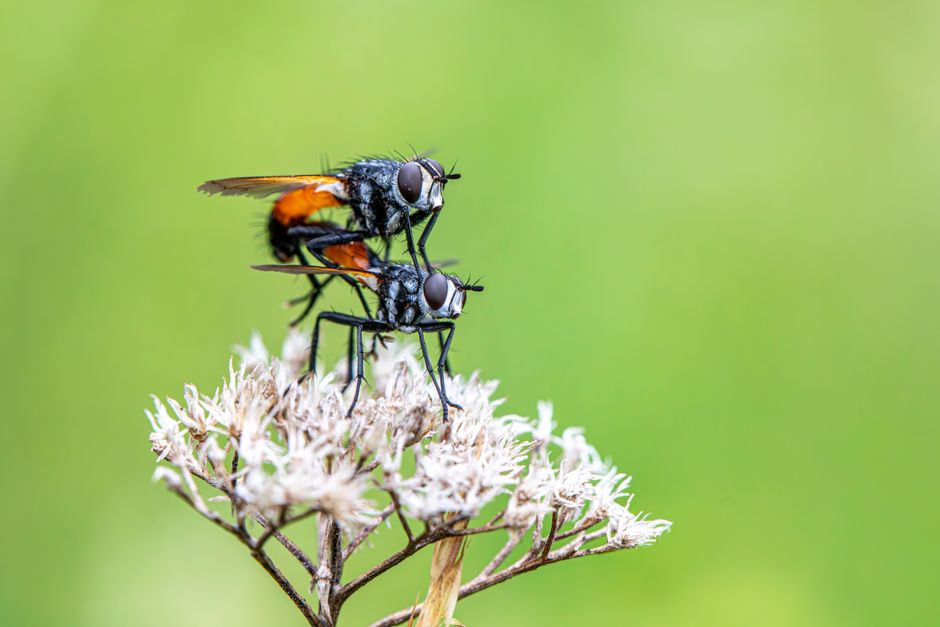
Tiny flies in your kitchen can appear suddenly and multiply fast. The most common culprit is the fruit fly, drawn to ripening produce and fermenting liquids. Fungus gnats are also common, living in the moist soil of houseplants. Getting rid of them takes two steps: eliminate the breeding source and stop them from coming back. This guide walks you through the process step by step, starting with finding where they breed and ending with prevention methods that actually work.
Step 1: Find and Remove the Breeding Source
Flies cannot breed without a food source and moisture. Your first job is to find where they are laying eggs. Check every area where organic matter can rot. This includes overripe fruit bowls, open trash cans, recycling bins with sticky bottles, and drains with built-up sludge.
Remove the source completely. Throw away any fruit that shows soft spots or tiny puncture marks. Take out the trash and wipe down the inside of the bin. Rinse recyclable containers before putting them in the bin. If you use a compost bin indoors, empty it more often or move it outside until the fly problem is gone.
Do not skip the drains. Fruit flies and drain flies breed in the thin film of organic matter inside sink pipes. Pour boiling water down the drain once a day for three days. Follow with a mixture of baking soda and vinegar if the buildup is heavy. This breaks up the biofilm that flies feed on.
Step 2: Set Up Traps to Catch Adult Flies
Once the breeding source is gone, you still have adult flies flying around. Traps catch these adults and break the cycle. The classic vinegar trap works well. Fill a small bowl with apple cider vinegar and add a drop of dish soap. The soap breaks the surface tension so flies sink instead of landing on top.
Cover the bowl with plastic wrap and poke several small holes with a toothpick. Flies enter through the holes but cannot find their way out. Place these traps near the source areas you identified in step one. Replace them every two to three days.
For fungus gnats, the trap is different. These flies are attracted to yellow. Yellow sticky traps placed near the base of houseplants catch adults effectively. These traps are available at garden centers and online. They do not solve the problem alone, but they reduce the adult population while you treat the soil.
Step 3: Treat Houseplant Soil for Fungus Gnats
Fungus gnats lay eggs in moist potting soil. The larvae feed on fungi and organic matter in the soil. If you see tiny flies hovering just above the soil surface, this is your problem. Treating the soil is the only way to stop them.
Let the top two inches of soil dry out completely between waterings. Fungus gnat larvae need consistently moist soil to survive. Many houseplants tolerate this drying period well. Succulents and snake plants prefer it.
For severe infestations, consider a soil drench. Some products contain Bacillus thuringiensis israelensis (BTI), a naturally occurring bacterium that kills fungus gnat larvae. Follow the product label instructions exactly. This treatment is specific to the larvae and does not harm the plant.




Step 4: Seal Entry Points to Stop New Flies
Flies enter through gaps around windows, doors, and vents. Inspect these areas and seal any openings. Weather stripping around doors and windows blocks most entry routes. Check that window screens fit tightly and have no tears.
Pay attention to where you bring produce inside. Fruit can carry fly eggs from the grocery store or farmers market. Wash produce as soon as you bring it home. Store fruit in the refrigerator when possible. If you keep fruit on the counter, eat it within a few days or store it in a covered container.
Keep kitchen surfaces clean. Wipe up spills immediately, especially sugary drinks and juice. Take out trash regularly, not just when it looks full. Flies can breed in a single forgotten food particle.
How To Get Rid Of Tiny Flies In House Fast
If you need immediate results, combine all the steps above in one day. Remove the source, set traps, treat the soil, and seal entry points. This combination approach is more effective than any single method.
Some people use chemical sprays to kill flies on contact. These sprays work on visible flies but do not address the breeding source. You will still have new flies emerging from eggs already laid. Sprays are a temporary fix, not a solution.
Commercial fruit fly traps with attractant liquids are also available. Many of these work well and are convenient. The same principle applies: traps catch adults, but you must remove the breeding source to stop the cycle.
How Long Does It Take to Get Rid of Flies?
The timeline depends on the fly species and how many breeding sites exist. Fruit flies have a short life cycle. Eggs hatch within 24 to 30 hours, and larvae mature in about a week. Adult flies live for several weeks. If you remove all breeding sources, the existing adults die off naturally within a few weeks.
Fungus gnats have a similar timeline. Their eggs hatch in about three days, and larvae feed in the soil for roughly two weeks before emerging as adults. Treating the soil and drying it out stops new generations from developing.
You should see a noticeable reduction within three to five days. Complete elimination typically takes one to two weeks. If flies persist after two weeks, you likely missed a breeding site. Check under appliances, inside garbage disposals, and in rarely used drains.
Preventing Tiny Flies From Coming Back
Prevention is simpler than elimination. Make your home an unattractive place for flies to breed. Store produce in the refrigerator or in sealed containers. Empty trash cans regularly and clean them occasionally.
Clean drains weekly with boiling water to prevent biofilm buildup. Keep houseplant soil from staying constantly wet. Water plants only when the top inch of soil is dry. Use pots with drainage holes so water does not pool at the bottom.
Check new houseplants for gnats before bringing them inside. Repot new plants in fresh potting soil if you suspect contamination. Inspect produce bags for flies before putting them in your cart.
If you live in a building with shared walls, flies can enter from neighboring units. This is harder to control. Sealing your own entry points and keeping your space clean reduces the problem even if you cannot eliminate it entirely.
Common Mistakes People Make
One common mistake is using only traps without removing the source. Traps catch some adults, but eggs continue to hatch. The problem seems endless because you never addressed the root cause.
Another mistake is overwatering houseplants while trying to fix a fungus gnat problem. The extra moisture makes the problem worse. Letting the soil dry is the first and most important step.
Some people spray household insecticides around food preparation areas. This is not recommended. You risk contaminating food and surfaces. The safer approach is removing sources and using targeted traps.
Frequently Asked Questions
Why do I have tiny flies in my house?
Tiny flies usually come from a food source like overripe fruit, trash, or moist plant soil. They enter through open windows, doors, or on produce you bring inside.
Do apple cider vinegar traps really work for fruit flies?
Yes, apple cider vinegar traps are effective for catching adult fruit flies. The vinegar attracts them, and the dish soap prevents them from escaping.
How do I know if I have fruit flies or fungus gnats?
Fruit flies are usually near food sources in the kitchen and have red eyes. Fungus gnats hover near houseplant soil and are darker and smaller.
Can tiny flies make you sick?
Fruit flies can carry bacteria from one surface to another because they feed on rotting matter. Practice good kitchen hygiene by washing produce and surfaces regularly.
