
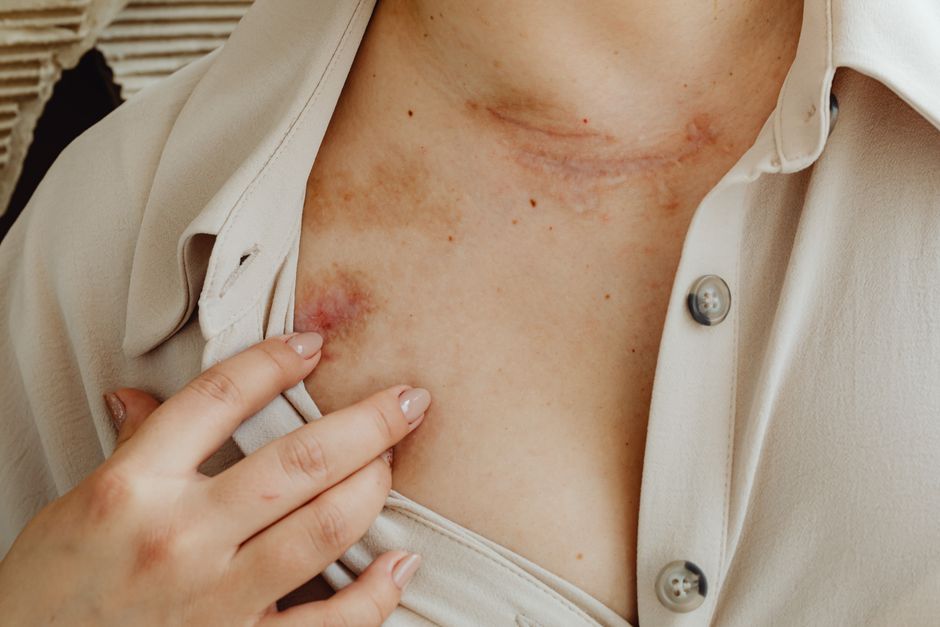
Scar tissue on the lip is common and usually harmless, but it can change how your mouth looks and feels. Most small lip scars fade on their own over months. For scars that stay raised, tight, or noticeable, treatments range from silicone gel and massage to steroid injections and minor procedures done by a doctor.
What Causes Scar Tissue to Form on the Lip?
A scar forms when the skin or the tissue just beneath it is damaged and heals by laying down collagen instead of rebuilding normal tissue. The lip is a tough place for that process to go smoothly. It moves constantly when you talk, eat, and smile. It also has a thin outer layer and a rich blood supply, so injuries there can heal with a visible mark.
Common causes include:
- Cuts or bites that break the skin
- Cold sores and other blisters that heal and leave a mark
- Piercings, especially if they were infected or rejected
- Surgery, such as removing a mole or cyst
- Burns from hot food or drinks
- Accidental trauma, like a fall or a hit to the mouth
One detail worth knowing: not every bump on a lip is a scar. A mucocele is a small, fluid-filled sac that forms when a salivary gland duct is blocked or damaged, often from lip biting. It looks like a clear or bluish bump and often goes away on its own. A fibroma is a firm, harmless lump of fibrous tissue. Both are frequently mistaken for scars. If a bump is new, growing, bleeding, or changing, have a doctor or dentist look at it rather than assuming it is scar tissue.
How Do You Know If It Is Actually Scar Tissue?
Scars have a fairly predictable feel and look. Most are flat or slightly raised, lighter or darker than the surrounding skin, and firm to the touch. They do not usually hurt once healed. They may feel tight, especially when you stretch your lip.
Two types of scars behave differently and are worth recognizing:
- Hypertrophic scars stay within the boundary of the original injury. They are raised but do not spread beyond the wound.
- Keloids grow beyond the original wound edges and can keep enlarging over time. They are more common in people with darker skin tones.
If a bump is soft and fluid-filled, it is more likely a mucocele than a scar. If it is hard, painless, and has been there a long time without change, it may be a fibroma. A doctor can usually tell the difference by looking and feeling, and can confirm with a small biopsy if there is any doubt.
How To Get Rid Of Scar Tissue On Your Lip
There is no single method that erases a lip scar completely. The goal of treatment is to make it flatter, softer, less noticeable, and more comfortable. What works depends on the type of scar, how old it is, and how much it bothers you.
Silicone gel and silicone sheets
Silicone is one of the most studied treatments for scars. Research consistently shows it can improve the color, thickness, and texture of raised scars. It works by keeping the scar hydrated and applying gentle pressure. It is generally used once the wound has fully closed. Silicone is not a cure, and results build slowly over weeks to months.
Massage
Gentle massage of a healed scar is widely recommended by clinicians to soften tissue and reduce tightness. The evidence for massage alone is not strong, but it is low risk and many people find it helps. Massage should not be started on an open wound.
Steroid injections
For raised or thickened scars, a doctor may inject a corticosteroid directly into the scar. This is a common clinical practice for hypertrophic scars and keloids. It can flatten and soften the tissue, but it usually takes more than one session, and the scar may not disappear entirely.
Laser treatment
Laser therapy can reduce redness and improve texture. Different lasers target different features, so the right choice depends on the scar. Multiple sessions are typically needed. Results vary, and laser does not remove a scar — it changes how it looks.
Surgical revision
Sometimes a scar is cut out and the tissue is closed again more carefully. This can help when a scar is wide or poorly aligned. It carries the risk of forming a new scar, and in people prone to keloids, surgery can make things worse. This is a decision to make with a specialist.
Fillers
Depressed or indented scars can sometimes be raised with injectable fillers. This is temporary and needs to be repeated. It is not a permanent fix.





What Can You Do at Home?
Home care works best for fresh, healing scars and for keeping an older scar from getting worse. It will not remove a mature raised scar on its own.
- Keep the area moisturized. Dry tissue heals less comfortably.
- Protect the lip from sun. Sun exposure can darken a scar and make it more visible. Use a lip balm with sun protection.
- Avoid picking, biting, or scratching the area. This can reopen the wound and add new scar tissue.
- Do not smoke. Smoking narrows blood vessels and is linked to poorer wound healing.
- Give it time. Many small lip scars fade noticeably over several months.
Be skeptical of creams and oils marketed as scar removers. Most have little or no evidence behind them. Vitamin E oil, for example, is popular but has not been shown to improve scars in studies, and it can irritate some people’s skin.
When Should You See a Doctor About a Lip Scar?
See a doctor or dentist if a bump or lesion on your lip is new, growing, bleeding, painful, or changing in color or shape. These signs can point to conditions that are not scars, and a proper exam matters.
You should also get medical input if:
- The scar limits how you open or move your mouth
- It is a keloid that keeps growing
- It causes you emotional distress or affects your daily life
- You want treatment beyond basic home care
A dermatologist or plastic surgeon is usually the right specialist for scar treatment. For anything inside the mouth, a dentist or oral surgeon may be the better first stop.
Does Scar Tissue on the Lip Ever Go Away Completely?
Complete disappearance is uncommon. Scar tissue is permanent structural change, and no treatment removes it entirely. What treatment can do is make a scar flatter, softer, lighter, and less noticeable.
Fresh scars improve the most. The body remodels scar tissue over many months, and a scar that looks prominent early often settles down. Older, mature scars respond less to treatment and tend to need procedures rather than home care.
Setting realistic expectations matters. Most people who treat a lip scar see improvement, not erasure. For many, that improvement is enough.
Frequently Asked Questions
Can lip scar tissue go away on its own?
Small, fresh lip scars often fade and soften over several months without treatment. Mature raised scars usually do not go away on their own and may need medical treatment to improve.
What is the best treatment for raised scar tissue on the lip?
Silicone gel or sheets are a well-studied first option for raised scars, and steroid injections are commonly used by doctors for thicker ones. The best choice depends on the scar type and should be discussed with a clinician.
Is a bump on my lip always a scar?
No. Bumps on the lip are often mucoceles or fibromas, which are not scars. Any new, growing, or bleeding bump should be checked by a doctor or dentist.
Can I remove lip scar tissue at home?
Home care like moisturizing, sun protection, and gentle massage can help a healing scar but will not remove a mature one. Procedures that remove or flatten scar tissue need to be done by a medical professional.
