
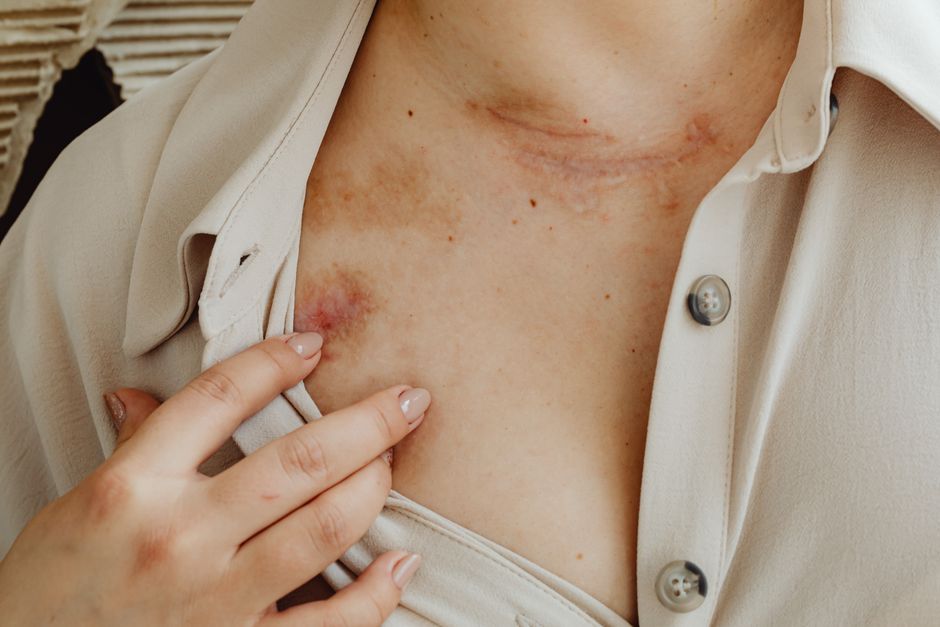
Ingrown hair scars happen when a hair curls back into the skin instead of growing out. This causes inflammation, and when that inflammation goes deep enough, it leaves behind dark spots or raised marks. To get rid of ingrown hair scars, you need to stop new ones from forming first, then treat the existing marks with ingredients that fade pigment and smooth texture. The steps are simple: prevent new ingrown hairs, use targeted scar treatments, and give your skin time to heal. Here is exactly how to do that, based on what the evidence actually shows.
What Causes Ingrown Hair Scars in the First Place?
When a hair gets trapped under the skin, your body treats it like a foreign object. The immune system sends inflammatory cells to the area. That is what causes the red bump you see. If the inflammation is mild, the bump goes away without a mark. But when the hair stays trapped for days or weeks, the inflammation goes deeper into the dermis — the second layer of your skin.
Deep inflammation triggers your body to produce extra collagen as it repairs the tissue. This can lead to a raised scar, medically called a hypertrophic scar. More commonly, the inflammation causes the skin to produce excess melanin. That leaves a flat, dark spot known as post-inflammatory hyperpigmentation (PIH). These dark spots are not true scars in the sense of permanent tissue damage. They are pigment changes. And they fade over time with the right care.
The American Academy of Dermatology notes that people with curly or coarse hair are more prone to ingrown hairs. Shaving, waxing, and plucking increase your risk because they cut the hair at an angle that makes it easier to grow back into the skin. If you have darker skin tones, you are also more likely to develop dark spots from inflammation. That is not a myth. It is a well-documented difference in how melanin-producing cells respond to injury.
Step 1: Stop New Ingrown Hairs Before They Form
Treating scars is pointless if you keep creating new ones. The first step is changing how you remove hair. The goal is to cut the hair so it has a straight, blunt tip when it grows back. A blunt tip is less likely to pierce the skin and get trapped.
Here is what works based on dermatology guidelines:
- Use a sharp, single-blade razor. Multi-blade razors pull the hair up and cut it below the skin surface. That increases the chance of ingrown hairs. A single-blade razor cuts the hair at skin level.
- Shave in the direction of hair growth. Shaving against the grain gives a closer shave but also creates sharper hair tips that are more likely to re-enter the skin.
- Do not stretch the skin while shaving. When you pull the skin taut, the hair retracts below the surface after you cut it. That hair then has to push through skin to grow out, which it often cannot do.
- Exfoliate gently before shaving. Use a soft washcloth or a gentle chemical exfoliant like salicylic acid. Physical scrubs with large, jagged particles can irritate the skin and make inflammation worse.
- Consider laser hair removal. For people with persistent ingrown hairs, laser hair removal is the most effective long-term solution. It destroys the hair follicle so no hair grows back at all. The American Academy of Dermatology recommends this for chronic cases.
If you are currently dealing with an active ingrown hair, do not pick at it. Picking increases inflammation and makes scarring more likely. Instead, apply a warm compress for 10 minutes to help the hair come to the surface. If it does not release on its own, see a dermatologist.
Step 2: Treat Dark Spots with Ingredients That Actually Work
Once you have stopped new ingrown hairs, you can focus on the existing marks. The most common type of ingrown hair scar is a flat, dark spot. Research published in the Journal of Clinical and Aesthetic Dermatology shows that these dark spots respond best to ingredients that block melanin production and speed up skin cell turnover.
The ingredients with the strongest evidence are:
- Azelaic acid. This naturally occurring acid reduces melanin production and also has anti-inflammatory properties. Studies show it is effective for post-inflammatory hyperpigmentation, especially in darker skin tones. It is available over the counter in 10% concentrations and by prescription at 15-20%.
- Kojic acid. Derived from mushrooms, kojic acid blocks an enzyme needed to produce melanin. A study in the Journal of Dermatological Treatment found that kojic acid combined with glycolic acid was more effective than hydroquinone for some types of hyperpigmentation.
- Niacinamide. This form of vitamin B3 interferes with pigment transfer between skin cells. It is gentle and works well for long-term use. Research shows that 4-5% niacinamide is effective for dark spots without the irritation of stronger ingredients.
- Vitamin C (L-ascorbic acid). This antioxidant brightens skin by inhibiting melanin production and reducing oxidative stress. It works best in concentrations of 10-20% and at a pH below 3.5. The problem is that many vitamin C products are unstable and lose effectiveness quickly. Look for products in opaque, airtight packaging.
One ingredient you do not need for dark spots is hydroquinone. It is effective, but it carries risks of ochronosis — a permanent bluish-darkening of the skin — especially with long-term use. The FDA has proposed banning over-the-counter hydroquinone products. There are safer alternatives that work just as well.




Step 3: Treat Raised Scars with Silicone and Laser Therapy
Raised scars from ingrown hairs are less common than dark spots, but they are harder to treat. These are hypertrophic scars, meaning the body produced too much collagen during healing. They feel firm and may be slightly raised above the skin surface.
The first-line treatment for raised scars is silicone gel or silicone sheets. The evidence for silicone is strong. A meta-analysis published in the journal Dermatologic Surgery found that silicone gel sheets significantly improved scar thickness and color compared to no treatment. Silicone works by hydrating the scar tissue and regulating collagen production. It is not a quick fix. You need to apply it daily for at least 12 weeks to see results.
For raised scars that do not respond to silicone, laser treatments are the next option. Vascular lasers, such as pulsed-dye laser, target the blood vessels in the scar and reduce redness and thickness. Fractional lasers create microscopic injuries in the scar tissue, prompting the body to remodel the collagen. A study in the Journal of the American Academy of Dermatology reported that fractional laser treatments improved hypertrophic scar appearance by 50-80% after three to five sessions.
Corticosteroid injections are another option for thick, raised scars. A dermatologist injects a steroid directly into the scar tissue to reduce inflammation and collagen production. This is typically done every four to six weeks. It is effective, but it carries a risk of skin thinning and depigmentation at the injection site.
| Scar Type | Best First Treatment | Time to See Results | Strongest Evidence |
|---|---|---|---|
| Dark spots (PIH) | Azelaic acid or kojic acid | 4-8 weeks | Multiple clinical trials |
| Raised scars (hypertrophic) | Silicone gel or sheets | 12+ weeks | Meta-analysis in Dermatologic Surgery |
| Stubborn raised scars | Fractional laser or steroid injections | 3-5 sessions | JAMA Dermatology studies |
What Does Not Work for Ingrown Hair Scars?
There is a lot of bad advice online about treating scars. Some of it is harmless but ineffective. Some of it can make things worse. Here is what to skip.
Lemon juice. This is a common DIY remedy for dark spots. Lemon juice is acidic enough to irritate skin and cause chemical burns, especially when you go into the sun afterward. There is no clinical evidence that lemon juice fades scars. It can actually worsen hyperpigmentation by causing more inflammation.
Toothpaste. Applying toothpaste to scars is a viral trend with zero scientific backing. Toothpaste contains ingredients like baking soda and hydrogen peroxide that dry out the skin and disrupt its barrier. This can lead to redness, peeling, and more inflammation — the opposite of what you want for scar healing.
Aloe vera. Aloe vera is soothing for fresh burns and minor irritation. Some people report that it helps with scar appearance. But as of 2026, there is no strong clinical evidence that aloe vera reduces established hyperpigmentation or raised scars. It is not harmful, but it is not a substitute for ingredients with proven efficacy.
Scrubbing aggressively. Physical exfoliation with harsh scrubs can tear the skin and worsen inflammation. This is especially true for dark spots, which are caused by inflammation in the first place. Gentle chemical exfoliation with AHAs or BHAs is safer and more effective.
Coconut oil. Coconut oil is comedogenic, meaning it clogs pores. For people prone to ingrown hairs, applying coconut oil to the area can trap hairs under the skin and cause new ingrowns. It also has no proven effect on scar tissue or pigmentation.
How To Get Rid Of Ingrown Hair Scars: The Real Timeline
Scar treatment takes time. No product or procedure removes an ingrown hair scar overnight. Anyone promising that is selling something that does not work.
For dark spots, you can expect to see noticeable fading within 4 to 8 weeks of consistent use of an active ingredient like azelaic acid or niacinamide. Full resolution usually takes 3 to 6 months. Sun protection is critical during this time. UV exposure stimulates melanin production and can darken spots that were already fading. Use a broad-spectrum sunscreen with SPF 30 or higher every day, even if you are mostly indoors.
For raised scars, improvement takes longer. Silicone gel requires 12 weeks of daily use before you see visible flattening. Laser treatments typically require multiple sessions spaced 4 to 6 weeks apart. Most people see 50-80% improvement after a full course of treatment, not complete removal.
Some scars are permanent. If a scar has been present for more than a year and has not responded to treatment, it may be a true dermal scar rather than a pigment change. Dermal scars are difficult to erase completely. The goal shifts from removal to improvement — making the scar less noticeable, flatter, and closer to your natural skin tone.
The most important thing you can do is be consistent. Pick one or two evidence-based treatments and stick with them for at least three months. Switching products every week does not give your skin time to respond. And if you are still getting new ingrown hairs, treat that problem first. No scar treatment can keep up with ongoing inflammation.
Frequently Asked Questions
How long does it take for ingrown hair scars to fade?
Dark spots typically fade within 3 to 6 months with consistent treatment. Raised scars take longer and may require 6 to 12 months of treatment for noticeable improvement.
Can ingrown hair scars go away on their own?
Some dark spots fade on their own over months to years, but raised scars usually do not resolve without treatment. Active ingredients speed up the fading process significantly.
Is laser hair removal good for preventing ingrown hair scars?
Yes. Laser hair removal destroys the hair follicle so no hair grows back. This eliminates the root cause of ingrown hairs and prevents future scars from forming.
What is the best cream for ingrown hair scars?
Azelaic acid and niacinamide have the strongest evidence for fading dark spots. Silicone gel is the best option for raised scars. No single cream works for every scar type.
