
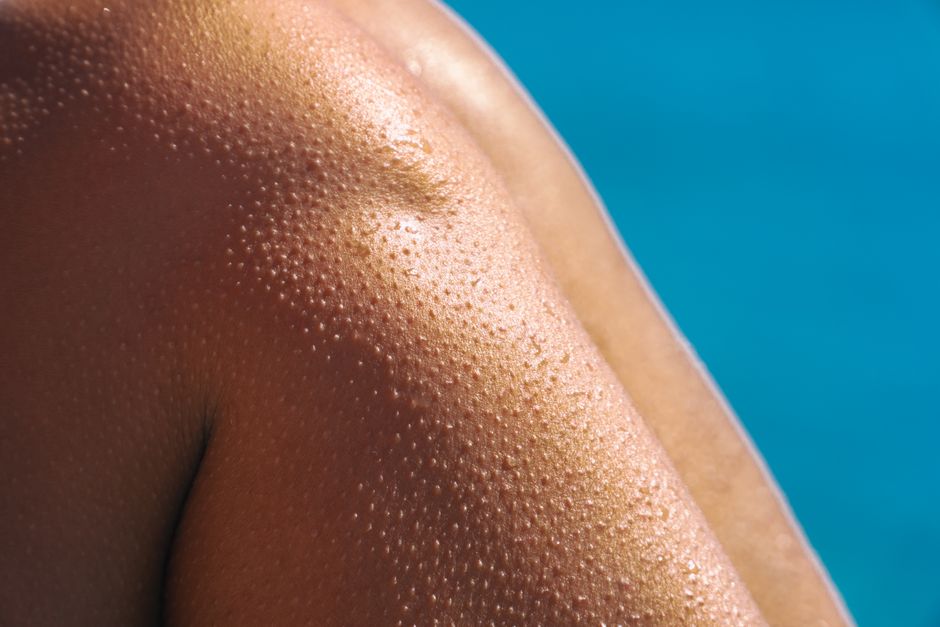
Closed comedones are the small, flesh-colored bumps that feel like tiny grains of sand under your skin. Unlike blackheads, they do not have an opening to the surface, which makes them harder to treat. The most effective approach combines daily exfoliation with a retinoid, and it takes patience because these bumps clear slowly over weeks, not days.
What Exactly Are Closed Comedones?
A closed comedone, often called a whitehead, forms when a pore becomes blocked with oil and dead skin cells. The pore opening stays closed, so the material inside never touches air. That is why it stays flesh-colored instead of turning black like an open comedone.
The skin naturally sheds dead cells and produces oil called sebum. In most cases, these move to the surface and wash away. In a closed comedone, the cells stick together and trap the oil beneath the surface. The result is a small, dome-shaped bump that can feel hard to the touch.
Many people mistake closed comedones for milia, which are tiny cysts filled with a protein called keratin. Milia are harder and whiter, and they do not respond to the same treatments. If you are unsure what you have, a dermatologist can tell the difference in seconds with a quick visual exam.
Why Do Closed Comedones Form?
Several factors contribute to closed comedones, and most people have more than one at play.
Hormones are a major driver. Androgens, which are present in both men and women, stimulate oil production. When oil output increases, the chance of pores becoming blocked goes up. This is why breakouts often appear during puberty, menstrual cycles, and times of hormonal change.
Skin care products can also cause them. Heavy creams, oils, and silicone-based products can sit on the skin and trap cells. This is sometimes called comedogenic, meaning it tends to block pores. Not everyone reacts to the same ingredients, so what breaks one person out may be fine for another.
Genetics play a role too. Some people naturally produce stickier skin cells that shed less efficiently. This is a trait you inherit, and it means you may need ongoing maintenance to keep pores clear.
How To Get Rid Of Closed Comedones What Works
The treatments that work best target the two problems at once: the excess cells and the trapped oil.
Retinoids are the first-line treatment. These are vitamin A derivatives that speed up cell turnover. They help the skin shed dead cells more quickly, which prevents them from building up inside the pore. Adapalene is available over the counter at 0.1 percent strength. Stronger retinoids like tretinoin require a prescription.
Retinoids take time. You will likely see no change for the first two to four weeks. Meaningful improvement usually appears around eight to twelve weeks of consistent use. Many people quit too early because they see an initial purge, where existing bumps come to the surface and look worse before they look better.
Salicylic acid is the best over-the-counter alternative. It is a beta hydroxy acid that dissolves the bonds holding dead cells together. It also penetrates oil, which helps it reach inside the pore. Products with 2 percent salicylic acid are widely available as cleansers, toners, or leave-on treatments.
Azelaic acid is another option. It works by normalizing how skin cells shed and has mild anti-inflammatory properties. It is often well tolerated by people who cannot use retinoids. Some research supports its use for comedonal acne, though it tends to work more slowly than retinoids.
What does not work? Scrubbing harder. Physical scrubs with rough particles can irritate the skin and make the problem worse by increasing inflammation. Extraction, where a tool is used to press out the contents, only helps temporarily and can cause scarring if done incorrectly.




How To Build A Routine That Clears Closed Comedones
A simple, consistent routine matters more than a complicated one. Here is what dermatologists generally recommend.
Start with a gentle cleanser. Harsh soaps strip the skin and trigger more oil production. Look for a cleanser without fragrance or sulfates. Wash twice a day, or once if your skin is dry.
Apply a leave-on treatment after cleansing. If you choose adapalene, use a pea-sized amount over your entire face, not just the bumps. Spot-treating does not work well for comedones because they are not inflamed like pimples. The medication needs to cover the whole area to prevent new ones from forming.
Moisturizer is not optional. Retinoids and acids dry the skin, and dry skin makes the barrier weaker. A simple moisturizer with ceramides or hyaluronic acid helps maintain the skin barrier so you can keep using the treatment.
Sunscreen is essential during the day. Retinoids increase sun sensitivity, and sun damage makes skin cells stickier. Use a broad-spectrum sunscreen with SPF 30 or higher every morning.
Do not add too many active ingredients at once. Using a retinoid, an acid, and a vitamin C serum together will likely irritate your skin. If irritation develops, back off to every other night with the retinoid until your skin adjusts.
When To See A Dermatologist
If you have used a retinoid consistently for three months and seen no improvement, it is time to get professional help. The same applies if the bumps are spreading, becoming inflamed, or leaving dark marks on your skin.
A dermatologist can prescribe stronger options. Tretinoin and tazarotene are more potent retinoids. Some doctors recommend combining a retinoid with a topical antibiotic if inflammation is present, though antibiotics do not directly treat comedones.
Professional extraction is an option, but it is not a cure. A dermatologist or licensed esthetician can use a sterile tool to open and drain stubborn bumps. This gives immediate cosmetic improvement, but the underlying tendency to form comedones remains. You still need a maintenance routine to prevent new ones.
In severe or stubborn cases, some dermatologists prescribe oral medications. Isotretinoin, a powerful oral retinoid, is reserved for severe acne that has not responded to other treatments. It is not used for mild comedonal acne because of its side effect profile, which includes dry skin, dry eyes, and the need for regular blood monitoring.
Lifestyle Factors That Make A Difference
Diet does not have strong evidence linking it to comedonal acne specifically. Some research suggests that high-glycemic foods and dairy may worsen acne in some people, but the effect varies widely. If you notice a pattern between certain foods and your skin, it is reasonable to test eliminating them. Do not expect diet alone to clear comedones.
Pillowcases and phone screens collect oil and bacteria. Changing your pillowcase weekly and wiping your phone screen regularly is a simple hygiene step that may help, though it has not been studied directly for comedones.
Do not pick at the bumps. Picking can rupture the pore wall, causing inflammation and potentially scarring. It also introduces bacteria from your fingers, which can turn a non-inflamed comedone into a red, infected pimple.
How Long Does It Take To See Results?
This is the question everyone wants answered, and the honest answer is that it takes longer than you hope. Skin cell turnover takes about 28 days in young adults and slows with age. A retinoid works by accelerating this process, but it does not happen overnight.
Most people see noticeable improvement at eight weeks. Significant clearing typically takes three to four months. If you are consistent and still see no change at twelve weeks, you need a different approach, which may mean a prescription-strength treatment.
The good news is that closed comedones respond well to treatment when the right approach is used consistently. They are not like inflammatory acne, which can leave scars. With time and the right products, most people can achieve clear skin.
Frequently Asked Questions
Can closed comedones turn into pimples?
Yes. If the pore wall ruptures, the trapped material triggers inflammation and the comedone becomes a red, swollen pimple. This is why picking at them is risky.
Is salicylic acid or adapalene better for closed comedones?
Adapalene is generally more effective because it normalizes cell shedding at a deeper level. Salicylic acid works well for mild cases or for people who cannot tolerate retinoids.
Will closed comedones go away on their own?
Some will eventually clear as skin sheds naturally, but this can take months. Most people find that without treatment, new ones form faster than old ones clear.
Can moisturizer cause closed comedones?
Some heavy moisturizers can block pores in people who are prone to comedones. Look for products labeled non-comedogenic, but know that this label is not strictly regulated and individual reactions vary.
