
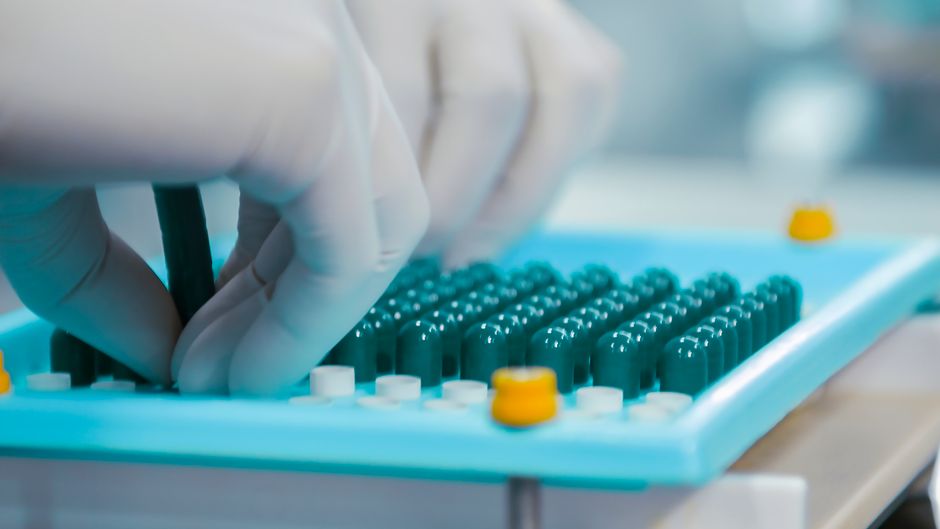
Cell sorting in flow cytometry works by forcing cells single-file through a laser beam, measuring their physical and chemical properties, then electrically charging and deflecting selected cells into collection tubes. This process, often called fluorescence-activated cell sorting (FACS), can isolate specific cell types from a mixture at speeds over 70,000 cells per second. It is the most precise method scientists have for purifying living cells based on multiple characteristics at once.
How Does a Flow Cytometer Actually Sort Cells?
A flow cytometer sorts cells using four steps that happen in milliseconds. First, the sample fluid containing cells is pressurized and pushed through a nozzle so narrow that cells come out one at a time. This is called hydrodynamic focusing. The stream of single cells then passes through one or more laser beams.
As each cell passes through the laser, it scatters light and may emit fluorescence if it has been stained with fluorescent markers. Detectors measure forward scatter (which relates to cell size) and side scatter (which relates to cell complexity). Fluorescence detectors capture signals from specific markers, such as proteins on the cell surface.
The instrument’s computer analyzes these signals in real-time. If a cell meets the criteria the user has set — for example, “CD4-positive and CD8-negative” — the machine waits until that cell reaches the end of the stream. At that exact moment, the stream is electrically charged. The charged droplet containing the target cell then passes through high-voltage deflection plates, which push it into a collection tube. Unwanted cells go to waste or a separate tube.
This entire decision and sorting process happens in less time than it takes a single cell to travel from the laser intercept to the droplet formation point, which is typically about 100 microseconds.
What Are the Key Components of a Cell Sorter?
Understanding the parts helps explain how cell sorting works in flow cytometry. Every sorter has the same basic elements, though designs vary between manufacturers.
- Fluidics system: Pressurizes and delivers the sample to the nozzle. It also carries sheath fluid, which surrounds the sample stream and keeps cells aligned.
- Optics: Lasers of different wavelengths (commonly 488 nm blue, 633 nm red, and 405 nm violet) excite fluorescent markers. Photodetectors collect the emitted light.
- Electronics: Converts light signals into digital data. The computer processes this data and makes sorting decisions.
- Sorting mechanism: A piezoelectric crystal vibrates the nozzle at a specific frequency, breaking the stream into uniform droplets. Charging electrodes and deflection plates direct droplets.
- Collection system: Tubes, plates, or slides that receive the sorted cells. Many sorters can collect into multiple tubes at once.
The most critical component for successful sorting is the nozzle. Its size must match the cell type. A 70-micron nozzle works for most blood cells. A 100-micron nozzle is better for larger cells like stem cells or neurons, though it limits sort speed.
What Can Cell Sorting Actually Tell You?
Cell sorting does not just separate cells — it lets you analyze them first. Before sorting, the instrument measures each cell’s properties. This gives you data on the entire population, not just the sorted subset.
For example, researchers studying immune cells can ask: “What percentage of T cells are activated?” The sorter can count the total T cells, measure how many express activation markers like CD69, and then sort those activated cells for further experiments. The CDC reports that flow cytometry is the standard method for monitoring CD4 counts in HIV patients, which guides treatment decisions.
After sorting, the collected cells remain alive and functional. This is the key advantage over other methods. You can culture them, run genetic tests, perform drug screens, or transplant them into animals. Research published in the journal Nature Methods has shown that sorted stem cells retain their ability to differentiate into multiple cell types, provided the sorting pressure and nozzle size are appropriate.
Cell sorting is also used in clinical settings. It can isolate circulating tumor cells from a blood sample, purify sperm for artificial insemination, or enrich specific immune cells for cancer immunotherapy. The U.S. Food and Drug Administration has approved several cell therapy products that rely on flow sorting during manufacturing.



What Are the Limitations of Cell Sorting?
Cell sorting is powerful, but it has real limitations. The most obvious is speed versus purity. Sorting faster means more cells per second, but it also means more contamination from unwanted cells that happen to be in the same droplet. This tradeoff is called the “purity-recovery-speed” triangle. You can optimize for two of these three factors, but not all three at once.
Another limitation is cell stress. The high pressure, laser exposure, and electrical charge can damage cells. Some cell types, particularly primary human cells and fragile stem cells, may not survive the sort. A 2019 study in Cytometry Part A found that viability after sorting ranged from 60% to 95% depending on cell type and instrument settings. Researchers must test their specific cells before assuming good recovery.
The cost is also significant. A new cell sorter costs between $100,000 and $500,000. Operating costs include trained staff, antibodies for staining, and daily calibration. Many institutions have core facilities where researchers pay per hour of use, which is more practical than buying a machine.
Sterility is another concern. The fluidics system can harbor bacteria. If you need sterile cells for culture, the instrument must be thoroughly cleaned and run with sterile sheath fluid. Some sorters have built-in sterilization cycles, but this adds time to the setup.
How Does Cell Sorting Compare to Other Cell Separation Methods?
Several methods exist for separating cells, and each has different strengths. The table below compares cell sorting with the two most common alternatives.
| Method | Speed | Purity | Multiparameter | Cell Viability | Cost |
|---|---|---|---|---|---|
| FACS (cell sorting) | High (up to 70k/sec) | Very high (95-99%) | Yes (up to 20+ markers) | Good (60-95%) | High ($100k-$500k) |
| Magnetic bead separation (MACS) | Moderate (millions/min) | Moderate (70-90%) | Limited (1-2 markers) | Excellent (90-98%) | Low ($5k-$20k) |
| Microfluidic sorting | Low (thousands/min) | High (90-95%) | Limited | Excellent (95%+) | Moderate ($20k-$80k) |
Magnetic bead separation is faster for bulk processing and gentler on cells, but it cannot sort based on multiple markers at once. You get everything that expresses CD4, for example, regardless of other markers. Microfluidic devices are newer and gentler, but they process cells much more slowly and are not yet widely available for complex sorts.
Cell sorting remains the only method that can isolate cells based on combinations of multiple markers in real-time. If you need a specific subset of cells, such as “CD34-positive, CD38-negative, and lineage-negative” for stem cell research, flow sorting is the only practical option.
Common Misconceptions About Cell Sorting
A few misunderstandings come up repeatedly. One is that cell sorting is the same as flow cytometry analysis. Analysis only measures cells and produces data. Sorting adds the physical separation step. Many flow cytometers are analyzers only and cannot sort. The instruments are different, though they share the same detection principles.
Another misconception is that sorted cells are identical to the original population. Sorting can activate stress responses in cells. Gene expression changes have been documented within 30 minutes of sorting. Researchers should work quickly after sorting or allow cells to recover in culture before running experiments that measure baseline gene expression.
Some people believe that higher sort speed always means better results. This is false. Sorting at maximum speed often reduces purity and viability. For most applications, sorting at 5,000 to 10,000 cells per second gives the best balance of speed and quality. Pushing to 30,000 or more cells per second is only useful when you need very large numbers of cells and purity is less critical.
There is also a belief that any cell can be sorted. Some cells are too large, too sticky, or too fragile for standard sorters. Cells that form clumps will clog the nozzle. Cells that are very large, like adipocytes, cannot fit through standard nozzles. Some cells, like certain neurons, do not survive the process at all. The instrument manual always lists compatible cell sizes and types.
Frequently Asked Questions
How long does cell sorting take?
A typical sort takes 30 minutes to 3 hours depending on the number of cells needed and the sort speed. Sorting 10 million cells at 10,000 cells per second takes about 17 minutes if the target cells make up 10% of the sample.
Can cell sorting be done on live cells?
Yes, cell sorting is routinely performed on live cells. Most protocols keep cells on ice or in cold buffer to maintain viability during the process.
What is the difference between FACS and flow cytometry?
Flow cytometry is the measurement of cell properties using lasers and detectors. FACS (fluorescence-activated cell sorting) is a specific application of flow cytometry that physically separates cells based on those measurements.
How many cells do I need to start a sort?
You typically need at least 1 million total cells to start a sort, though 5-10 million is more common. The minimum depends on how rare your target population is and how many sorted cells you need.
