
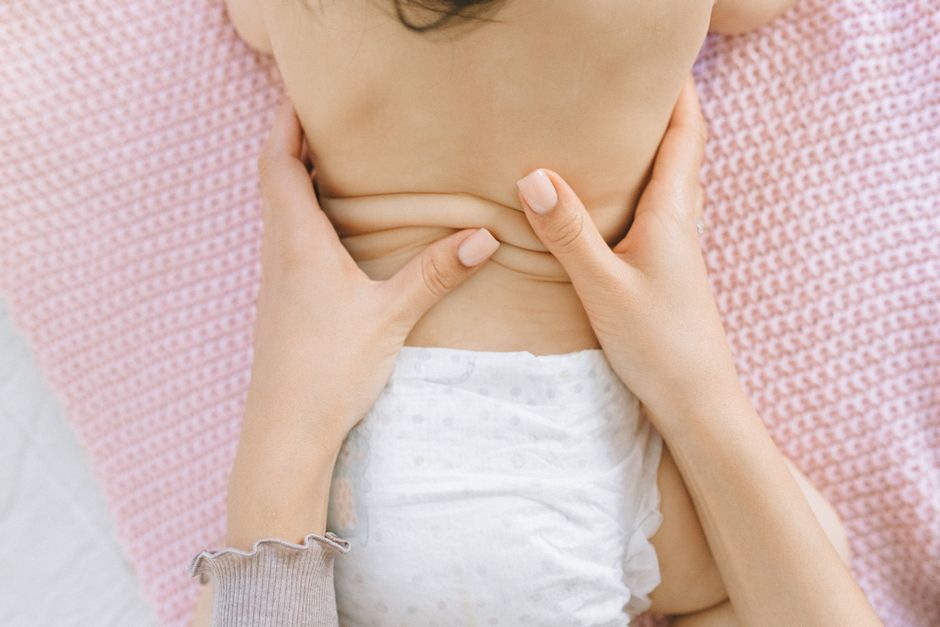
Baby hiccups look alarming but are almost always harmless. They are simply spasms of the diaphragm, the muscle that helps your baby breathe. Most hiccup episodes stop on their own within a few minutes and do not bother the baby at all.
To get rid of baby hiccups, try a gentle feeding break, a pacifier, or a slow position change. To prevent them, feed your baby before they get too hungry, keep them upright after meals, and burp them frequently. The most important thing to remember is that hiccups are a normal reflex, not a sign of distress.
Why Do Babies Get Hiccups So Often?
Hiccups happen when the diaphragm contracts suddenly and involuntarily. Each contraction causes the vocal cords to snap shut, which produces the “hic” sound. This reflex is common in all humans, but babies experience it far more frequently than adults.
There are a few reasons for this. A baby’s nervous system is still maturing. The nerve pathways that control the diaphragm are not fully developed, so the muscle is more easily triggered. Also, a baby’s stomach is tiny. When it fills with milk or air, it can push up against the diaphragm and irritate it, causing a spasm.
Some research suggests that hiccups in infancy may actually help with brain and breathing development. One study proposed that the rhythmic contraction of the diaphragm helps the baby’s brain learn to regulate breathing. This is not a proven fact, but it does offer a reassuring perspective on a very normal reflex.
How To Get Rid Of Baby Hiccups And Prevent Them
When your baby has hiccups, you do not need to do anything dramatic. In most cases, they will resolve on their own in about 5 to 10 minutes. If you want to help them stop sooner, there are a few simple techniques that are safe and commonly recommended by pediatricians.
- Take a feeding break. If you are bottle-feeding, pause and gently remove the bottle. If you are breastfeeding, unlatch your baby. A short break can relax the diaphragm.
- Offer a pacifier. Sucking can help relax the diaphragm and may interrupt the hiccup cycle.
- Change positions. Hold your baby upright against your chest for a few minutes. The change in posture can relieve pressure on the diaphragm.
- Burp them. Sometimes trapped gas is pushing on the diaphragm. A gentle burp can release that pressure and stop the hiccups.
Do not startle your baby, pull their tongue, or press on their eyeballs. These are old folk remedies that have no medical support and can be distressing for an infant. Do not use gripe water or any herbal remedy specifically to treat hiccups without asking your pediatrician first.
Prevention is about reducing the triggers. Feed your baby before they are frantic with hunger. A frantic baby swallows a lot of air, which can lead to hiccups. Keep feedings calm and paced. After feeding, hold your baby upright for 20 to 30 minutes. This helps milk settle and allows air to rise so it can be burped out.
Is It Safe To Feed A Baby With Hiccups?
Yes, it is safe to feed a baby who has hiccups. The hiccups do not interfere with swallowing or breathing. In fact, many babies will naturally stop hiccupping once they start to nurse or take a bottle.
However, there is a practical consideration. If your baby has hiccups and is also showing hunger cues, feeding them is a reasonable response. The sucking motion can help regulate the diaphragm. If the hiccups are frequent and seem to bother your baby during feeding, stopping to burp them more often may help.
Some parents worry that feeding a hiccupping baby will cause them to choke. This is not a realistic concern. The airway is protected by the epiglottis during swallowing, and hiccups do not change that protective mechanism. Feed your baby normally, but keep the pace slow and calm.




When Should Hiccups Worry You?
Hiccups are rarely a cause for concern. But there are situations where you should contact your pediatrician. If your baby has hiccups that last longer than an hour without stopping, that is worth a call.
You should also seek medical advice if the hiccups are accompanied by other symptoms. These include spitting up large amounts forcefully, coughing, gagging, or appearing to be in pain. Frequent hiccups combined with excessive spitting up can sometimes be a sign of gastroesophageal reflux disease, or GERD. This is a condition where stomach contents flow back into the esophagus, causing irritation.
Another sign to watch for is hiccups that interfere with sleep or feeding to the point that your baby is not gaining weight. This is uncommon, but it warrants a professional evaluation. In most cases, however, hiccups are a normal part of infant development and resolve on their own as the baby grows.
By the time most babies reach their first birthday, hiccups become much less frequent. The nervous system matures, the stomach grows, and the diaphragm becomes less easily irritated.
Do Home Remedies Like Sugar Or Gripe Water Work?
You may have heard of home remedies for hiccups, such as giving a baby a teaspoon of sugar or using gripe water. The evidence for these is limited. There is no solid clinical research confirming that sugar stops hiccups in infants.
Gripe water is a supplement that traditionally contains herbs like fennel, ginger, and chamomile. Some parents use it for colic and gas. It may help some babies with digestive discomfort, but it is not specifically proven to stop hiccups. Also, gripe water is not regulated by the FDA, and its ingredients vary by brand. Some versions contain alcohol or sugar, which are not appropriate for infants.
If you are considering gripe water for any reason, talk to your pediatrician first. They can tell you whether a specific brand is safe for your baby’s age. For hiccups specifically, the gentler physical methods like position changes and burping are safer and just as likely to work.
There is no clinical evidence that any home remedy can prevent hiccups from happening in the first place. The most reliable prevention is simply good feeding habits: feeding before extreme hunger, pacing the feed, and burping regularly.
Does Burping Actually Help Prevent Hiccups?
Burping helps release air that gets swallowed during feeding. When air sits in the stomach, it can push against the diaphragm and trigger hiccups. Releasing that air reduces the pressure and can stop an episode.
For prevention, burping is most effective when done at natural pauses in the feeding. If you are bottle-feeding, burp your baby after every 2 to 3 ounces. If you are breastfeeding, burp when you switch breasts. Some babies need more frequent burping than others. You will learn your baby’s pattern quickly.
An upright burping position is best. Hold your baby against your chest with their chin resting on your shoulder. Gently pat or rub their back. You do not need to pat hard. A soft, rhythmic pat is enough to help the air rise.
It is worth noting that some babies simply do not burp easily. If your baby does not burp after a few minutes, it is fine to continue feeding. Not every feeding results in a burp, and not every hiccup is caused by trapped air. Burping is a helpful tool, not a guarantee.
Frequently Asked Questions
Can hiccups hurt my baby?
No, hiccups do not hurt babies. They are a normal reflex and most babies are not bothered by them at all.
How long do baby hiccups usually last?
Most hiccup episodes last between 5 and 10 minutes. If hiccups last longer than an hour, contact your pediatrician.
Should I wake my baby to treat hiccups?
No, you do not need to wake a sleeping baby for hiccups. Hiccups will stop on their own and do not disrupt breathing.
Can I give my baby water to stop hiccups?
No, do not give water to a baby under 6 months old. Water can interfere with their electrolyte balance and is not a safe treatment for hiccups.
