
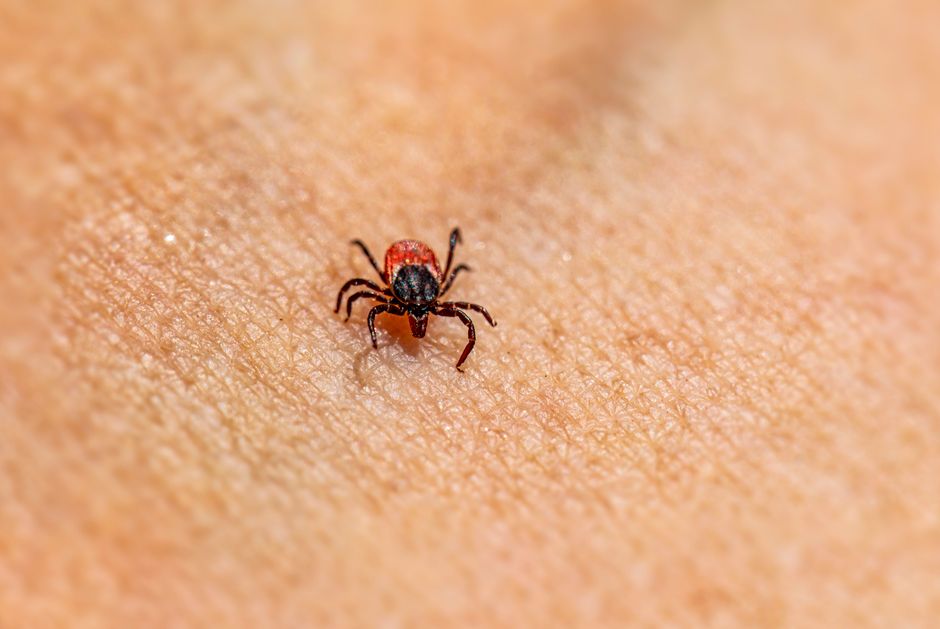
Finding a tick attached to your skin is unsettling, but how you remove it matters more than how fast you do it. The goal is to grasp the tick as close to your skin as possible and pull straight up with steady, even pressure. Using fine-tipped tweezers is the only method recommended by public health authorities. This approach minimizes the chance of leaving the tick’s mouthparts behind or causing the tick to regurgitate fluids into your bloodstream.
Why Breaking the Tick Is a Real Risk
A tick’s mouth is not a simple needle. It has barbed structures that anchor it firmly into your skin. If you squeeze the tick’s body, twist it, or burn it, you can cause it to vomit its stomach contents into the bite wound.
This matters because disease-causing bacteria and viruses live in the tick’s gut and salivary glands. When a tick regurgitates, those pathogens can enter your bloodstream more easily. The goal of removal is to avoid this transfer entirely.
Breaking the tick’s body also leaves parts behind. The mouthparts can stay embedded in the skin, which increases the risk of local infection. Even if you remove the tick cleanly, you should still clean the area thoroughly and watch for symptoms.
The Only Recommended Method: Fine-Tipped Tweezers
Public health agencies agree on one method. Use fine-tipped tweezers. Not blunt tweezers. Not your fingers. Not a credit card. Not petroleum jelly.
Here is the step-by-step process that health authorities recommend:
- Grasp the tick as close to the skin surface as possible. Do not grab the tick by its body.
- Pull upward with steady, even pressure. Do not twist, jerk, or yank the tick.
- Do not squeeze the tick’s body. This can force fluids into your skin.
- After removal, clean the bite area and your hands with rubbing alcohol or soap and water.
- Dispose of the tick by placing it in alcohol, sealing it in a bag, or flushing it down the toilet.
If mouthparts break off and remain in the skin, leave them alone if you can. The skin will shed them naturally over time. Trying to dig them out with a needle often causes more harm than leaving them be.
Methods That Do Not Work and Can Be Dangerous
Many folk remedies for tick removal are not just ineffective. Some are actively harmful.
Petroleum jelly, nail polish, or liquid soap are sometimes suggested to smother the tick. The idea is that the tick will back out on its own. This does not work. Ticks can survive for long periods without breathing. They will not detach quickly, and the delay gives them more time to transmit pathogens.
Heat from a match or a lighter is another dangerous myth. Heating the tick can cause it to regurgitate. This is exactly what you are trying to prevent. It can also burn your skin.
Twisting the tick is also a common mistake. Some tick removal tools are designed to twist, but the evidence supporting this method is limited. The safest approach remains a straight upward pull with fine-tipped tweezers.
If you do not have tweezers, a tick removal tool designed for this purpose is an acceptable alternative. These tools work by sliding under the tick’s body and lifting it off. Follow the manufacturer’s instructions carefully.





What To Do After the Tick Is Out
Once the tick is removed, do not crush it with your fingers. Put it in a sealed bag or container in case you need to identify it later. Some health departments offer tick testing, but results are not always actionable. Knowing the type of tick can help your doctor assess your risk.
Clean the bite area with rubbing alcohol or soap and water. Then wash your hands. Apply an antiseptic if you have one.
Watch the bite site for a few weeks. A small red bump is normal and not a cause for concern. Seek medical care if you develop a rash that looks like a bullseye, a fever, headache, muscle aches, or fatigue. These can be early signs of a tick-borne illness.
Save the tick if you can. Place it in a small bag or jar with a damp paper towel. If you do develop symptoms, having the tick can help a laboratory identify the species and test for specific pathogens.
How To Get A Tick Out Of Skin Without Breaking It: The Key Points
The technique comes down to three things: the right tool, the right grip, and the right motion.
Use fine-tipped tweezers. Grasp the tick at the skin line. Pull straight up without twisting.
If the tick breaks during removal, do not panic. Clean the area and remove any visible mouthparts with the tweezers if they are easy to grasp. If they are not easy to grasp, leave them. The body will push them out naturally.
Do not apply anything to the tick before removal. No oil, no heat, no chemicals. These methods increase the risk of regurgitation and do not speed up removal.
When To See a Doctor After a Tick Bite
Not every tick bite requires a doctor visit. Most tick bites do not lead to illness. But some situations warrant medical attention.
See a doctor if you develop a fever, chills, headache, fatigue, or muscle aches within a few weeks of the bite. These are nonspecific symptoms, but they can be early signs of Lyme disease, anaplasmosis, or other tick-borne infections.
See a doctor if a rash develops. The classic bullseye rash of Lyme disease is a red ring with a central clearing, but not everyone develops this pattern. Any expanding rash at the bite site should be evaluated.
If you removed the tick within the last 24 to 48 hours, your risk of Lyme disease is much lower. Transmission of the bacteria that causes Lyme disease typically requires the tick to be attached for at least 24 hours, and often longer. Prompt removal is one of the best ways to reduce risk.
Some people may be offered preventive antibiotics after a tick bite, but this is not routine for every bite. It depends on the type of tick, how long it was attached, and geographic risk. Your doctor can help you decide if this is appropriate.
Preventing Future Tick Bites
Prevention is more reliable than any removal technique. Ticks live in grassy, brushy, and wooded areas. They do not jump or fly. They wait on the tips of vegetation and latch onto passing hosts.
When spending time outdoors, walk in the center of trails. Use an EPA-registered insect repellent that contains DEET, picaridin, or oil of lemon eucalyptus. Treat clothing and gear with permethrin, which kills ticks on contact.
After coming indoors, check your body for ticks. Ticks can attach anywhere, but they prefer warm, moist areas. Check under the arms, in and around the ears, inside the belly button, behind the knees, between the legs, and around the waist.
Showering within two hours of coming indoors has been shown to reduce the risk of tick-borne disease. It also gives you a chance to find ticks that are not yet attached. Ticks often crawl for hours before they bite.
Frequently Asked Questions
Can I use a match or heat to remove a tick?
No. Heat causes the tick to regurgitate fluids into your skin, which increases the risk of disease transmission. Use fine-tipped tweezers instead.
What if the tick’s head stays in my skin?
Leave it alone if you cannot easily grasp it. The skin will shed the mouthparts naturally over time, and digging can cause infection.
Should I save the tick after removal?
Yes. Place it in a sealed bag or jar with a damp paper towel. This can help a doctor or laboratory identify the species if you develop symptoms later.
How long does a tick need to be attached to transmit Lyme disease?
Transmission typically requires at least 24 hours of attachment, and often longer. Removing a tick promptly is the most effective way to reduce risk.
