
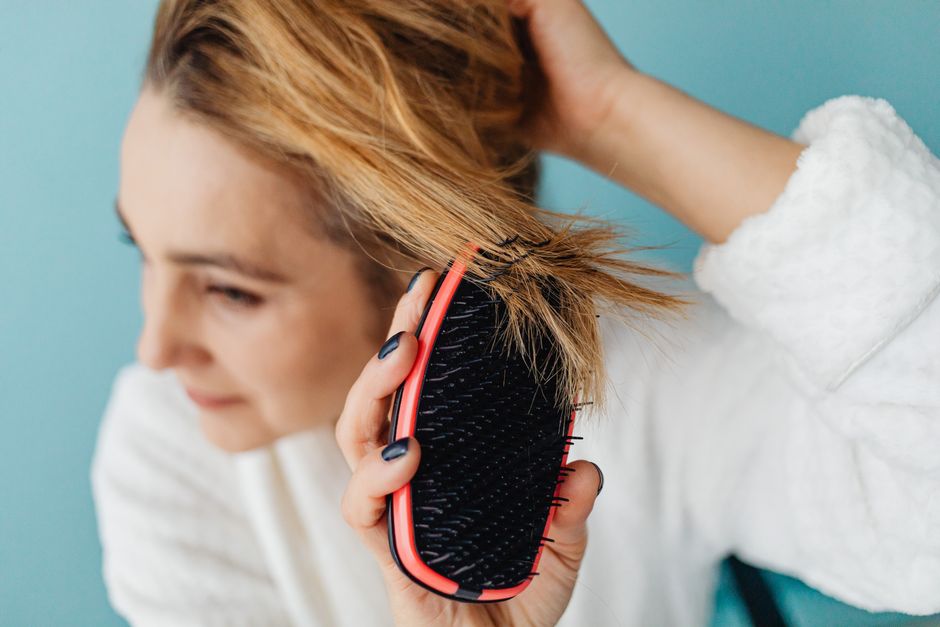
Hair breakage is different from hair loss. Hair loss happens at the root, when strands fall out from the scalp. Breakage happens along the hair shaft itself, leaving you with short, frayed pieces and uneven lengths. The most common reason hair breaks is physical stress on weakened strands, but the underlying causes range from heat styling to nutritional gaps. Identifying the exact cause matters because the fix for heat damage is completely different from the fix for a protein deficiency.
What Does Hair Breakage Actually Look Like?
Breakage has a distinct appearance. You will notice small, broken pieces of hair on your pillow, shoulders, or brush. These pieces are typically short and have a blunt, split end rather than the tapered root bulb you see with normal shedding.
Other signs include uneven hair lengths, especially around the crown and temples. Your hair may feel rough, dry, or brittle to the touch. You might also see white dots along the strand, which are points where the hair fiber has weakened and is about to snap.
Normal hair shedding is different. People lose 50 to 100 hairs per day from the root. That is a natural cycle. Breakage is not shedding. It is the hair strand snapping mid-shaft due to weakness.
How Does Hair Structure Explain Breakage?
Hair has three layers. The outermost layer is the cuticle, made of overlapping scales that protect the inner layers. The middle layer, the cortex, gives hair its strength, elasticity, and color. The innermost layer, the medulla, is not always present in all hair types.
Breakage happens when the cuticle is damaged and the cortex becomes exposed. Once the cortex loses its structural proteins, the strand becomes fragile. Any tension, brushing, or styling can snap it.
Hair is made mostly of a protein called keratin. Keratin is held together by disulfide bonds, hydrogen bonds, and salt bonds. Heat, chemicals, and mechanical stress can break these bonds. When enough bonds break, the hair fiber fails.
Hair also has a natural moisture level. Healthy hair contains about 10 percent water. When moisture drops below that, the hair becomes brittle and prone to snapping. When moisture is too high, the hair can swell and become weak as well.
Why Is Your Hair Breaking Off? Heat and Styling Damage
Heat styling is one of the most common causes of breakage. Flat irons, curling irons, and blow dryers expose hair to temperatures that can reach 400 degrees Fahrenheit or higher. At these temperatures, the water inside the hair shaft turns to steam and expands. This creates bubbles and cracks within the cortex.
Repeated heat exposure compounds the damage. The cuticle scales lift, the cortex loses protein, and the hair becomes increasingly porous. Porous hair absorbs water quickly but cannot hold it, leaving strands dry and weak.
Mechanical damage is equally important. Brushing wet hair is risky because wet hair is more elastic and up to 30 percent weaker than dry hair. Aggressive brushing, tight ponytails, and rough towel drying all create friction that frays the cuticle.
Sleeping on cotton pillowcases also causes friction. Cotton fibers are rough at a microscopic level. Silk or satin pillowcases create less friction and may reduce overnight breakage.

Chemical Damage From Dye, Bleach, and Relaxers
Chemical treatments alter the structure of hair permanently. Bleach is the most aggressive. It opens the cuticle and dissolves melanin, the pigment that gives hair its color. This process also breaks down the protein structure of the cortex. Over-bleached hair can lose significant structural integrity.
Hair dye, especially permanent color, uses ammonia to open the cuticle and hydrogen peroxide to lift the natural color. Every coloring session causes some degree of protein loss. Repeated coloring without adequate recovery time accumulates damage.
Relaxers and perms work by breaking disulfide bonds and reforming them in a new shape. This is a powerful chemical process. When done too frequently or left on too long, it can cause severe structural damage. Some research indicates that relaxer use is associated with increased hair breakage, particularly in women with naturally curly or coily hair.
The evidence is clear that chemical processing weakens hair. The question is how much damage your specific hair type can tolerate. Fine hair has a smaller diameter and less protein to spare. Curly hair has more fragile points along the strand where the fiber bends.
Nutritional Deficiencies That Weaken Hair
Hair is a non-essential tissue. When the body lacks nutrients, it prioritizes vital organs over hair growth. This means nutritional deficiencies can directly cause weaker hair that breaks easily.
Iron deficiency is one of the most studied links to hair problems. Iron is needed for red blood cells to carry oxygen to hair follicles. Low ferritin levels, which reflect stored iron, have been associated with hair shedding and reduced hair quality. Some research suggests that ferritin levels below 40 ng/mL may affect hair health, though clinical thresholds vary.
Protein is another critical factor. Hair is almost entirely protein. If your diet is very low in protein, your body may reduce hair production or produce weaker strands. Severe protein malnutrition causes visible hair changes, but the effects of mild insufficiency are less clear.
Zinc plays a role in hair tissue growth and repair. Low zinc levels have been linked to hair shedding and brittle hair. Vitamin D also appears important. Some studies have found lower vitamin D levels in people with certain hair loss conditions, though direct evidence for breakage specifically is limited.
Biotin is widely marketed for hair health, but the evidence is weak. Biotin deficiency is rare, and most people get enough from food. Large doses of biotin have not been shown to strengthen hair in people without a deficiency. Some research does show biotin supplements improve hair and nail strength in people with documented deficiency, but that does not apply to the general population.
No clinical guidelines currently exist for using supplements to treat hair breakage in otherwise healthy people. If you suspect a deficiency, a blood test is the appropriate first step. Taking random supplements without knowing your levels is not evidence-based.
Underlying Medical Conditions That Cause Breakage
Some medical conditions directly affect hair structure and strength. Hypothyroidism, an underactive thyroid, can cause hair to become dry, coarse, and brittle. The hair also sheds more than usual. Treating the thyroid condition typically improves hair quality over time.
Polycystic ovary syndrome, or PCOS, causes hormonal imbalances that can affect hair. It more commonly causes hair thinning at the scalp, but it can also affect hair texture and strength.
Eating disorders and rapid weight loss can trigger hair problems. When the body is under severe stress or lacks nutrients, hair growth cycles are disrupted. The hair that does grow may be weaker and more prone to breakage.
Certain medications can cause hair changes. Chemotherapy is the most well-known, but some blood pressure medications, antidepressants, and hormonal medications can also affect hair. If you notice breakage starting after a new medication, discuss it with your doctor. Do not stop taking prescribed medication without medical advice.
Environmental Factors and Water Quality
Sun exposure damages hair. Ultraviolet radiation breaks down the proteins in the hair shaft, particularly the amino acids that give hair its strength. Prolonged sun exposure can make hair dry, brittle, and prone to breakage.
Chlorine and salt water both affect hair. Chlorine strips the natural oils from hair and can cause the cuticle to lift. Salt water dehydrates the hair. Both leave hair more vulnerable to mechanical damage.
Hard water, which contains high levels of calcium and magnesium, may affect hair. Some research suggests these minerals can build up on the hair shaft, making it stiff and more prone to breakage. The evidence is not conclusive, but many people report softer hair after installing a water softener.
How to Stop the Breakage
The first step is to stop the damaging behavior. If you use heat styling daily, reduce it to once or twice a week. If you bleach your hair regularly, extend the time between treatments. If you brush wet hair, switch to a wide-tooth comb.
Use heat protectant products when you do style with heat. These products cannot prevent all damage, but they can reduce moisture loss and protein degradation. Look for products that contain silicones or other film-forming ingredients.
Handle wet hair with care. Wet hair is weaker than dry hair. Use a microfiber towel or an old t-shirt to gently squeeze out excess water. Do not rub. Detangle with your fingers first, then use a wide-tooth comb starting from the ends and working upward.
Wash hair with lukewarm water rather than hot water. Hot water strips natural oils and can cause the cuticle to swell. Follow with a conditioner that suits your hair type. Conditioners help smooth the cuticle and reduce friction.
For hair that is already severely damaged, the most reliable fix is cutting off the damaged ends. No product can truly repair a hair strand that is already broken or severely compromised. Products can temporarily coat the hair and improve its appearance, but the structural damage remains.
When to See a Doctor
See a doctor if you notice sudden or severe breakage. Also see a doctor if breakage comes with other symptoms like fatigue, weight changes, skin changes, or unusual shedding. These could point to an underlying medical condition that needs treatment.
A dermatologist can examine your hair and scalp and may order blood tests. They can check for thyroid problems, iron deficiency, and other treatable causes. Treatment of the underlying condition is the only way to address breakage caused by medical issues.
Hair breakage is treatable in most cases. The key is identifying the cause. Once you stop the damaging behavior or address the medical issue, new hair will grow in healthy. It takes time, but the breakage can stop.
Frequently Asked Questions
Can damaged hair be repaired?
No product can truly repair a hair strand that is already broken. Treatments can temporarily coat the hair and improve appearance, but the only lasting fix is cutting off the damaged ends and allowing new hair to grow.
How long does it take for hair breakage to stop?
Hair grows about half an inch per month, so visible improvement takes time. Once you stop the damaging behavior, new healthy hair typically becomes noticeable within three to six months.
Does biotin help with hair breakage?
Biotin only helps if you have a documented biotin deficiency, which is rare. For most people, taking biotin supplements has not been shown to strengthen hair or stop breakage.
Is hair breakage a sign of a serious health problem?
Not usually. Most breakage is caused by heat, chemicals, or mechanical stress. However, sudden or severe breakage with other symptoms like fatigue or weight changes should be evaluated by a doctor.
