
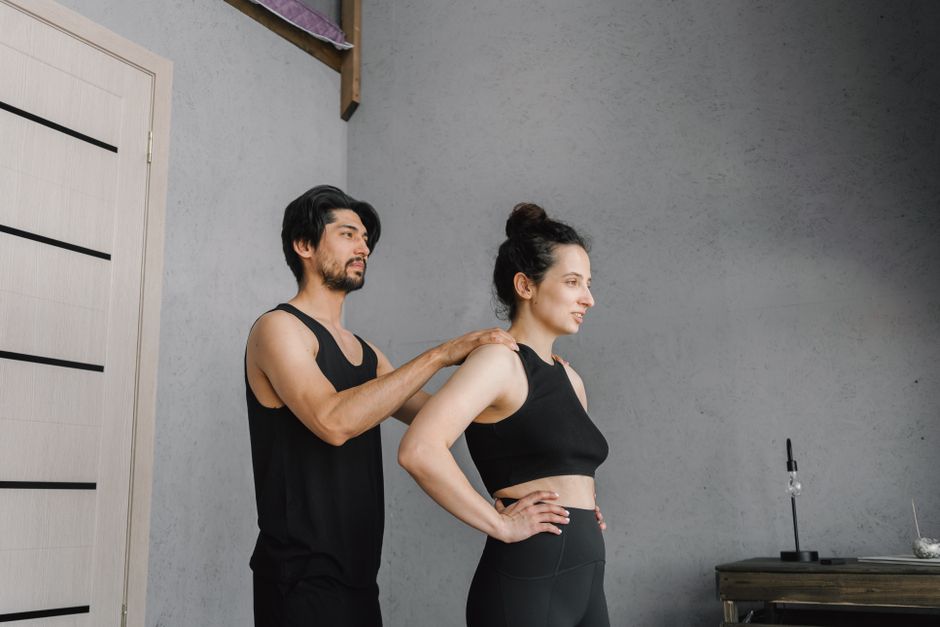
Lordosis is the inward curve of your lower back. Everyone has a small one, and that is normal. The problem starts when the curve becomes exaggerated, pulling your belly forward and your buttocks out. The fix is not one magic move. It is a combination of stretching tight muscles, strengthening weak ones, and changing daily habits that reinforce the curve.
The most effective approach targets the specific pattern. Your hip flexors and lower back muscles are usually tight. Your abdominal muscles and glutes are usually weak. Stretching the tight areas and strengthening the weak ones teaches your pelvis to sit in a more neutral position. Habits matter just as much. How you sit, stand, and sleep either maintains the correction or undoes it.
What Causes Lordosis In The First Place?
Understanding the cause helps you fix it correctly. Lordosis is often called “swayback” because the lower spine curves inward more than it should. This shifts your center of gravity forward. Your body compensates by tilting your pelvis forward, which is called an anterior pelvic tilt.
Prolonged sitting is a major contributor. Sitting for hours shortens the hip flexors, the muscles at the front of your hip that connect your thighs to your pelvis. When you stand, those shortened muscles pull the front of your pelvis down. This increases the curve in your lower back.
Weak abdominal muscles make it worse. Your abs act like a front brace for your spine. When they are weak, nothing holds the front of your pelvis up. The lower back muscles then overwork to keep you upright, which tightens them further. This creates a cycle that is hard to break without targeted work.
Other causes include obesity, especially belly fat that pulls the pelvis forward, and pregnancy, which shifts weight distribution. In rare cases, lordosis can be linked to neuromuscular conditions or spinal issues. If your curve is severe, painful, or accompanied by numbness or weakness in your legs, see a doctor before starting any exercise program.
How To Fix Lordosis Exercises Stretches And Habits?
The most effective plan combines three elements: stretching, strengthening, and habit changes. You cannot fix the curve with stretching alone. You cannot fix it with strengthening alone. You need both, plus awareness of how you hold your body throughout the day.
Start with the tight muscles. Your hip flexors, lower back, and sometimes your hamstrings need lengthening. Then move to the weak muscles. Your glutes, abdominal wall, and core stabilizers need activation. Finally, practice neutral spine positioning in daily activities. This is the difference between temporary relief and lasting change.
A consistent routine matters more than intensity. Doing a few targeted exercises daily beats doing a long session once a week. Most people notice postural changes within a few weeks, though significant structural change takes longer. Be patient and consistent.
Stretches That Help Correct Lordosis
These stretches target the muscles that pull your pelvis into an exaggerated tilt. Hold each stretch for 30 seconds. Breathe normally. Do not bounce.
The kneeling hip flexor stretch is the most important one. Kneel on one knee with the other foot flat on the floor in front of you. Squeeze your glute on the kneeling side and gently push your hips forward. You should feel a stretch in the front of the thigh on the kneeling leg. This directly addresses the shortened hip flexor that drives the anterior pelvic tilt.
The child’s pose stretch targets the lower back. Start on your hands and knees. Sit your hips back toward your heels and extend your arms forward. Let your chest sink toward the floor. This gently lengthens the lower back muscles that are often overactive in lordosis.
The knee-to-chest stretch also helps. Lie on your back and pull one knee toward your chest, keeping the other leg straight on the floor. This stretches the lower back on one side at a time. It is gentle and safe for most people.
If your hamstrings feel tight, add a hamstring stretch. Lie on your back with one leg extended upward, using a towel or strap around your foot to gently pull the leg toward you. Tight hamstrings can pull on the pelvis and contribute to the postural imbalance.




Strengthening Exercises That Support Neutral Alignment
Strengthening is the other half of the equation. The goal is to give your pelvis support from the front and back so it rests in a neutral position without effort.
The glute bridge is a foundational exercise. Lie on your back with your knees bent and feet flat on the floor. Squeeze your glutes and lift your hips until your body forms a straight line from shoulders to knees. Hold for a few seconds, then lower slowly. This activates the glutes, which are often weak and underused in people with lordosis.
The dead bug exercise targets the deep core muscles. Lie on your back with your arms extended toward the ceiling and your knees bent at 90 degrees. Slowly lower your right arm and left leg toward the floor while keeping your lower back pressed into the ground. Return to start and switch sides. This teaches your core to stabilize your spine while your limbs move.
The plank is a more advanced option. Hold a forearm plank with your body in a straight line from head to heels. Keep your abs engaged and your lower back flat. If you feel your lower back sagging, stop and rest. A sagging plank reinforces the wrong pattern.
Abdominal activation exercises like the pelvic tilt are also valuable. Lie on your back with your knees bent. Gently flatten your lower back into the floor by tilting your pelvis backward. Hold for a few seconds, then release. This teaches you voluntary control over your pelvic position, which is the foundation of correcting lordosis.
Daily Habits That Prevent Lordosis From Returning
Exercises correct the imbalance. Habits keep it corrected. Without habit changes, your body will drift back to its old pattern within weeks.
Sitting posture matters most if you work at a desk. Sit with your hips slightly higher than your knees. Keep both feet flat on the floor. Place a small cushion or rolled towel behind your lower back to maintain a neutral curve. Avoid slouching forward, which rounds your upper back and increases the curve in your lower back.
Standing posture requires awareness. Stand with your weight evenly distributed through both feet. Gently tuck your pelvis under by engaging your glutes and abdominal muscles. Your ears, shoulders, hips, and ankles should form a vertical line. Check yourself in a mirror until the position feels natural.
Sleeping position also plays a role. If you sleep on your back, place a pillow under your knees. This reduces the curve in your lower back. If you sleep on your side, place a pillow between your knees to keep your pelvis aligned. Avoid sleeping on your stomach, which forces your lower back into an exaggerated curve.
Weight management is relevant if excess belly weight is a factor. Carrying extra weight in the abdomen pulls the pelvis forward and increases the curve. Losing weight through diet and regular activity can reduce the load on your lower back. This is not about appearance. It is about reducing mechanical stress on your spine.
When To See A Professional
Most cases of lordosis improve with consistent exercise and posture changes. But not all cases are the same. Some require professional assessment.
See a doctor or physical therapist if your lower back pain is severe, persistent, or getting worse. Seek immediate care if you experience numbness, tingling, or weakness in your legs, or if you lose control of your bladder or bowels. These symptoms can indicate nerve involvement that needs medical evaluation.
A physical therapist can assess your specific muscle imbalances and design a program tailored to you. This is especially valuable if you have tried general exercises without improvement. The therapist can identify which muscles are tight and which are weak in your individual case, then prescribe targeted work.
If your lordosis is very pronounced or accompanied by other symptoms, imaging may be needed. X-rays can measure the degree of spinal curvature. MRI can evaluate the discs and nerves. These tests are not routine for every case. They are used when symptoms warrant further investigation.
How Long Does It Take To See Results?
This is a common question, and the honest answer is that it varies. Some people notice postural improvements within two to four weeks of consistent daily work. Others need several months, especially if the pattern has been present for years.
Muscle length changes slowly. Tight hip flexors and lower back muscles do not lengthen overnight. Consistent daily stretching is more effective than occasional intense sessions. Similarly, weak muscles need time to strengthen. Glute and core strength builds over weeks of regular training.
Structural changes to the spine itself, if they occur, take longer. The spine is a bony structure, and changing its curve is a slow process. In many cases, the goal is not to eliminate the curve entirely but to reduce it to a healthier range and eliminate associated pain.
If you do not see any improvement after several months of consistent effort, reassess your approach. You may need professional guidance to identify what you are missing. You may also need to examine your daily habits more closely, as posture during work and sleep can undo your exercise efforts.
Frequently Asked Questions
Can lordosis be fixed with exercise alone?
Exercise is the primary treatment for most cases of lordosis, but it must be paired with habit changes. Stretching and strengthening correct the muscle imbalance while posture habits prevent the curve from returning.
How often should I do lordosis exercises?
Daily practice is most effective for correcting lordosis. A 15 to 20 minute routine combining stretches and strengthening exercises done consistently produces better results than longer sessions done occasionally.
Is it safe to stretch a lordotic lower back?
Yes, but the right stretches matter. Focus on lengthening the hip flexors and lower back gently, and avoid aggressive stretching that increases pain. If a stretch causes sharp pain or nerve symptoms, stop and consult a professional.
Can bad posture alone cause lordosis?
Yes, prolonged poor posture is a leading cause of lordosis. Sitting for long hours with weak core muscles and tight hip flexors gradually pulls the pelvis forward, increasing the lower back curve.
