
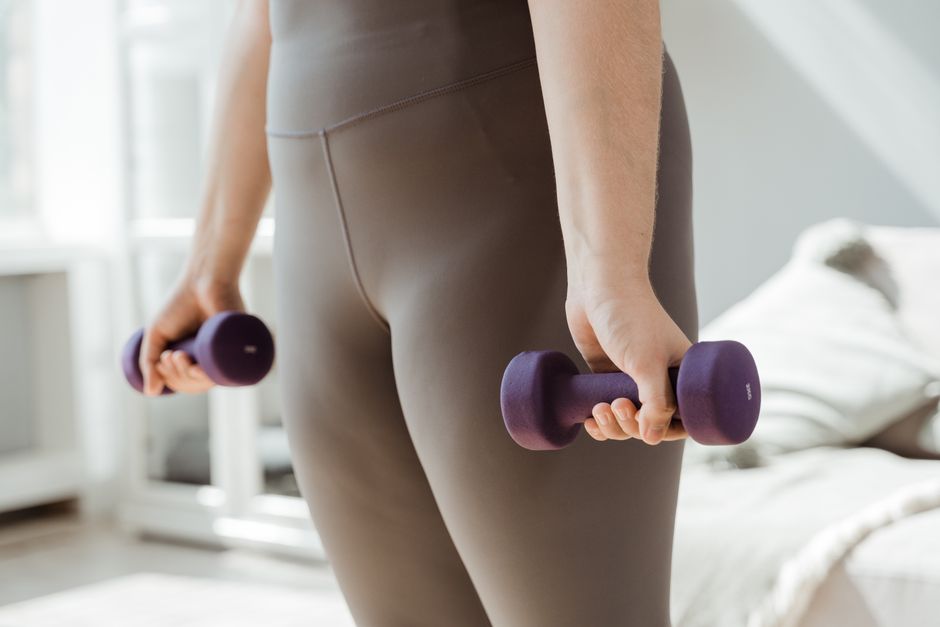
You don’t need a gym membership or any special gear to get a solid workout at home. Many effective exercises rely only on your own body weight. Squats, push-ups, lunges, planks, and glute bridges are some of the best options you can do in a small space with no equipment. These moves target major muscle groups and can be combined into a full routine.
What Exercises Can I Do At Home Without Equipment?
A full-body workout at home is possible using bodyweight exercises. Here are several moves that require nothing but your own body and a little floor space.
- Squats. Stand with feet shoulder-width apart. Lower your hips back and down as if sitting in a chair. Keep your chest up and knees tracking over your toes. Return to standing. This works your quads, hamstrings, and glutes.
- Push-ups. Start in a high plank with hands under shoulders. Lower your chest toward the floor, then push back up. If needed, drop to your knees. Push-ups target your chest, shoulders, and triceps.
- Lunges. Step one foot forward and lower both knees to 90 degrees. Push through the front heel to return. Alternate legs. Lunges work your quads, glutes, and core stabilizers.
- Plank. Hold a push-up position with your body in a straight line from head to heels. Keep your core tight. Plank strengthens your abdominals, back, and shoulders.
- Glute bridges. Lie on your back with knees bent and feet flat on the floor. Lift your hips toward the ceiling, squeeze your glutes, then lower. This works your glutes and hamstrings.
- Burpees. From standing, squat down, place hands on the floor, jump your feet back into a plank, do a push-up (optional), jump your feet back in, and jump up. This is a full-body cardio and strength move.
- Mountain climbers. Start in a plank. Drive one knee toward your chest, then switch legs quickly. This raises your heart rate and works your core and hips.
- Superman holds. Lie face down with arms extended. Lift your arms, chest, and legs off the floor simultaneously. Hold for a second, then lower. This targets your lower back.
These exercises form the foundation of a no-equipment workout. You can choose 4 to 6 of them for a session.
How Many Repetitions Should You Do?
General fitness guidelines suggest 2 to 4 sets of 8 to 15 repetitions for most strength-building exercises. For endurance, you can aim for 15 to 20 reps. Start on the lower end if you are new to exercise. Stop when your form begins to break down — quality matters more than quantity. Rest 30 to 90 seconds between sets depending on difficulty.
How to Increase Difficulty Without Weights
Bodyweight exercises can become harder without adding any equipment. Simple progressions make the same move more challenging.
- For squats: try single-leg squats (pistol squats) or add a jump.
- For push-ups: elevate your feet on a chair or lower into a decline push-up. Diamond push-ups (hands together under chest) also increase triceps demand.
- For lunges: add a jump between lunges or try reverse lunges with a knee drive.
- For planks: lift one leg or one arm, or hold a side plank.
- For glute bridges: lift one leg off the floor and bridge with the other.
- For burpees: add a tuck jump at the top or a push-up each time.
Increasing the number of repetitions, slowing down the movement, or shortening rest periods also raises the difficulty without equipment.
Common Mistakes in Bodyweight Training
Even without weights, poor form can lead to injury or limit results. Watch for these issues.
- Knees collapsing inward during squats or lunges. Push your knees outward in line with your toes.
- Dropping your hips during push-ups or planks. Keep your body in a straight line. Engage your core.
- Rushing through reps. Controlled movement builds strength more effectively than using momentum.
- Not going through a full range of motion. For example, partial squats work less muscle. Lower until your thighs are at least parallel to the floor.
- Neglecting flexibility and warm-up. A few minutes of light movement and dynamic stretches before exercise reduces injury risk.
Good form matters more than speed or rep count. If you cannot maintain proper technique, reduce the intensity or take a break.
Is Bodyweight Training Enough for Muscle Growth?
For people new to strength training, bodyweight exercises can build muscle and increase strength. Research consistently shows that beginners gain significant muscle from bodyweight work alone. For experienced lifters, bodyweight exercises may not provide enough resistance to continue making gains. Advanced variations and higher reps can help, but adding external weight — such as dumbbells or resistance bands — often becomes necessary for further progress. If your goal is general fitness and maintenance, bodyweight training is plenty. If you aim for large muscle growth, you will likely need to add load over time.
How Often Can You Do Bodyweight Workouts at Home?
Most people can safely do full-body bodyweight workouts 3 to 4 times per week. Rest at least 48 hours between sessions that target the same muscle groups to allow recovery. If you are doing a split routine — for example, upper body one day, lower body another — you can train more frequently. Listen to your body. Soreness is normal, but sharp pain or exhaustion that lasts several days signals you may be overdoing it.
Can You Get a Cardio Workout Without Equipment?
Yes. Exercises like burpees, mountain climbers, high knees, jumping jacks, and squat jumps raise your heart rate without any gear. A circuit of these moves performed with minimal rest can provide a cardiovascular workout similar to running or cycling. Aim for 20 to 40 minutes of continuous or interval-style activity for a cardio effect. The key is to keep moving with little rest between exercises.
Frequently Asked Questions
How many times a week should I do bodyweight exercises?
Most people can do full-body bodyweight workouts 3 to 4 times per week. Allow at least one day of rest between sessions for recovery.
Can I build muscle with only bodyweight exercises?
Yes, especially if you are new to strength training. As you get stronger, you will need to use harder variations or add external weight to keep building muscle.
What is the best bodyweight exercise for beginners?
Squats and glute bridges are very beginner-friendly because they work large muscles with low injury risk. Push-ups from the knees and planks are also good starting points.
How long should a home workout without equipment be?
Aim for 20 to 45 minutes including warm-up and cool-down. A circuit of 4 to 6 exercises done for 3 rounds takes about 30 minutes.
