
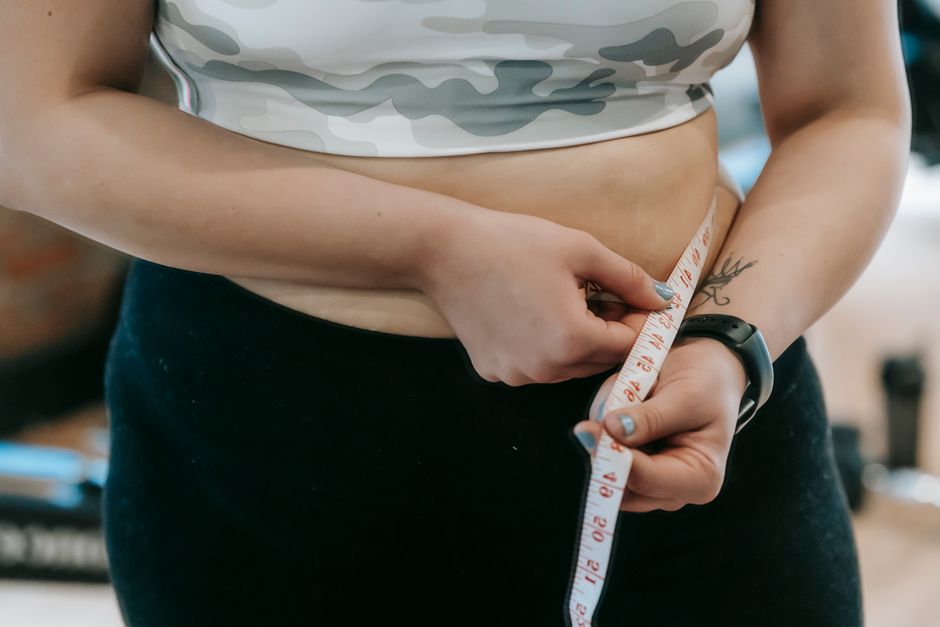
Figuring out how many calories to eat each day is not about guessing. It comes down to your body’s energy needs, which are shaped by your size, age, sex, and how active you are. The most reliable way to start is by calculating your Total Daily Energy Expenditure (TDEE), which is the number of calories your body burns in a day. From there, you adjust that number based on whether your goal is to lose weight, gain weight, or stay exactly where you are.
What Is Your Basal Metabolic Rate?
Your Basal Metabolic Rate (BMR) is the number of calories your body burns at complete rest. This is the energy required to keep your heart beating, your lungs breathing, and your cells functioning. It accounts for roughly 60 to 75 percent of the total calories you burn each day.
BMR is not the same for everyone. Muscle tissue burns more calories at rest than fat tissue does. This is why two people who weigh the same can have different calorie needs. A person with more muscle mass will have a higher BMR and can eat more without gaining weight.
Age also matters. BMR naturally declines as you get older, partly because people tend to lose muscle mass over time. This is why calorie needs often decrease in your 40s and 50s even if your weight stays the same. Keeping muscle through resistance training can help offset this decline, but it will not stop it entirely.
How To Figure How Many Calories To Eat
To figure out your calorie needs, you first estimate your BMR, then multiply it by an activity factor. The most commonly used formula in clinical settings is the Mifflin-St Jeor equation. It is considered the most accurate general formula for most people.
For men, the equation is: BMR = (10 × weight in kg) + (6.25 × height in cm) − (5 × age in years) + 5.
For women, the equation is: BMR = (10 × weight in kg) + (6.25 × height in cm) − (5 × age in years) − 161.
Once you have your BMR, you multiply it by an activity factor to get your TDEE. If you are mostly sedentary, multiply by 1.2. If you exercise lightly one to three days per week, multiply by 1.375. Moderate exercise three to five days per week means multiplying by 1.55. Heavy exercise six to seven days per week uses 1.725. Very intense physical labor or twice-daily training uses 1.9.
These activity factors are estimates. They are a starting point, not a precise measurement. Most people overestimate how active they actually are. If you are unsure, use the lower activity factor and adjust based on your results over two to three weeks.
Adjusting Calories for Your Goal
Your TDEE is your maintenance calories. Eating this amount keeps your weight stable. To lose weight, you need to eat fewer calories than your TDEE. To gain weight, you need to eat more.
A pound of body fat contains roughly 3,500 calories. Creating a daily deficit of 500 calories should lead to about one pound of weight loss per week. This is a general guideline, not a guarantee. Weight loss is rarely perfectly linear because water retention, hormone fluctuations, and changes in metabolism all affect the scale.
For weight loss, most clinicians recommend a moderate deficit of 300 to 500 calories per day. Larger deficits can lead to muscle loss, fatigue, and nutrient deficiencies. For weight gain, especially if you are trying to build muscle, a surplus of 200 to 300 calories per day is usually enough. Eating far above your TDEE mostly results in fat gain.
Do not try to lose weight on fewer than 1,200 calories per day if you are a woman or 1,500 if you are a man without medical supervision. These are not hard rules, but they represent practical minimums for getting adequate nutrients. Going below these numbers makes it very difficult to meet your vitamin and mineral needs from food alone.





Why Online Calculators Can Be Wrong
Online calorie calculators use the same equations described above, but they are only as accurate as the information you enter. Many people do not know their exact body fat percentage or their true activity level. The calculator can only give you an estimate based on averages.
These tools also do not account for individual differences in metabolism. Thyroid function, hormone status, and genetics all influence how many calories you actually burn. Two people with identical stats can have different calorie needs.
That said, calculators are still useful. They give you a reasonable starting point. The key is to treat the number as a hypothesis, not a verdict. Track your weight for two to three weeks while eating that amount. If your weight is moving in the right direction, keep going. If not, adjust by 100 to 200 calories and reassess.
How To Track Your Intake Accurately
Once you have a target number, you need to know how much you are actually eating. Most people underestimate their calorie intake by a significant margin. This is not about dishonesty. It is about portion size errors and forgetting to log small items like cooking oil, sauces, and drinks.
The most accurate method is to weigh your food using a kitchen scale. Measuring cups and spoons are less precise, especially for foods like rice, pasta, and peanut butter. A food scale removes the guesswork.
Use a tracking app to log what you eat. These apps have large databases of foods, but the entries are user-generated and can contain errors. When possible, scan the barcode of packaged foods or search for entries that match the nutrition label exactly. Weigh your food in grams rather than using the app’s default serving sizes.
You do not have to track every single meal forever. Many people track for a few weeks to learn what appropriate portions look like, then switch to a more intuitive approach. The tracking period is about education, not permanent bookkeeping.
What About Exercise Calories?
Exercise increases your calorie burn, but the effect is often smaller than people expect. A 30-minute run might burn 250 to 350 calories depending on your weight and pace. That is a meaningful amount, but it can be erased by one large restaurant meal.
Fitness trackers and exercise machines often overestimate calories burned. They use algorithms based on average populations, and they cannot measure your actual metabolic response to exercise. Some studies suggest these devices can overestimate burn by 20 to 30 percent or more.
If you are trying to lose weight, do not eat back all the calories you burned during exercise. A common approach is to eat back only half of the estimated exercise calories, or to keep your calorie target fixed and treat exercise as extra deficit. If you feel weak, dizzy, or excessively hungry, you may need to eat more.
Signs Your Calorie Target Is Wrong
Your body gives you feedback. Pay attention to it. If you are losing weight faster than one to two pounds per week without trying, you are likely eating too little. If you are constantly tired, irritable, or cold, your intake may be too low.
For weight loss, losing more than two pounds per week after the first couple of weeks is generally considered too fast. Rapid weight loss often includes muscle loss and can slow your metabolism. It is also harder to sustain.
If you are gaining weight while eating what you thought was maintenance, your activity factor is probably too high, or you are underestimating your portions. Drop your intake by 100 to 200 calories and see what happens over the next two weeks.
Frequently Asked Questions
How many calories should I eat to lose weight?
Subtract 300 to 500 calories from your maintenance calories to lose about one pound per week. This moderate deficit helps preserve muscle and is easier to sustain than aggressive dieting.
Is 1,200 calories a day safe?
For most women, 1,200 calories is a very low intake that makes it hard to meet nutrient needs. It should only be done under medical supervision and is not appropriate for most people.
Do I need to count calories forever?
No. Many people track for a few weeks to learn portion sizes and then switch to intuitive eating. The tracking period teaches you what appropriate amounts look like.
Why am I not losing weight on my calculated calories?
Calculators are estimates, and your actual burn may be lower than predicted. Reduce your intake by 100 to 200 calories and track for two more weeks before making further changes.
