
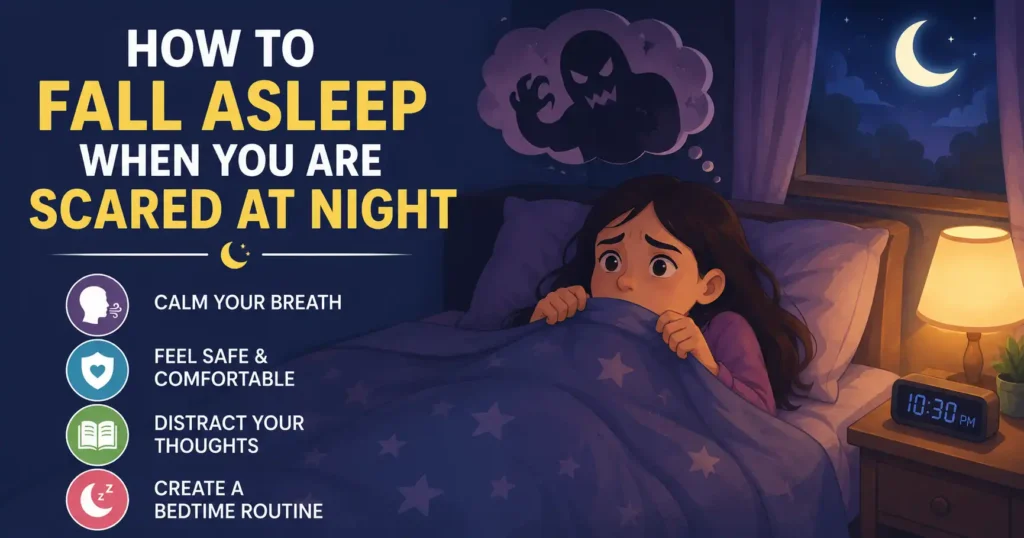
Fear at night makes falling asleep feel impossible. Your heart races, your mind scans for threats, and every creak sounds like danger. The key fact is that your brain has switched into survival mode, and you cannot force yourself to sleep from that state. You need to signal safety to your nervous system first, using specific techniques that research shows actually work.
Why Does Fear Make It So Hard to Fall Asleep?
Fear activates your sympathetic nervous system. This is the fight-or-flight response. It pumps adrenaline and cortisol into your bloodstream. Your body prepares to run or fight, not to rest.
Sleep requires the opposite system to be active. The parasympathetic nervous system controls rest and digestion. When you are scared, your brain will not let this system take over. It treats sleep as dangerous because sleeping makes you vulnerable.
This is not a character flaw. It is a biological survival mechanism that has kept humans alive for thousands of years. Understanding this helps you stop blaming yourself for not being able to relax.
Research shows that the amygdala, the fear center of the brain, becomes hyperactive at night for many people. Without daytime distractions, your brain has more room to focus on perceived threats. This is why fears that seem manageable during the day become overwhelming at bedtime.
What Actually Works to Calm Your Nervous System Fast?
The most effective techniques directly target your nervous system. They do not rely on trying to think your way out of fear. You cannot reason your way out of a biological state.
Slow breathing is the fastest tool. Studies have found that extending your exhale longer than your inhale activates the vagus nerve. This nerve tells your brain it is safe to rest. Try breathing in for four counts and out for eight counts. Do this for two minutes before you expect results.
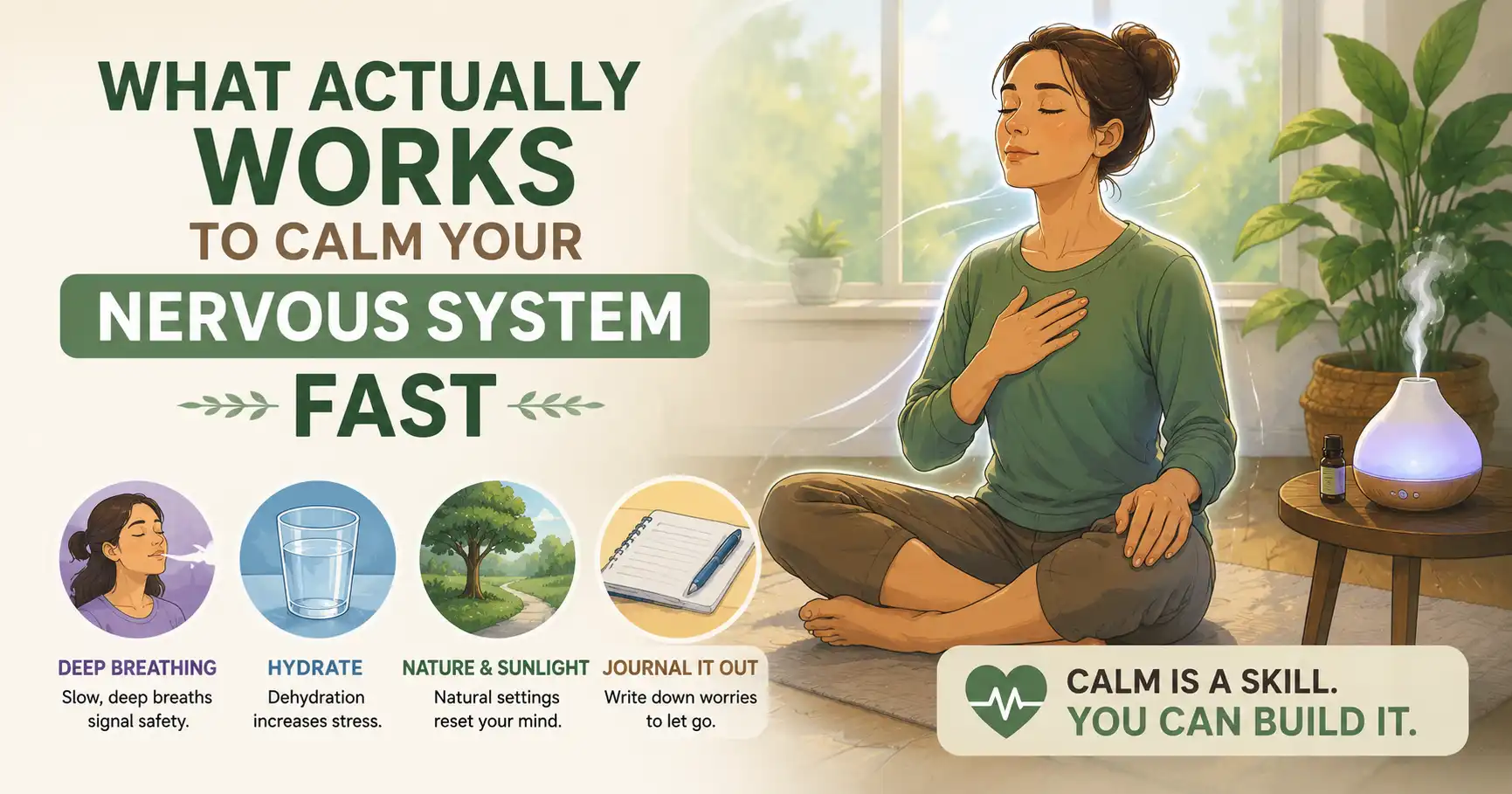
Progressive muscle relaxation works because fear creates physical tension, and tension signals danger to your brain. Tense each muscle group for five seconds, then release completely. Start at your feet and move upward. The release phase is what tells your brain you are safe.
Temperature change can help. Splashing cold water on your face triggers the mammalian dive reflex, which slows your heart rate. Keep a small spray bottle of cold water on your nightstand if getting up feels too hard.
Some people report that weighted blankets help. Current research suggests they may work by providing deep pressure stimulation, which increases serotonin and melatonin while reducing cortisol. The evidence is still emerging, but many people find them genuinely calming.
How To Fall Asleep When You Are Scared At Night Using Your Senses
Your brain uses sensory information to assess safety. You can deliberately feed it safe signals. This is not about distraction. It is about giving your brain evidence that the environment is secure.
Sound is powerful because hearing works even during sleep. Brown noise, which is deeper than white noise, masks sudden sounds that might trigger fear. It creates a consistent auditory environment that your brain learns to associate with safety.
Light matters more than most people realize. Complete darkness can make fear worse because your brain cannot verify the environment. A very dim red light is best because red light does not suppress melatonin production as blue light does. Place it where you can see the room layout without having to turn on bright lights.
Scent connects directly to the emotional centers of the brain. Lavender has the strongest research support for reducing anxiety before sleep. One study found that lavender aroma reduced nighttime awakenings in people with anxiety. A few drops on your pillowcase are enough. Do not use synthetic fragrances, which can cause headaches.
Touch can ground you. Holding something with texture, like a rough stone or a soft fabric, gives your brain concrete sensory data. This interrupts the cycle of abstract fearful thoughts. Keep a small object on your nightstand specifically for this purpose.




What Should You Avoid When Trying to Sleep While Scared?
Many common sleep tips actually make fear worse. Knowing what to avoid is as important as knowing what to do.
| Common Advice | Why It Backfires |
|---|---|
| Counting sheep | Keeps your mind active and does not address the fear |
| Lying still and waiting | Increases anxiety about not sleeping, which raises cortisol |
| Checking the time | Creates performance pressure that makes sleep harder |
| Watching TV until you fall asleep | Blue light suppresses melatonin, and content may trigger more fear |
| Alcohol to relax | Disrupts sleep architecture and causes nighttime awakenings |
Do not stay in bed if fear is escalating. The old advice to never leave your bed is wrong for fearful states. If your heart is racing and you cannot calm down after fifteen minutes, get up. Go to a different room. Sit in a chair and do something boring in dim light. Return to bed only when you feel sleepy, not just tired.
Avoid reassurance seeking. Checking locks repeatedly or asking someone to confirm the house is safe provides temporary relief but strengthens the fear cycle. Each check teaches your brain that checking is necessary for safety. This makes the fear worse over time.
What Does the Research Say About Long-Term Solutions?
Short-term techniques help you get through tonight. Long-term solutions address why your brain is stuck in fear mode at bedtime. As of 2026, the strongest evidence supports cognitive behavioral therapy for insomnia, often called CBT-I.
CBT-I is not about lying on a couch talking about your childhood. It is a structured program that changes the thoughts and behaviors keeping you awake. One component, called cognitive restructuring, helps you examine the actual probability of the things you fear at night.
Research shows that people who complete CBT-I fall asleep faster and have fewer nighttime awakenings. The benefits last longer than sleep medications. Many insurance plans cover it, and there are effective online programs if you cannot find a local provider.
Exposure therapy can help if your fear is tied to a specific trigger, like a dark room or being alone. You gradually face the feared situation in small steps while practicing calm breathing. Your brain learns that the feared outcome does not happen, and the fear response weakens over time.
Some people benefit from addressing underlying anxiety disorders. If you feel scared at night most nights for more than a month, it is worth talking to a doctor. Generalized anxiety disorder and panic disorder often show up most strongly at bedtime.
How Do You Handle Fear That Has a Real Cause?
Not all nighttime fear is irrational. Living in an unsafe neighborhood, recovering from trauma, or going through a major life change creates real reasons for fear. Pretending these fears are not real does not help.
If the fear has a real basis, take practical safety steps. Install adequate locks. Get a security system if you can afford one. Keep a phone within reach. Having a concrete plan reduces the feeling of helplessness, which is often worse than the actual threat.
After taking reasonable precautions, use the same nervous system techniques described above. You cannot eliminate all risk from life. You can learn to tolerate uncertainty without staying in a hypervigilant state all night.
Trauma survivors may need specialized help. Nighttime fear after trauma is different from general anxiety. The body remembers the threat even when the mind knows it is safe. Eye movement desensitization and reprocessing, or EMDR, has strong research support for reducing trauma-related sleep problems.
Common Misconceptions About Falling Asleep While Scared
Many people believe they must eliminate fear before they can sleep. This is not true. You do not need to feel completely calm. You only need to reduce the fear enough that your nervous system allows sleep to happen.
Another misconception is that you should exhaust yourself into sleep. Exercising right before bed raises core body temperature and heart rate, which makes falling asleep harder. Exercise during the day helps sleep quality, but not as a last-minute solution.
Some people think medication is the only answer. Prescription sleep aids have their place, but they do not address the underlying fear. They sedate you, which is different from natural sleep. Many people develop tolerance and need higher doses over time.
Melatonin is widely misunderstood. It is not a sedative. It is a timing signal that tells your brain when to prepare for sleep. It helps with circadian rhythm issues but does not directly reduce fear. Taking high doses can actually cause vivid nightmares in some people.
Frequently Asked Questions
Can I fall asleep with my heart still racing?
Yes, if you slow your breathing enough to signal safety to your nervous system. Focus on extending your exhale longer than your inhale for several minutes.
Should I get up if I cannot stop feeling scared in bed?
Yes, if fear is escalating after fifteen minutes. Go to another room and do something boring in dim light until you feel sleepy.
Does leaving a light on make it harder to sleep?
A very dim red or amber light is fine and may help if darkness increases your fear. Bright white or blue light will suppress melatonin and make sleep harder.
How long does it take for these techniques to work?
Some techniques like slow breathing can calm you within minutes. Long-term changes usually take several weeks of consistent practice.
