
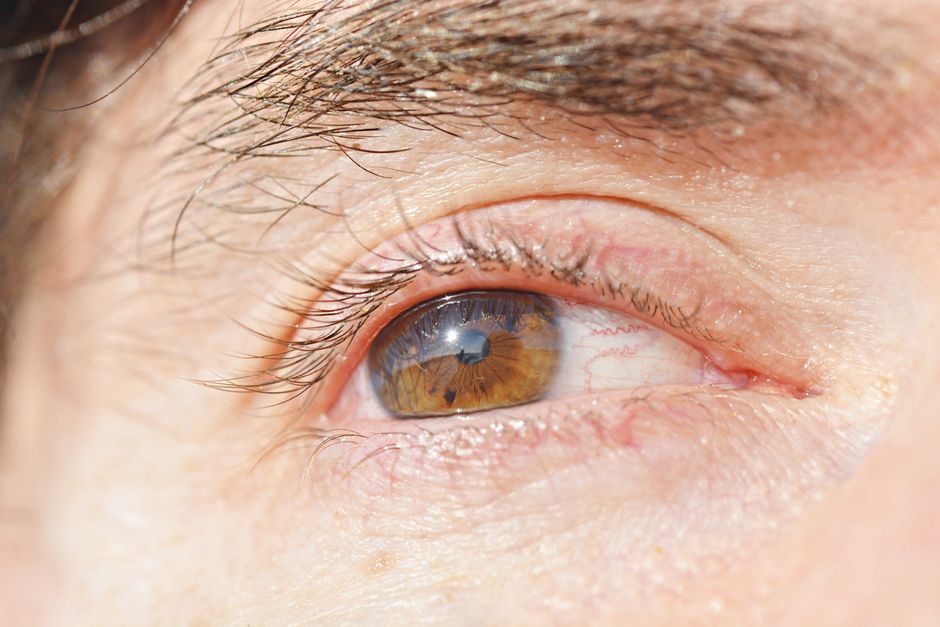
Ocular palsy is a condition where the muscles that move your eye or the nerves that control them stop working properly. This causes double vision, drooping eyelids, or trouble moving the eye in certain directions. The causes range from minor issues like migraines to serious problems like strokes or brain aneurysms. Treatment depends entirely on what is causing the problem, so getting an accurate diagnosis is the first and most important step.
What Exactly Is Ocular Palsy?
Ocular palsy means one or more of the six muscles that move your eye are not working correctly. These muscles are controlled by three cranial nerves: the oculomotor nerve (CN III), the trochlear nerve (CN IV), and the abducens nerve (CN VI). When any of these nerves gets damaged, the corresponding muscle cannot move the eye as it should.
The result is that your two eyes stop working as a team. One eye may look straight ahead while the other points inward, outward, upward, or downward. Your brain then sees two different images, which creates double vision. Some people also experience drooping of the upper eyelid or a pupil that is larger than normal.
There are three main types of ocular palsy based on which nerve is affected. Third nerve palsy affects the oculomotor nerve and causes the eye to look down and out. Fourth nerve palsy affects the trochlear nerve and causes vertical double vision. Sixth nerve palsy affects the abducens nerve and prevents the eye from turning outward.
What Causes Ocular Palsy?
The causes of ocular palsy fall into several categories. Vascular problems are among the most common, especially in adults over 50. High blood pressure and diabetes can damage the small blood vessels that supply the cranial nerves. When these vessels get blocked or leak, the nerve stops working. Research published in the journal Stroke found that microvascular ischemia accounts for about 25 to 30 percent of all ocular palsy cases in adults.
Head trauma is another frequent cause. A blow to the head can stretch or tear the cranial nerves as they travel through tight spaces in the skull. The fourth nerve is especially vulnerable because it is long and runs through a narrow area. Car accidents and falls are common sources of this type of injury.
Brain aneurysms and tumors can also cause ocular palsy. An aneurysm pressing on the third nerve is a medical emergency. The National Institute of Neurological Disorders and Stroke states that a sudden third nerve palsy with a dilated pupil is a red flag for a posterior communicating artery aneurysm. Tumors in the brain or along the nerve pathway can also compress the nerves slowly over time.
Inflammatory conditions like multiple sclerosis can cause ocular palsy as well. MS damages the myelin sheath that protects nerves, which disrupts nerve signals. Sixth nerve palsy is particularly common in people with MS. Infections such as Lyme disease, shingles, and meningitis can also inflame the nerves and cause palsy.
What Are the Common Signs and Symptoms?
The most obvious symptom of ocular palsy is double vision. This happens because the two eyes are not aligned. The brain sees two separate images that overlap. Some people describe it as seeing a ghost image next to the real one. Others say it looks like everything is shifting or jumping.
Drooping of the upper eyelid is another key sign, especially with third nerve palsy. The eyelid may cover part or all of the pupil. This can make the eye appear smaller or completely closed. Some people also notice that their pupil is larger on the affected side or that it does not constrict normally when light shines in it.
Difficulty moving the eye in a specific direction is a hallmark of ocular palsy. A person with sixth nerve palsy cannot turn the affected eye outward toward the ear. Someone with fourth nerve palsy has trouble looking downward, especially when the eye is turned inward. These movement limitations are often subtle at first but become more noticeable over time.
Head tilting is a common compensation strategy. People instinctively tilt their head to align their eyes and reduce double vision. If you notice someone holding their head at an unusual angle, it could be a sign of ocular palsy. Headaches and pain around the eye can also occur, particularly if the cause is vascular or inflammatory.





How Is Ocular Palsy Diagnosed?
Diagnosis starts with a thorough eye exam. An ophthalmologist or neurologist will check how well each eye moves in all directions. They will look for any weakness or limitation. They will also examine the pupils and eyelids for asymmetry. The doctor will ask about when the symptoms started and whether they came on suddenly or gradually.
Imaging is almost always needed to find the cause. An MRI of the brain and orbits is the standard test. It can show tumors, aneurysms, inflammation, or signs of multiple sclerosis. A CT scan may be used in emergency settings, especially if a stroke or bleeding is suspected. CT angiography can show blood vessels in detail and help identify aneurysms.
Blood tests are often done to check for underlying conditions. Doctors will look for diabetes, high blood pressure, thyroid problems, and infections. In some cases, a lumbar puncture is needed to check for inflammation or infection in the fluid around the brain and spinal cord.
The urgency of the workup depends on which nerve is affected and what other symptoms are present. A sudden third nerve palsy with a dilated pupil requires immediate imaging to rule out an aneurysm. A gradual sixth nerve palsy in a person with known diabetes may be watched more closely but still needs imaging to be safe.
| Nerve | Eye Movement Affected | Common Cause | Emergency Risk |
|---|---|---|---|
| Third (Oculomotor) | Eye looks down and out; eyelid droops; pupil may be large | Aneurysm, diabetes, head trauma | High – aneurysm possible |
| Fourth (Trochlear) | Vertical double vision; trouble looking down when eye is turned in | Head trauma, congenital weakness | Low |
| Sixth (Abducens) | Cannot turn eye outward; horizontal double vision | Diabetes, high blood pressure, MS, increased pressure in the brain | Moderate – may indicate brain pressure |
What Does Research Show About Treatment Options?
Treatment for ocular palsy depends entirely on the underlying cause. If the cause is microvascular ischemia from diabetes or high blood pressure, the nerve often heals on its own. Studies have found that about 80 percent of people with this type of palsy recover within three to six months. The treatment is to control blood sugar and blood pressure while the nerve heals.
If the cause is a brain aneurysm, surgery or endovascular coiling is needed immediately. The goal is to prevent the aneurysm from rupturing. Once the aneurysm is treated, the nerve may recover partially or fully. Recovery can take months and is not guaranteed. The same is true for tumors – removing or shrinking the tumor can relieve pressure on the nerve.
For inflammatory causes like multiple sclerosis, steroid medications can reduce inflammation and speed recovery. The American Academy of Neurology recommends high-dose intravenous steroids for acute optic neuritis and other inflammatory nerve conditions. Recovery from MS-related ocular palsy is generally good, though some people may have residual symptoms.
When the nerve does not recover fully, there are surgical options to help with double vision. Prism glasses can shift the image seen by one eye so that the two images align. This works well for mild cases. For more severe cases, eye muscle surgery can reposition the eyes to improve alignment. Botox injections into the overacting muscle can also help temporarily.
What to Avoid and Common Misconceptions
One common misconception is that eye exercises can cure ocular palsy. This is not supported by evidence. The problem is not weak muscles – it is a damaged nerve that cannot send proper signals. No amount of eye exercises can fix a nerve that is compressed, inflamed, or dead. Exercises may help with some types of strabismus in children, but they do not help with acquired ocular palsy in adults.
Another myth is that ocular palsy is always a sign of a stroke. While stroke can cause ocular palsy, it is not the most common cause. Microvascular disease from diabetes and high blood pressure is far more common. However, because stroke is possible, any sudden onset of double vision or eye movement problems should be treated as an emergency until proven otherwise.
Some people believe that patching one eye is a good long-term solution. While patching can temporarily relieve double vision, it does not treat the underlying problem. Using a patch for weeks or months without seeing a doctor can delay diagnosis of a serious condition. Patching should only be used as a short-term measure while waiting for medical evaluation.
Avoid self-diagnosing based on internet searches. The symptoms of ocular palsy overlap with many other conditions, including myasthenia gravis, thyroid eye disease, and stroke. Only a doctor with proper testing can determine the cause. Delaying medical care for what seems like a minor eye issue can have serious consequences if the cause is a growing aneurysm or tumor.
- Do not assume double vision is just eye strain – get it checked
- Do not delay emergency care if symptoms come on suddenly
- Do not rely on eye exercises to fix nerve damage
- Do not use an eye patch long-term without medical guidance
- Do not ignore other symptoms like headache or eyelid drooping
Frequently Asked Questions
Can ocular palsy go away on its own?
Yes, if the cause is microvascular disease from diabetes or high blood pressure, the nerve often heals within three to six months. Other causes like aneurysms or tumors require specific treatment and will not resolve on their own.
Is ocular palsy the same as a lazy eye?
No, they are different conditions. Lazy eye, or amblyopia, develops in childhood when the brain ignores input from one eye. Ocular palsy is a nerve or muscle problem that prevents the eye from moving properly.
What is the fastest way to fix double vision from ocular palsy?
Patching one eye or using a temporary prism can eliminate double vision immediately. These are short-term solutions while doctors determine and treat the underlying cause.
Can stress cause ocular palsy?
Stress alone does not cause ocular palsy. However, stress can raise blood pressure, which is a risk factor for the vascular problems that can lead to palsy. If you have double vision, do not assume it is from stress.
