
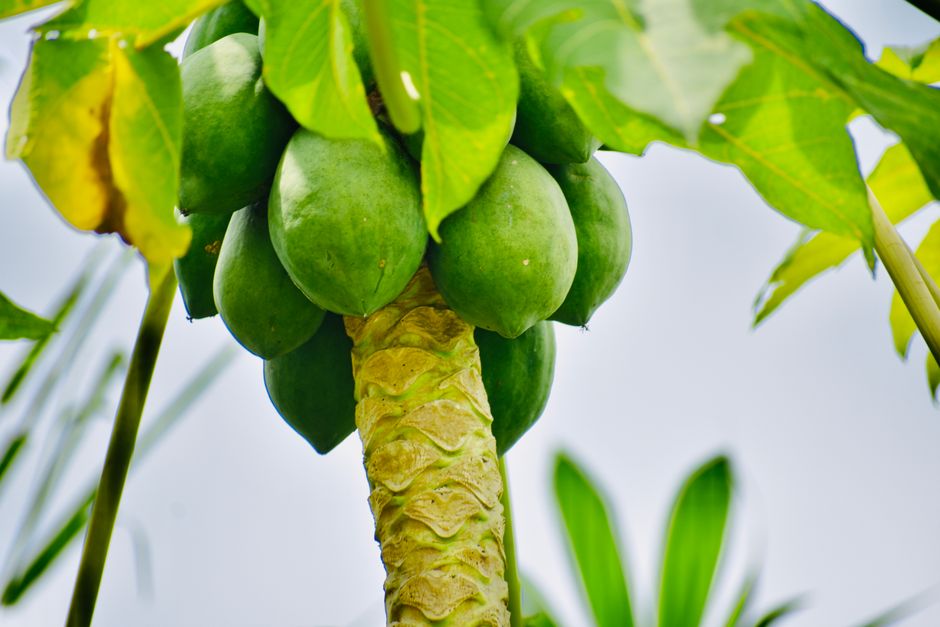
The easiest way to eat a papaya is to cut it in half lengthwise, scoop out the seeds, and scoop or peel the flesh. You can eat it raw when ripe, or use it green in salads and cooked dishes. The skin is not edible, but the seeds are safe to eat in small amounts.
How To Eat Papaya Fruit?
Start by washing the whole papaya under cool water to remove dirt or residues. Place it on a cutting board and slice it lengthwise from the stem end to the tip. You will see two halves filled with small black seeds in the center cavity.
Use a spoon to scoop out the seeds. Do not throw them away — they are edible and can be used as a garnish or seasoning (more on that below). The flesh of a ripe papaya is soft and orange. You can either scoop it out with a spoon, similar to a melon, or peel the skin with a vegetable peeler and slice the flesh into cubes or wedges.
If the papaya is still green and firm, the skin must be peeled with a sharp knife or peeler, and the flesh can be julienned or sliced thin. Green papaya is often used in Southeast Asian dishes like som tam (papaya salad) or cooked in soups and stir‑fries. The flavor is mild and not sweet, so it absorbs dressings and sauces well.
For ripe papaya, most people eat it plain, add it to fruit salads, smoothies, or yogurt. You can also freeze cubed papaya for use in smoothies later. The fruit is delicate, so handle it gently to avoid bruising.
What Does Papaya Taste Like?
Ripe papaya has a mild, sweet flavor that some describe as a cross between melon and mango, with a soft, buttery texture. The sweetness is not intense — it is subtle and creamy. The aroma is distinctive; some people smell a faint musky or even slightly fermented scent, but this is normal and does not mean the fruit is spoiled.
Green papaya is not sweet at all. It is firm, crunchy, and nearly flavorless on its own, which is why it is usually combined with strong ingredients like lime, fish sauce, chili, and garlic in savory dishes. The texture holds up well to shredding and pickling.
Can You Eat Papaya Seeds?
Yes, papaya seeds are safe to eat, but they have a strong, peppery, slightly bitter taste. Some people dry and grind them to use as a black pepper substitute. There is no standard recommended amount for daily consumption, and eating a large quantity at once may cause stomach upset.
No established clinical guidelines exist for using papaya seeds as a treatment for any condition. Small amounts as a seasoning are fine. The seeds contain compounds like benzyl isothiocyanate, which have been studied in laboratory settings, but human evidence is too limited to support health claims.





How To Choose a Ripe Papaya
A ripe papaya will be mostly yellow on the outside, with some green patches still acceptable. It should yield slightly to gentle palm pressure — not too soft or mushy. The skin should be smooth and free of bruises or dark sunken spots. A ripe fruit has a sweet, floral smell at the stem end. Avoid papayas that are completely green (they will ripen at home) or have shriveled skin (overripe).
If you buy a green papaya, let it sit at room temperature for a few days until yellow color spreads. Once ripe, store it in the refrigerator and eat within two to three days for best quality. Cut papaya should be stored in a sealed container and eaten within two days.
How To Prepare Papaya for Different Dishes
For fresh eating: cut, deseed, and scoop or slice. Add to fruit salads, smoothie bowls, or enjoy plain with a squeeze of lime. Ripe papaya also pairs well with ham or prosciutto in a simple appetizer — the salt contrasts the sweetness.
For smoothies: freeze cubed ripe papaya and blend with coconut milk, banana, and a bit of ginger. The creamy texture eliminates the need for yogurt or ice cream.
For green papaya salad (som tam): peel the green fruit, shred the flesh with a julienne peeler or mandoline. Toss with lime juice, fish sauce, chopped peanuts, tomatoes, green beans, and chili. The dish is crisp, tart, and spicy — not sweet.
For cooking: green papaya can be boiled or stir‑fried. It holds its shape and absorbs flavors. In some cuisines, it is added to stews or curries as a vegetable. The unripe fruit contains papain, an enzyme that can tenderize meat, so it is sometimes included in marinades.
Is Papaya Good for Digestion?
Papaya contains papain, an enzyme that breaks down protein. This is why unripe papaya is sometimes used as a meat tenderizer. However, the amount of papain in a typical serving of ripe papaya is low, and most people’s stomach acid and digestive enzymes (like pepsin) already handle protein digestion effectively.
Some small studies suggest that eating papaya may help with occasional constipation or bloating, but the evidence is not strong enough to recommend it as a digestive aid. Papaya is a good source of fiber — about 2.5 grams per cup of cubed fruit — which can support regular bowel movements. If you enjoy it, it can be part of a fiber‑rich diet, but it is not a proven treatment for digestive issues.
Are There Any Risks or Side Effects?
Papaya is safe for most people when eaten as food. People with latex allergy may also react to papaya because of cross‑reactive proteins. This is rare but possible — if you have a latex allergy, start with a small amount.
Unripe or semi‑ripe papaya contains latex (different from the allergy‑related protein), which can cause uterine contractions. For this reason, pregnant women are often advised by clinicians to avoid unripe papaya in large amounts. Ripe papaya is generally considered safe during pregnancy in normal food amounts, but if you are pregnant, it is best to confirm with your healthcare provider.
No reports of serious side effects from normal consumption. If you eat many seeds at once, you might experience mild stomach discomfort.
Frequently Asked Questions
Can you eat papaya skin?
No, papaya skin is not edible. It is tough, slightly bitter, and may contain residues. Always peel the fruit before eating.
How do you store cut papaya?
Store cut papaya in a sealed container in the refrigerator for up to two days. It does not freeze well for eating raw, but frozen cubes work in smoothies.
Can you eat papaya during pregnancy?
Ripe papaya is safe in normal food amounts during pregnancy. Avoid unripe or semi‑ripe papaya, as it contains latex that may stimulate uterine contractions. Check with your obstetrician.
Is papaya a fruit or a vegetable?
Botanically, papaya is a fruit. In cooking, green (unripe) papaya is often treated as a vegetable because it is not sweet and is used in savory dishes.
