
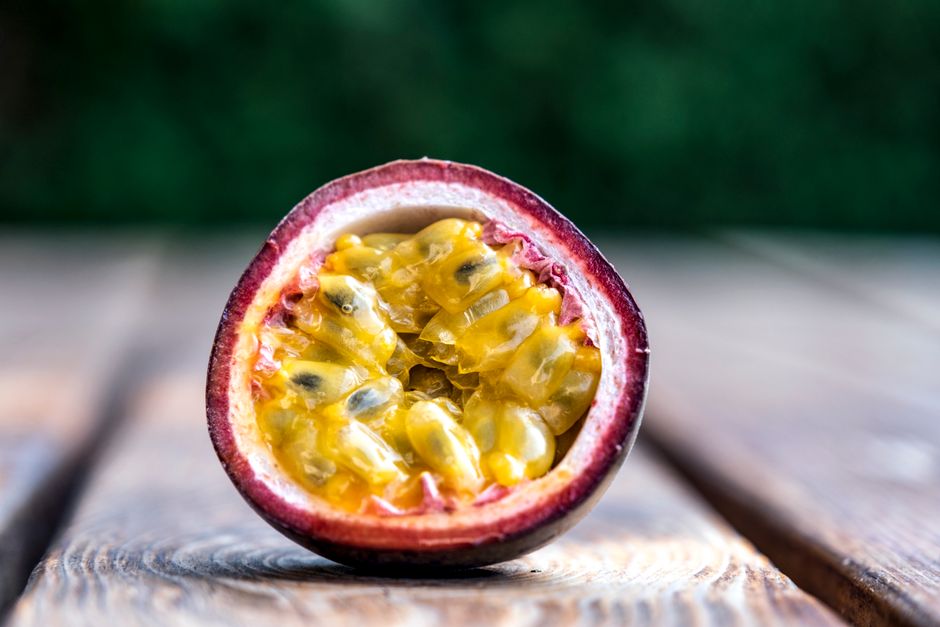
Passion fruit seeds are safe to eat. The small black seeds inside a fresh passion fruit are edible, and people swallow them all the time without thinking about it. The crunchy seeds are part of the fruit’s pulp, and eating them is normal in many parts of the world.
That said, there are a few real details worth knowing. The seeds contain small amounts of compounds that can matter if you eat a lot of them. And for some people, the seeds are simply hard to digest. Here is what the evidence actually shows.
Can You Eat Passion Fruit Seeds Safely?
Yes. The seeds of the common purple passion fruit (Passiflora edulis) are edible and have a long history of being eaten whole with the pulp. You do not need to remove them.
Passion fruit is native to South America and is now grown in tropical and subtropical regions worldwide. In Brazil, Colombia, and parts of Asia, the whole fruit — pulp and seeds — is eaten fresh or blended into juices. The seeds are small, dark, and covered in a gel-like sac that holds them inside the fruit.
When you eat passion fruit, you typically swallow the seeds along with the pulp. Many people chew them. Both are fine.
The seeds are not poisonous. They do not contain cyanide or other toxins in amounts that pose a risk to healthy adults eating normal portions of fruit.
What Is Actually Inside Passion Fruit Seeds?
Passion fruit seeds are mostly fiber and fat. That surprises some people, since seeds seem like a minor part of the fruit.
By weight, the seeds make up a meaningful share of the fruit. They contain dietary fiber, small amounts of protein, and fats. The fat in passion fruit seeds is largely unsaturated. Some of it is a type of fat called piceatannol, a compound related to resveratrol, which is found in grapes and red wine.
Piceatannol has been studied in laboratory and animal research. Some of that work looks at how it affects cells. But laboratory findings are not the same as proven health effects in people. No large human trials have confirmed that eating passion fruit seeds produces specific health benefits.
The seeds also contain small amounts of minerals and trace compounds. The amounts are modest. You would not eat enough seeds to make them a major nutrient source.
One practical point: the seeds are a source of fiber. That is a real, well-established benefit of eating the whole fruit rather than straining it.
Are There Any Risks From Eating Passion Fruit Seeds?
For most healthy adults, eating passion fruit seeds with the fruit is not a concern. The risks that do exist are limited and specific.
Digestion. The seeds have a tough outer coat. Some people cannot break them down well, and they pass through undigested. This is not harmful, but it can cause minor digestive discomfort in people who eat a lot of them at once.
Choking risk for young children. This is the most important safety point. Small, hard, round seeds can be a choking hazard for toddlers and young children. The American Academy of Pediatrics has long advised against giving small, round foods to children under age four because of choking risk. This applies to passion fruit seeds just as it does to grapes, whole nuts, and popcorn.
Passion flower concerns. This is a different product, but people often confuse the two. Passion fruit comes from the fruit of the plant. Passion flower is an herbal supplement made from other parts of related plants. Some evidence suggests passion flower may interact with certain medications, including sedatives and blood thinners. That is a separate issue from eating the fruit and its seeds.
Allergy. Passion fruit allergy is uncommon but documented. People with a latex allergy may be more likely to react, because some plant proteins overlap. If you have a known latex allergy, talk to your doctor before trying passion fruit for the first time.




Do You Have to Chew the Seeds?
No. You can swallow them whole. Many people do.
Chewing the seeds releases more of what is inside them, including the fats and fiber. Swallowing them whole means they mostly pass through undigested. Either way, you get the nutrition from the pulp, which is the main part of the fruit.
The pulp around the seeds is where most of the vitamin C, vitamin A, and potassium sit. It is also where the fruit’s natural sugars are. The seeds add fiber and some fat, but the pulp is the nutritional center of the fruit.
Some people find the seeds too crunchy or bitter when chewed. If that is you, swallowing them whole is completely fine.
How Much Passion Fruit Can You Eat?
There is no official recommended serving size for passion fruit specifically. Most people eat one to two fruits at a time, which is a reasonable portion.
Passion fruit is not a food you eat in large amounts. It is tart and strongly flavored, so a little goes a long way. Eating one or two fruits with their seeds is normal and well within what people eat in countries where the fruit is common.
If you eat a large quantity of seeds — far more than you would get from a few fruits — you might notice some digestive upset. There is no established toxic dose for passion fruit seeds in humans, because serious harm from eating them has not been reported.
One clarification worth making: passion fruit juice that you buy in a bottle is often strained. That means it may contain few or no seeds. If you want the fiber from the seeds, you need the whole fruit or a product that keeps the seeds in.
Is the Seed Content Different in Juice vs Whole Fruit?
Yes, and it matters if you are choosing passion fruit for its fiber.
| Form | Seeds present | Fiber from seeds |
|---|---|---|
| Whole fresh fruit | Yes | Yes |
| Fresh-blended pulp | Yes | Yes |
| Strained juice | No | Minimal |
| Bottled juice (most brands) | Usually no | Minimal |
Straining removes the seeds and the fiber that comes with them. If fiber is your goal, eat the whole fruit or blend the pulp without straining it.
Does Cooking or Blending Change Anything?
Blending breaks the seeds into smaller pieces. That makes them easier to digest and releases more of their contents into whatever you are making. Smoothies and juices made with whole passion fruit include ground-up seeds.
Cooking does not make the seeds unsafe. Heat does not create toxins in passion fruit seeds. If you cook with passion fruit, the seeds soften somewhat but keep their shape.
Neither blending nor cooking has been shown to create any new risk. The main change is texture and how well your body can break the seeds down.
What About Passion Fruit Seed Oil and Supplements?
Passion fruit seed oil is sold as a skincare and cooking oil. It is pressed from the seeds. As a food oil, it is generally recognized as safe in the amounts used in cooking.
Passion fruit seed extracts are also sold as dietary supplements, often marketed for skin or antioxidant support. This is where caution is warranted. Dietary supplements are not reviewed by the FDA for effectiveness before they are sold. Claims made about them are often not backed by human trials.
Some laboratory research has looked at compounds in passion fruit seeds. That research is early. It does not establish that taking a supplement produces health benefits in people. If a product claims to do something specific for your health, treat that claim as unproven unless solid human studies back it up.
Frequently Asked Questions
Are passion fruit seeds poisonous?
No, passion fruit seeds are not poisonous. They are edible and are commonly eaten with the pulp in many countries.
Can kids eat passion fruit seeds?
Children over age four can generally eat them, but the seeds are a choking hazard for toddlers and young children under four. Cut or mash the fruit and remove seeds for young children.
Do passion fruit seeds have any health benefits?
The seeds add fiber and some unsaturated fat to the fruit. No large human trials have confirmed specific health benefits from the seeds themselves.
What happens if you swallow passion fruit seeds whole?
They usually pass through your digestive tract undigested and cause no harm. Chewing them releases more of their fiber and fat.
