
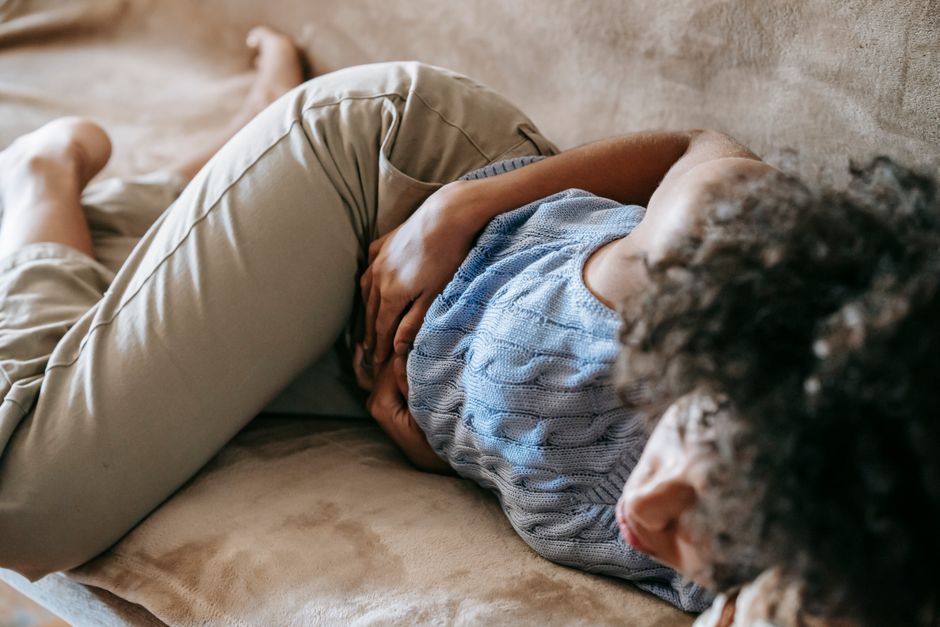
Breastfeeding cramps are common, and most are harmless. The cramping you feel in your belly in the days and weeks after birth is usually your uterus shrinking back to its pre-pregnancy size. That process is called involution, and it is a normal part of recovery. For safe relief, try a heating pad on your belly, rest, and an over-the-counter pain reliever your doctor has approved — acetaminophen and ibuprofen are the ones most often considered compatible with breastfeeding.
Why Do I Get Cramps While Breastfeeding?
The cramping has a clear physical cause. When your baby latches and suckles, nerve signals travel from your nipple to your brain. Your brain releases oxytocin, the same hormone that triggers milk letdown. Oxytocin also makes the smooth muscle of your uterus contract.
Those contractions are doing useful work. They help your uterus shrink from its stretched pregnancy size back down toward its normal size and help reduce bleeding after birth. This is why the cramps tend to be strongest in the first few days and gradually ease over the first week or two. For some women they last a little longer.
One detail that surprises many people: the cramps are often stronger with a second or later baby than with a first. The uterus has been stretched before, so it tends to contract more forcefully. If your cramps feel worse the second time around, that is expected, not a sign something is wrong.
Not every cramp is uterine, though. Some women feel cramping from gas, constipation, or general abdominal soreness after delivery. Knowing which kind you have helps you treat it correctly.
How To Ease Cramps While Breastfeeding Safe Relief
This is the practical part. The safest options are the ones that do not pass into your milk in any meaningful amount or that are well established as compatible with breastfeeding.
Heat is often the first thing to reach for. A warm compress or heating pad on your lower belly relaxes the muscle and eases the ache. Keep the heat moderate and never fall asleep on a heating pad, since that risks a burn.
Gentle movement helps some women. Slow walking and light activity can ease both uterine cramping and gas. Avoid heavy lifting and strenuous exercise in the early weeks while your body is still healing.
Emptying your bladder regularly can reduce pressure and discomfort. A full bladder presses on the uterus and can make contractions feel sharper.
Over-the-counter pain relievers are the most direct option for stronger cramps. Acetaminophen and ibuprofen are the two most commonly used after birth, and both are generally considered compatible with breastfeeding. Ibuprofen is often preferred because it also reduces inflammation. Always confirm with your own doctor or midwife before starting anything, especially if you had a cesarean, are taking other medications, or have any health conditions.
What about stronger pain? If over-the-counter options are not enough, that is a conversation to have with your clinician, not something to solve on your own.
Is It Safe To Take Pain Relief While Breastfeeding?
The short answer is yes for the common options, but the details matter.
Acetaminophen and ibuprofen pass into breast milk in very small amounts. Based on decades of use, they are widely regarded as compatible with breastfeeding. This is one of the rare areas where clinical practice and the evidence line up well.
Aspirin is different. Regular use of aspirin while breastfeeding is generally avoided because of a theoretical concern about a rare condition called Reye syndrome in infants. Occasional single doses are handled differently, but this is a decision for your doctor.
Opioid pain relievers require real caution. Some opioids pass into breast milk, and repeated or high-dose use has been linked to infant sedation and, in rare cases, more serious harm. If you were prescribed opioids after delivery, follow your prescriber’s instructions exactly and watch your baby for unusual sleepiness or poor feeding. Report any concern right away.
Herbal remedies deserve a specific warning. Many are marketed as natural and therefore safe, but “natural” is not the same as “safe while breastfeeding.” Some herbs can reduce milk supply or affect your baby. There is often little reliable data on how much of a given herb passes into milk. Treat herbal products with the same caution as drugs, and check with a clinician who knows lactation.




When Are Breastfeeding Cramps a Sign of Something More Serious?
Most cramping is normal. Some patterns are not, and knowing the difference matters.
Contact your doctor promptly if you notice any of the following:
- Fever of 100.4°F (38°C) or higher
- Cramping that is severe, getting worse, or not improving after the first week or two
- Heavy bleeding that soaks a pad in an hour or less, or passing large clots
- Foul-smelling vaginal discharge
- Pain that is sharp and one-sided, or pain with a red, warm, swollen area on your breast
- Feeling faint, dizzy, or having a racing heart
These can point to problems like infection, retained tissue, or other complications that need medical care. They are not things to wait out.
There is also a separate kind of cramping worth naming: breast pain itself. If your cramps are actually in your breasts rather than your belly, the cause is different. Engorgement, a clogged duct, or a breast infection can all cause pain. A clogged duct often feels like a tender lump, while an infection may come with fever and flu-like symptoms. These need different care.
Does Feeding More Often Make Cramps Worse?
More frequent feeding means more oxytocin release, which can mean more noticeable contractions. This is a real trade-off. Feeding often is good for your milk supply and for your recovery, but it can make cramps feel sharper in the moment.
You do not need to feed less to avoid cramps. Instead, time your pain relief so it is working when you expect to feed. Taking an approved pain reliever about 30 to 60 minutes before a feeding is a common approach, but ask your clinician to confirm the timing that fits you.
Relaxation helps too. Tension can make pain feel worse. A calm, comfortable feeding position, a supportive pillow, and a quiet room can take the edge off. Some women find that a warm compress on the belly right before a feed eases the contractions that follow.
How Long Do These Cramps Usually Last?
For most women, the strongest cramping lasts a few days and then fades over the first week or two. It tends to be most intense in the first 24 to 72 hours after birth, when the uterus is doing the most work.
After that, cramps usually become milder and less frequent. Some women notice them only during feeds, and only for a short time. If you are still having significant cramping beyond the first couple of weeks, or if it suddenly gets worse, that is worth a call to your doctor.
Everyone heals on a slightly different timeline. Your recovery may be faster or slower than someone else’s, and that is normal. What matters is the trend: it should be improving, not getting worse.
What Helps Beyond Medication?
Small daily habits make a real difference in how the first weeks feel.
Rest is not optional here. Sleep when you can, and accept help with household tasks. Tired bodies feel pain more sharply.
Stay hydrated and eat regular meals. Constipation and gas can mimic or add to cramping, and both are common after birth. Fiber, fluids, and gentle movement help keep things moving.
Support your belly when you move. A pillow pressed gently against your abdomen when you cough, laugh, or stand can reduce the pull on sore muscles.
And keep your follow-up appointments. Your postpartum visit is the right place to raise any cramping that is not following the expected pattern. Bring your questions. There is no such thing as a concern that is too small to mention.
Frequently Asked Questions
Is it normal to get cramps while breastfeeding?
Yes, it is normal and expected. Suckling triggers oxytocin release, which makes the uterus contract as it shrinks back to its pre-pregnancy size.
Can I take ibuprofen while breastfeeding for cramps?
Ibuprofen is generally considered compatible with breastfeeding and is commonly used for post-birth cramping. Confirm with your own doctor or midwife before taking it, especially if you have other health conditions.
How long do breastfeeding cramps last?
For most women, the strongest cramps last a few days and fade over the first week or two. Cramping that gets worse or continues beyond that should be checked by a doctor.
When should I worry about cramps after giving birth?
Call your doctor for a fever of 100.4°F (38°C) or higher, heavy bleeding, foul-smelling discharge, or pain that is severe or getting worse. These can signal a complication that needs treatment.
