
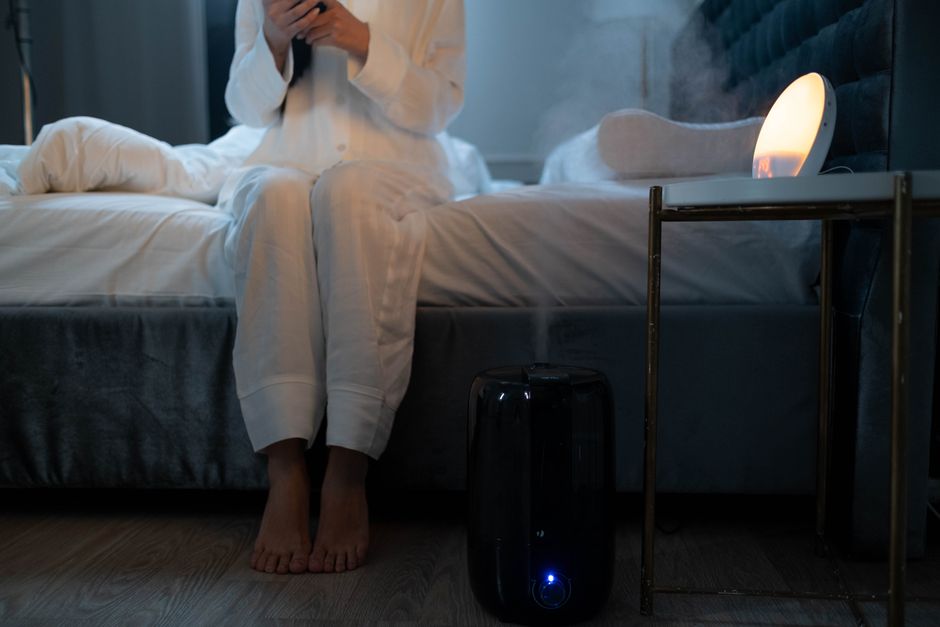
A cough that keeps you up at night often gets worse when the air around you is dry. A humidifier adds moisture to the air, which can soothe an irritated throat and loosen thick mucus so it is easier to clear. To use one for cough relief, run it in the room where you sleep or rest, keep the room’s humidity around 30% to 50%, use distilled or demineralized water, and clean the unit often so it does not spread mold or bacteria. It is a comfort measure, not a cure, and it works best alongside the basics your doctor recommends.
How To Use A Humidifier For Cough Relief
Moist air can help a cough, but only if you set the device up correctly. The goal is to raise the humidity in the room you are in, not to turn the room into a swamp.
Start by placing the humidifier on a firm, flat surface a few feet away from your bed. Aim the mist so it drifts into the room rather than blowing directly onto your face. Direct blasting can make you feel damp and chilled, and it does not help the cough any faster.
Run it while you sleep and during the day when you are resting. You do not need to run it around the clock in every room. One well-placed unit in the room where you spend the most time is usually enough.
Watch the moisture level. A simple hygrometer, sold at most hardware stores, tells you the relative humidity. Aim for somewhere between 30% and 50%. Above that range, you risk damp surfaces, condensation on windows, and mold growth. Below it, you are not getting much benefit.
Refill the tank with fresh water each time, and empty any water left over. Standing water is where germs and film build up. This single habit prevents most of the problems people run into with humidifiers.
Why Does Moist Air Help a Cough?
Dry air irritates the throat and airways. When you breathe dry air, the thin layer of mucus that lines your breathing passages can thicken and dry out. That makes the throat feel scratchy and the cough more frequent.
Adding moisture to the air does not kill viruses or cure an infection. What it does is keep the airway lining moist, which can ease the tickle that triggers coughing and thin mucus so it moves more easily. For a cough caused by a cold, allergies, or dry winter air, that comfort can matter, especially at night.
It is worth being clear about the limits here. The evidence that humidifiers shorten a cough or speed recovery is limited. Most of what we know points to symptom comfort rather than faster healing. That is still a real benefit when you are trying to sleep, but it is not a treatment.
Which Type of Humidifier Should You Use?
There are two main types, and they work differently. Neither is clearly better for a cough, but they have different trade-offs.
- Cool mist humidifiers release room-temperature moisture. They are a common choice for bedrooms and for homes with children, since there is no hot water or steam to spill.
- Warm mist humidifiers boil water and release warm steam. The heating process can reduce some germs in the water, but the unit gets hot and needs to be kept away from kids and pets.
Within cool mist, you will see ultrasonic and evaporative models. Ultrasonic units are quiet but can leave a fine white dust if you use tap water, because they push minerals into the air along with the moisture. Evaporative units use a fan and wick, and they tend to release less dust.
If you have asthma or allergies, pay attention to the dust issue. The white film some humidifiers leave behind is mineral dust, not mold, but it can still bother sensitive airways. Distilled water largely solves this.





What Water Should You Put in a Humidifier?
Use distilled or demineralized water whenever you can. Tap water contains minerals like calcium and magnesium. When the humidifier releases moisture, those minerals go into the air as fine dust and settle on surfaces around the room.
Distilled water has had most of those minerals removed, so it produces less dust and less buildup inside the machine. If distilled water is not practical, some people use filtered water, but filters do not remove all minerals. Tap water is the least ideal option, though many households use it without obvious problems.
Never add anything to the water. No essential oils, no medicated liquids, no vinegar, no salt. Putting oils or other substances into a humidifier can release particles into the air that irritate the lungs, and some can be harmful to breathe. If you want to use a vapor rub or similar product, follow its own directions rather than adding it to the tank.
How Do You Keep a Humidifier From Making You Sick?
A dirty humidifier can spray mold, bacteria, and their byproducts into the air you breathe. That can trigger coughing, sneezing, and allergy-like symptoms instead of relieving them. Cleaning is not optional.
Empty the tank and let it dry between uses. Rinse it with fresh water before each refill. Clean the tank and base regularly according to the manufacturer’s instructions, using the cleaning method the maker recommends. Many units can be cleaned with a diluted vinegar solution, then rinsed well and dried. Always check your own model’s manual, because materials differ.
Replace filters and wicks as directed. A clogged or mildewed wick is a breeding ground, and it will not humidify well either. If you see a pink or black film, or smell a musty odor, stop using the unit until it is thoroughly cleaned.
People with asthma, allergies, or weakened immune systems should be especially careful. For these groups, a poorly maintained humidifier can do more harm than good. If symptoms get worse when the humidifier runs, turn it off.
When Is a Humidifier Not Enough?
A humidifier is a comfort tool. It does not treat the cause of a cough, and it will not help every kind of cough.
A dry, tickly cough from cold air or a mild cold often responds to added moisture. A wet, productive cough from a chest infection may feel better with moisture too, but the infection itself needs time and, in some cases, medical care.
See a doctor if a cough lasts more than a few weeks, brings up blood, comes with a high fever, shortness of breath, chest pain, or weight loss, or if it is severe enough to disrupt sleep and daily life for long. In children, a barking cough or noisy breathing needs prompt medical attention. These are signs that something more than dry air is going on.
For most everyday coughs, the useful habits are simple: rest, fluids, and moist air. A humidifier can be one part of that routine. It is not a substitute for medical advice when a cough is serious or persistent.
Frequently Asked Questions
How long should I run a humidifier for a cough?
Run it while you sleep and during rest periods, and check that the room stays between about 30% and 50% humidity. You do not need to run it all day in every room.
Can a humidifier make a cough worse?
Yes, if the unit is dirty or the room gets too damp. Mold, bacteria, and mineral dust from a poorly maintained humidifier can irritate the airways and trigger more coughing.
Should I use warm or cool mist for a cough?
Either can add moisture and ease throat irritation. Cool mist is often chosen for bedrooms and homes with children because there is no hot water or steam to spill.
Can I put essential oils in my humidifier for a cough?
No. Adding oils or other substances to a humidifier can release particles that irritate the lungs. Use the unit with water only and follow its cleaning instructions.
