
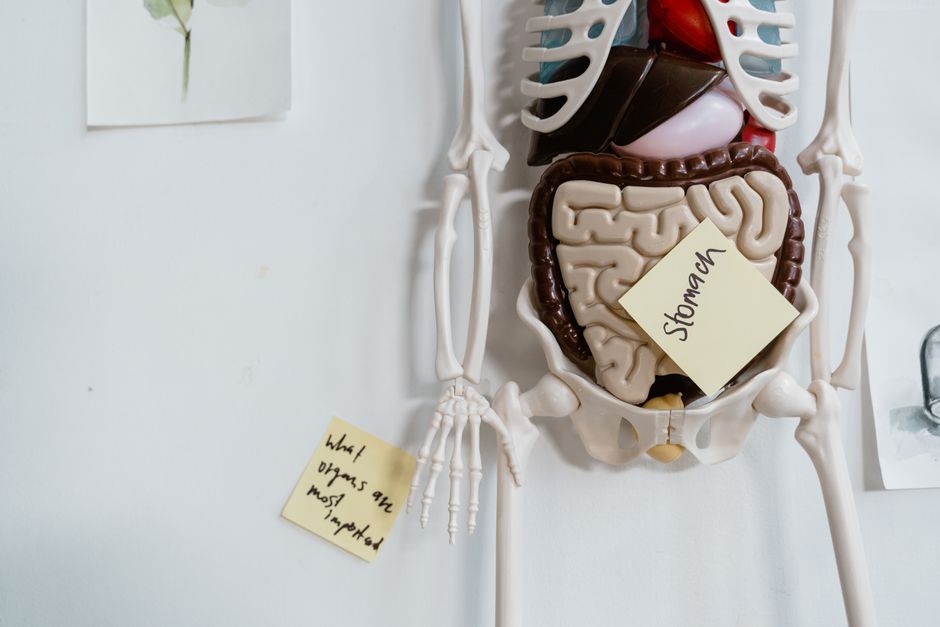
Drawing the digestive system comes down to two things: knowing the actual parts and their order, and using a method that keeps the shapes clear. The most reliable approach is to sketch a simple path first — mouth to esophagus to stomach to small intestine to large intestine — then add the organs that attach to that path, like the liver, gallbladder, and pancreas. Accuracy matters more than artistic skill, because a diagram that puts organs in the wrong place teaches the wrong thing.
What Organs Are Actually in the Digestive System?
The digestive system is a continuous tube called the gastrointestinal tract, plus several organs that sit alongside it and empty into it. The tube runs about 9 meters (roughly 30 feet) from mouth to anus in an adult. That length is one of the most commonly misdrawn details — people sketch a short, tidy loop and lose the true scale of the small intestine.
The main structures, in the order food travels:
- Mouth — teeth, tongue, salivary glands
- Pharynx and esophagus — the throat and the muscular tube to the stomach
- Stomach — a J-shaped organ on the upper left of the abdomen
- Small intestine — duodenum, jejunum, ileum; the longest section
- Large intestine — cecum, colon, rectum
- Anus — the exit
Then the accessory organs, which food does not pass through but which are essential:
- Liver — upper right abdomen, produces bile
- Gallbladder — small sac under the liver, stores bile
- Pancreas — behind the stomach, releases digestive enzymes
Getting this list right first is the single biggest thing that separates an accurate drawing from a decorative one. If you draw the organs in the wrong positions, no amount of shading will fix it.
How Do You Draw the Digestive System Step by Step?
Start with the tube, not the organs. This is the method that produces the most anatomically correct results, and it works whether you are drawing for a school project or a study aid.
Step 1 — Draw the central path. Lightly sketch a vertical line down the middle of your page. This is your guide for the esophagus and the axis of the body. Mark roughly where the head, chest, and abdomen sit.
Step 2 — Add the mouth and esophagus. Draw a simple open mouth shape at the top. From the back of the throat, run a tube down through the chest to just below the ribcage. The esophagus is a straight muscular tube, not a curvy one.
Step 3 — Draw the stomach. At the bottom of the esophagus, sketch a J-shaped pouch that curves to the left side of the body (the viewer’s right if you are drawing a front-facing figure). The stomach sits high in the abdomen, mostly on the left.
Step 4 — Draw the small intestine. This is where most drawings go wrong. The small intestine is long and tightly coiled, filling the center of the abdomen. Draw it as a dense, folded mass — not three neat loops. A common convention is to show it as a coiled cluster occupying the middle of the belly.
Step 5 — Draw the large intestine around it. The large intestine frames the small intestine. It goes up the right side, across the top, and down the left side — a shape like an upside-down U or a squared arch. Draw the ascending colon on the right, the transverse colon across, and the descending colon on the left.
Step 6 — Add the accessory organs. Place the liver in the upper right, overlapping the top of the stomach area. Tuck the gallbladder just under the liver. Draw the pancreas behind and below the stomach, angled toward the small intestine.
Step 7 — Label everything. Accurate labels turn a sketch into a diagram. Use straight lines to connect labels to structures so the drawing stays readable.
Why Does the Order of the Digestive Tract Matter?
Because the order is the function. The digestive tract is a sequence, and each part does a specific job at a specific stage. Drawing it in the correct order is not just about looking right — it reflects how food actually moves and gets processed.
Food is chewed and mixed with saliva in the mouth, where digestion of starches begins. It then travels down the esophagus by a wave of muscle contractions called peristalsis — not by gravity. This is a detail worth knowing: even upside down, the esophagus would still push food toward the stomach.
The stomach mixes food with acid and enzymes, turning it into a semi-liquid called chyme. From there it enters the small intestine, where most nutrient absorption happens. The liver and pancreas deliver bile and enzymes into the duodenum — the first section of the small intestine — to help break down fats, proteins, and carbohydrates.
By the time material reaches the large intestine, most nutrients have been absorbed. The colon absorbs water and forms waste, which is stored in the rectum and expelled through the anus.
If your drawing gets the order wrong — say, placing the pancreas before the stomach — the diagram contradicts the biology. For study purposes, that matters. For a test, it costs points.





What Are the Most Common Mistakes When Drawing the Digestive System?
Most errors are about proportion and position, not artistic ability. Fixing these makes a drawing instantly more credible.
- Making the small intestine too short. It is the longest part of the tract. Draw it as a large, coiled mass, not a few loops.
- Putting the stomach on the wrong side. The stomach sits on the body’s left side, not the right.
- Placing the liver on the left. The liver is the largest internal organ and sits mainly in the upper right abdomen.
- Drawing the large intestine inside the small intestine. The large intestine frames the small intestine — it wraps around the outside.
- Forgetting the accessory organs. The liver, gallbladder, and pancreas are part of the system even though food does not pass through them.
- Ignoring the diaphragm line. The stomach and liver sit below the diaphragm, which separates the chest from the abdomen. Marking this line keeps organs in the right region.
One clarification that trips people up: the “small” and “large” intestine names refer to diameter, not length. The small intestine is narrower but far longer. The large intestine is wider but shorter. Drawing them with correct relative widths and lengths is the fastest way to make a diagram look accurate.
What Tools and Techniques Help You Draw It More Accurately?
You do not need expensive supplies. You need a method that lets you correct mistakes without wrecking the drawing.
Start with a light pencil so you can erase guide lines. Sketch the tube and organ positions first, check the layout against a reference, then darken the final lines. If you are working digitally, use separate layers for guides, line art, and labels — this makes moving an organ easy if you get it wrong.
For proportions, a simple trick helps: divide your page into an upper chest area and a lower abdominal area. The esophagus and upper stomach belong in the chest-to-upper-abdomen zone. The intestines fill the lower abdomen. This keeps everything in roughly the right place before you add detail.
Color coding helps learning. Many study diagrams use one color for the tract itself and a different color for accessory organs. This visually separates the path food takes from the organs that support digestion — a distinction that matters when you are studying function, not just structure.
If you are drawing for a class, check whether your teacher wants a front view or a more three-dimensional view. Front views are easier to label clearly. Slightly angled views show depth but are harder to get right.
Can You Learn the Digestive System by Drawing It?
Drawing is one of the more effective ways to learn anatomy, and this is well supported in education research. The act of reproducing a structure forces you to notice its position, its connections, and its relationship to nearby parts — things you can skim past when only reading.
The key is drawing from understanding, not copying. If you trace a diagram, you may not retain it. If you build the drawing from the tube outward, you are rehearsing the actual sequence and layout, which is what sticks.
A practical approach: draw it once with a reference open, then close the reference and draw it again from memory. Compare the two. The parts you got wrong are the parts you have not learned yet. Repeat until the from-memory version is close.
This method works for the digestive system because the structure is logical — it is a path with attachments. Once you know the path and where each organ connects, the drawing almost builds itself.
Frequently Asked Questions
What is the correct order of the digestive system?
Food travels mouth, esophagus, stomach, small intestine, large intestine, rectum, and anus. The liver, gallbladder, and pancreas support digestion but food does not pass through them.
How long is the digestive tract?
The full gastrointestinal tract is about 9 meters (roughly 30 feet) long in an adult. The small intestine makes up most of that length.
Which side of the body is the stomach on?
The stomach sits mainly on the left side of the upper abdomen. The liver sits mainly on the right.
Why is the small intestine called small if it is the longest part?
The name refers to its narrower diameter, not its length. The small intestine is thinner but much longer than the large intestine.
